Forced closure of survivors' group
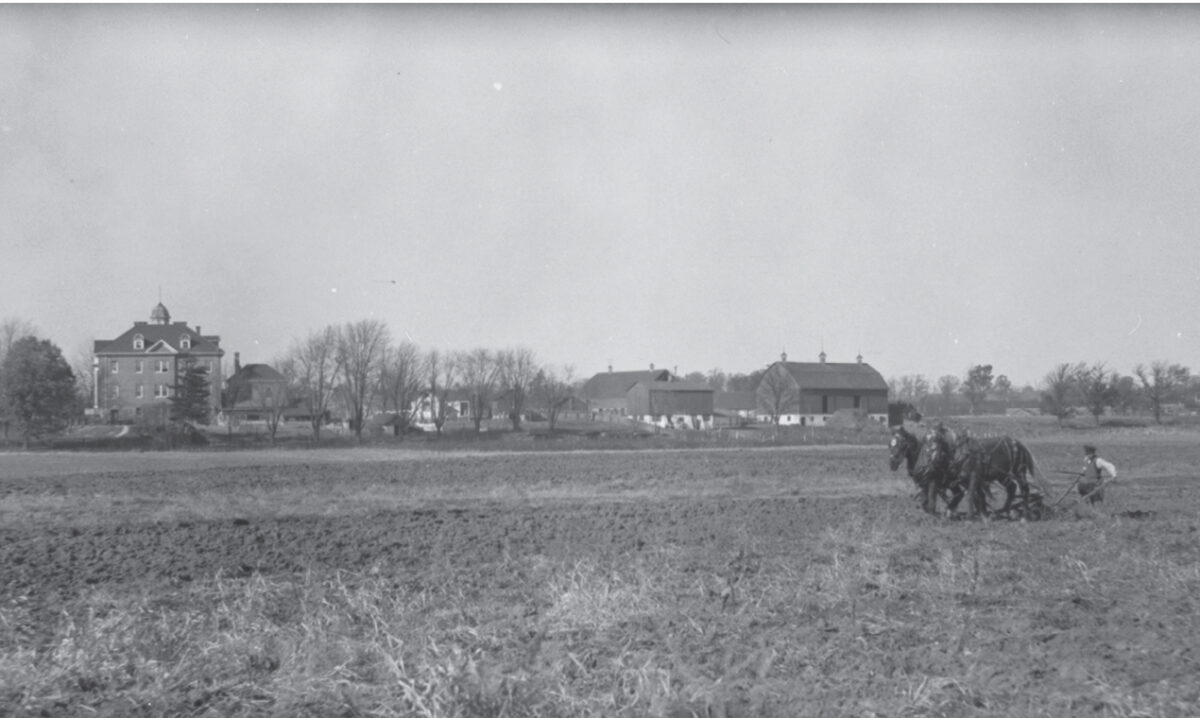
A group set up to shed light on the abuse faced by children at a residential school in Six Nations has been left with no options to fund its continued operations, after the federal government said it will no longer provide financial support to the organization.
The Survivor’s Secretariat was established in 2021 to investigate what happened at the Mohawk Institute, the longest operating residential school in Canada. Around 15,000 children are believed to have gone through the Mohawk Institute between 1828 and 1970 - including at least 37 children from Kahnawake and three from Kanesatake.
The group has in the past been supported by the Residential Schools Missing Children Community Support Fund, provided by Crown-Indigenous Relations and Northern Affairs Canada (CIRNAC), but had faced radio silence on the status of their funding applications in recent months.
The Secretariat say that it’s been borderline impossible to make contact with the federal government concerning funding matters since spring 2024, and the organization’s activities had already been impacted by the lack of funding, having been forced to release four staff in the last six months and pause all but one contract with external providers who assist in the research.
Secretariat lead Laura Arndt said that all came to a worst-case conclusion on January 22 at 12:16 a.m. when she received an email with a letter from CIRNAC that was dated December 20, 2024, more than a month earlier.
That five-page letter, according to Arndt, stated that the Secretariat would be receiving $0 from Canada, and that according to their records, the group had a $4.2 million surplus - something that Arndt said is particularly insulting as the group faces the reality that they will be unable to continue their operations due to a lack of money.
“I read the letter probably a dozen times between 12:16 a.m. and four o’clock in the morning,” Arndt said.

Part of the $4.2 million surplus that Canada claims is due to CIRNAC retroactively disallowing expenses, including activities the Secretariat organized for events like National Indigenous Peoples Day.
“They said we can’t use the fund, and it talked about curriculum activities and payments in advance, but they didn’t explain what any of it was,” Arndt said. “Our letter back to them was, ‘Okay, we don’t understand how you came to this amount can you please provide a detailed accounting of what was disallowed so that we can respond to it?’ And we’ve heard nothing since.”
Some of that $4.2 million comes from an almost $2.5 million carryover that the Secretariat was already aware of, which they had expected to receive in the spring of last year to fund their work on a commemoration wall, as well as data sovereignty work on archives. Arndt said they instead received it in December, too late to fund the groundwork, which ultimately had to be paused. That money was therefore used to cover the organization’s operational costs, already in the red due to a lack of funding.
Now, Arndt said CIRNAC wants the Secretariat to fund itself with $4.2 million that they say they don’t have.
“If we did things in such violation of protocols or agreements, something so egregious and so bad that there’s $1.7 million expenditures, don’t you think somebody should have been in touch before now?” Arndt said.
Arndt said that CIRNAC is disallowing expenses retroactively, going back to 2021 when the Secretariat was first started, even though the group has submitted audited financial reports annually. She feels that CIRNAC raising issues with expenses so far after they were submitted is in part to do with what she perceives as a lack of stability within the department.
“I’m at, I think, 31 government officials who’ve touched our file in three years. Every time I turn around, the people we were dealing with were being replaced because they were leaving the job, and we were being consistent on our side,” Arndt said. “I think part of what Canada really needs to think about is how has their oversight and management of this program created the situation we’re in right now?”

CIRNAC did not respond to The Eastern Door’s request for comment on the issues raised by Arndt in time for deadline but did state in a previous request from January 29 that all requests are assessed based on the criteria provided to communities and organizations.
Without funding, the Secretariat will be forced to shutter its doors, putting an end to the work that they’ve done to reveal the truth of what happened at the Mohawk Institute.
The news has hit board members, who are all survivors of the Institute, particularly hard.
“Being with the Survivor’s Secretariat, being this close with other survivors and sharing what we have has given me the strength to live through the trauma, because I never talked about this for 63 years,” said Diane Hill, who is from Six Nations and had just turned seven when she was taken to the Institute.
“I was pummelled by an adult my first night because I was crying for my mom. Every day there was a nightmare.”
Fellow board member Roberta Hill, also a survivor of the school from Six Nations, said that the government’s reluctance to fund projects like the Survivor’s Secretariat is a way to sweep the truth of Canada’s history under the rug.
“It’s a cover-up by the government. They don’t want to have to explain what Canada was doing,” said Roberta, who was six when she went to the Institute.
Sign up for email updates from The Eastern Door
“They knew what was going on. Don’t tell me that they don’t know where we were as kids.”
Cutting funding will make it immeasurably harder to uncover the truth about the Mohawk Institute, and further traumatize survivors, their families and communities of those who didn’t make it home.
“You’re breaking promises to people that you abused and tried to wipe off the planet,” Arndt said. “And you’re breaking them again, even when you said you would never do this to them again.”
Despite facing closure, those involved in the organization say they’re determined to push back against CIRNAC, and to continue investigating the Institute.
“They look at us today as these old people, we were little innocent kids when this was happening, but we’re here today to say we’re not going away, we’re asking for answers, and we want the truth to be told,” Roberta said.
“I’m not giving up. I haven’t got all my answers as to what was done, and we deserve it. They owe it to us.”