Media program rolling

When Rachel Cree went to check her mail and found a flyer advising community members of a new media program in town, it struck a chord with her.
Cree had first considered going into journalism when she wrote a piece about the July 11 walks after 1990 – “Why We Walk.” It ran in a small newspaper circulating at the alternative school, and it caught the eye of an employee at the Kanesatake Education Center who recognized the writer’s talent and encouraged her to think about media as a career path.
“It sounded like a great idea, so I went to apply in Tyendinaga,” Cree said. She was ready to move there for six months to study, but she couldn’t find a daycare that would take her baby daughter, still in diapers. So she stayed home and moved on.
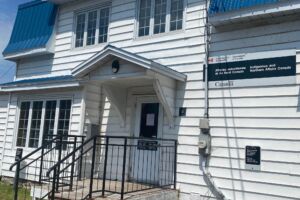
But all that changed when she learned about the new collaboration between the Kanesatake Employment and Training Service Center (KETSC) and Kiuna College, with classes right here in town in a trailer next to KETSC.
“I saw it as a second chance to get into journalism,” Cree said.
Now she’s one of a group of around 12 Indigenous students, many of them local, who decided to take the plunge and study full time to develop the skills they need to tell meaningful stories.
“Journal de Montreal and all these other media outlets sometimes don’t paint the best picture of us,” said student Sterling Mallette, adding he wants to cast a better light on the community and its people.
The program started Monday following an orientation last week that focused on culture and history.

“Seeing all the history made me want to learn more about our own history, our language here,” he said.
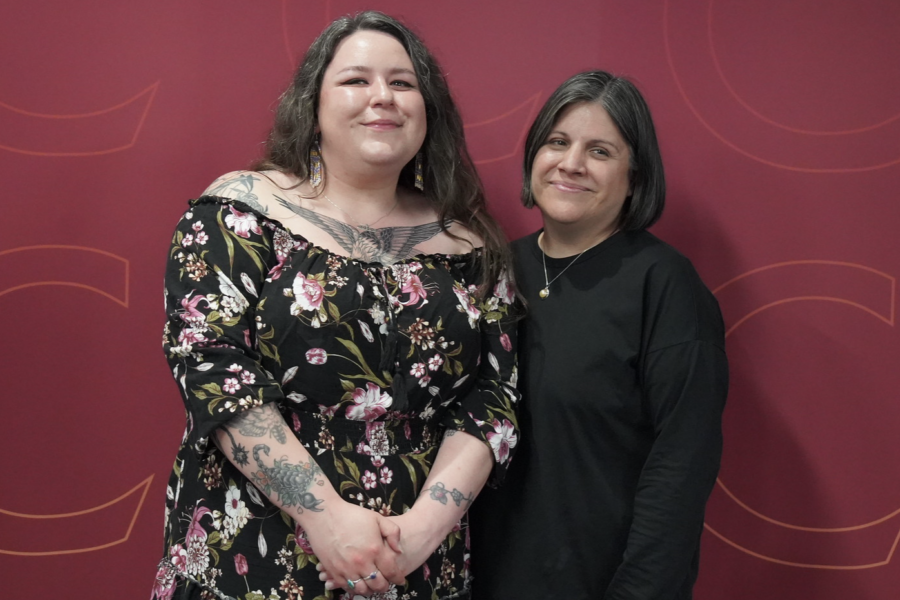
He signed up for the program together with his partner, Samantha Simon. “I was a little bit nervous at first to try something new, but doing it together kind of gave me a little more confidence to come in and try something new,” he said.
Simon had been managing a gas station when she decided to sign up for the program, which provides funding to students who take the course.
“I’m loving it so far. Very inspiring,” she said, adding that she’s hoping for a new lease on life from the program to go along with a new career. She is most interested in getting into written journalism, including all that comes along with it, like research and interviews.
Others are more drawn to the radio training.
“I’ve always had an interest in working with radio,” said Hank Phillips, who is commuting each day from Kahnawake, where he is already on the air at K1037 Radio.
“I could have been a good body man in a garage and stuff like that, but after three years of working in the field, I realized it’s not for me. But on the backburner, I’ve always had radio, it’s always been my thing,” he said.
He has never had formal training, however. "I was put on the air and learned everything backwards,” he said. Now is his chance to learn some of the fundamentals that can help him advance in his career.
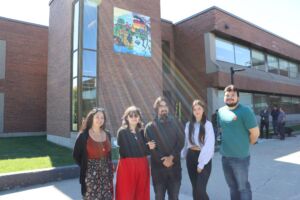
The possibilities are endless for the program’s students.
“Even if it’s not journalism related, I just hope I can provide something that is of use to them in whatever it is they want to pursue, whether it’s in film, or law – we have a future lawyer here. Maybe it’s around ethics or empathy in research,” said instructor Paul Grant, who teaches “Searching for Information,” which happened to be the first class of the week.
“I think in the end it’s going to be a great experience,” said Jonathan Turenne, who plans to apply to law school in September.
“I’m hoping the skills I learn here will help me in the future.”
While Grant’s perspective is more rooted in academia, the program has plenty of hands-on instruction. The Eastern Door’s editor/publisher Steve Bonspiel, for instance, is teaching news coverage, while Karahkóhare Syd Gaspé is teaching sound production.
“For me personally it’s always been creating opportunity, developing talent. Passing on my knowledge,” said Gaspé, who spent 24 years at CBC and is now president of Mohawk MultiMedia, the nonprofit that oversees Reviving Kanehsatà:ke Radio (RKR) 101.7 FM.
“Bringing an Indigenous perspective, our own stories out there, and having our own people tell them, is very rich,” he said. “I’m really proud of this group. We just started, and I think we’ve got a good thing going.”
He credits renowned Kanesatake journalist Dan David, who helped prepare the program, for putting so much focus on Indigenous history up front, featuring speakers from Kanesatake and elsewhere to talk about culture and history during the orientation, including aspects like the impact of the Indian Act and band council system.
Sign up for email updates from The Eastern Door
“It sort of seemed like a binding factor, the cultural week. All the participants more realize where our roots are and where we should be talking from,” said Gaspé.
The orientation resonated with the students, many of whom spoke about their reflections on it on the first day of class instruction.
“I believe it was a good start because you do need to know the history of your community before working in and around it because everybody’s got their tensions built up,” said Cree. “If you know the history and know the people, they’ll be more comfortable with you asking them questions.”
“It was so emotional last week,” said Tess Lalonde, another student in the program. “It opened what wasn’t done and what was done. It was more information from the real people. It’s so informative. I’m so grateful I’m here, what I’m learning, and from Kanesatake. It’s incredible.”