First Kidney Walk raises awareness
Marcus Bankuti The Eastern Door
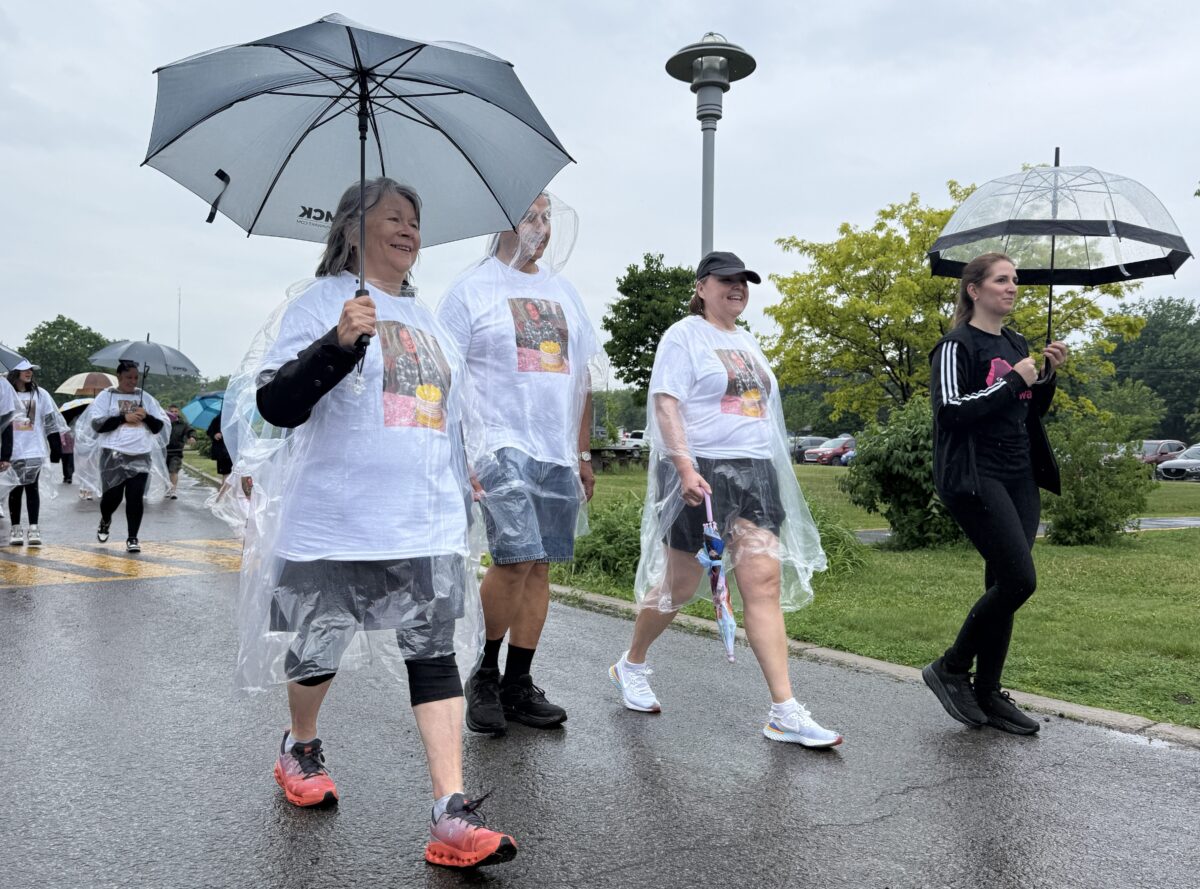
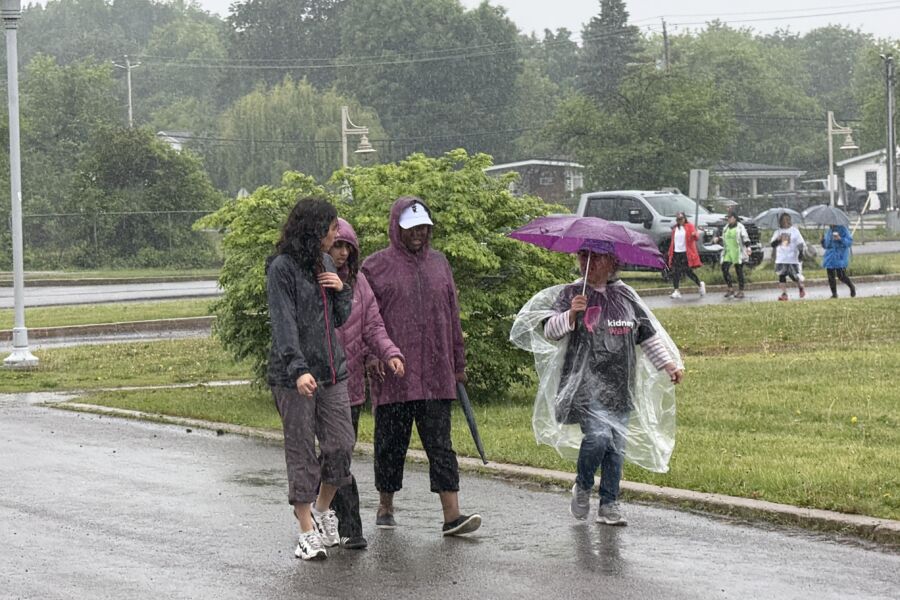
Huddles of umbrellas bobbed to upbeat tunes at Kahnawake’s first-ever Kidney Walk, as Kahnawa’kehró:non refused to let the rain deter them from taking action against kidney disease.
“The spirit is on top of the world,” said Valerie Diabo, executive director of the Kateri Memorial Hospital Centre (KMHC). “Everybody’s smiling, everybody’s happy to see everyone, and having the people here to talk to and to have that support.”
Even before Saturday morning, when the event took place at Karonhianónhnha Tsi Ionterihwaienstáhkhwa, the Kidney Walk had already fulfilled an important goal, according to Diabo.
“The awareness is out there, even if you’re not here. I hear people asking questions in the community about kidney health now, and that was our objective,” she said.
The walk was organized by Onkwata’karitáhtshera, Kahnawake’s health and social services agency, made up of the Mohawk Council of Kahnawake (MCK), Kahnawà:ke Shakotiia’takéhnhas Community Services (KSCS), KMHC, and the Kahnawake Fire Brigade (KFB).
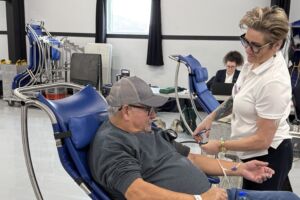
MCK chief Arnold Boyer was instrumental in bringing the walk to Kahnawake, largely inspired by local advocate Angus “Nias” Bordeau, who has been on kidney dialysis for over 25 years. Bordeau served as the walk’s ambassador, just as he did for last year’s walk in Chateauguay.
“He knows we’re all together behind him for this disease, to give him some comfort, give him support,” said Boyer, who walked alongside fellow MCK chiefs.
“Everybody’s here helping each other out. What more could you ask for? Maybe a sunny day? It’d probably be too hot,” said Boyer, adding that a little rain never hurt anybody.

Like some other walkers, he also had a more personal reason for participating. His mother, Sheila Boyer, died of chronic kidney disease two years ago. “After her passing, I wanted to bring chronic kidney disease to the community’s attention. It could be prevented. Medications are out there. Get yourself tested. It goes undetected until it’s too late,” he said.
He wasn’t the only one thinking of Sheila.
“She wasn’t a candidate for dialysis, so it’s to raise awareness and support for somebody else’s tóta who needs help,” said Sheila’s granddaughter Sarah Boyer.
“It’s moving. It’s emotional to see everybody showing up.”
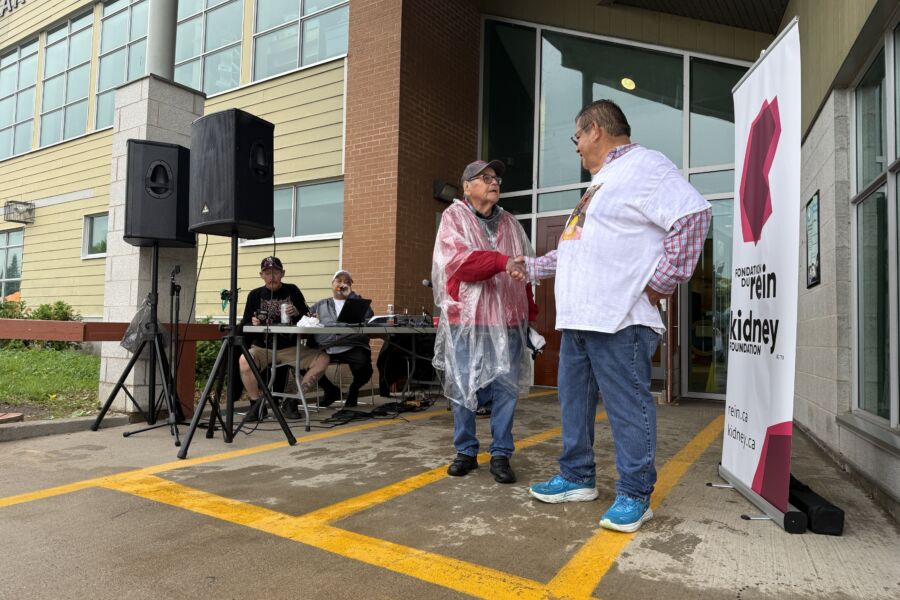
Nobody was counting laps at the nominally five-KM walk, but donations added up - at the event’s end, the Kidney Foundation of Canada was presented with a cheque for $17,225, which will be used to provide services and further the organization’s efforts to prevent and help those with kidney disease.
“It’s with the donations we can make all of these programs and services happen,” said Kidney Foundation communications advisor Mylène Bouche. “But it’s a very important part of our mission to let people know about the disease and what they can do and what they should do to prevent it.”
She noted that Indigenous populations are at an elevated risk for kidney disease.
“It’s very important for us that people are aware and get tested to ensure we detect it early and that they come to the Kidney Foundation to learn about the different programs and services we offer,” Boucher said.




Raising awareness is among the most important aspects of these walks, she emphasized.
According to Diabetes Canada, over 17 percent of Indigenous people living on reserve across the country have diabetes, one of the major causes of kidney disease.
“There’s a correlation with diabetes. There can be complications,” said Alex McComber, an assistant professor at McGill University who was recognized last year with a lifetime achievement award for his work around Indigenous health, including diabetes prevention.
He has seen awareness about diabetes and healthy living evolve in the decades since his career began, when there was more misinformation and reluctance to speak up. He believes events like the Kidney Walk can help contribute to change.
“It wakes up communities,” he said. “It brings folks together. This is what I’ve seen over the years. People are more aware of what’s involved and needed to have healthy lifestyles.”
About 100 people attended the June 6 event.
“It’s wonderful. It’s more than what I expected,” said Lois Montour, who donated a kidney in 2016.
“This funding helps research so improvements can happen in the future.”
Eleanor Paul was among those who had personal motivations for participating despite the weather.
Sign up for email updates from The Eastern Door
“I came here to support this walk because my brother (Russell Paul) suffered from kidney disease,” said Paul. Her brother was diabetic and was on dialysis for about 18 years, she said. “That’s why I’m here, to support awareness of kidney problems.”
She was impressed so many people came out in the rain to show their support at the Kahnawake Kidney Walk.
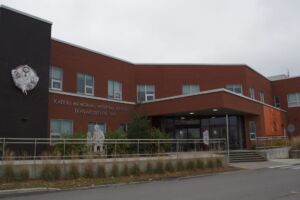
“I am so proud that it’s here,” she said. “Also, with that, since it’s here, maybe that’s another step closer to having our own dialysis clinic here in the community. I’m really hoping for that.”
The desire to see a local dialysis treatment facility is something that motivates Bordeau as he continues to advocate in the community for those who suffer from kidney disease and depend on the gruelling treatment to survive.
After opening the event with a few words, Bordeau took in the community’s effort.
“It feels great,” he said. “We’ve got a lot of support. Maybe next year will be bigger.”
Marcus Bankuti, Local Journalism Initiative Reporter