From teacher to student
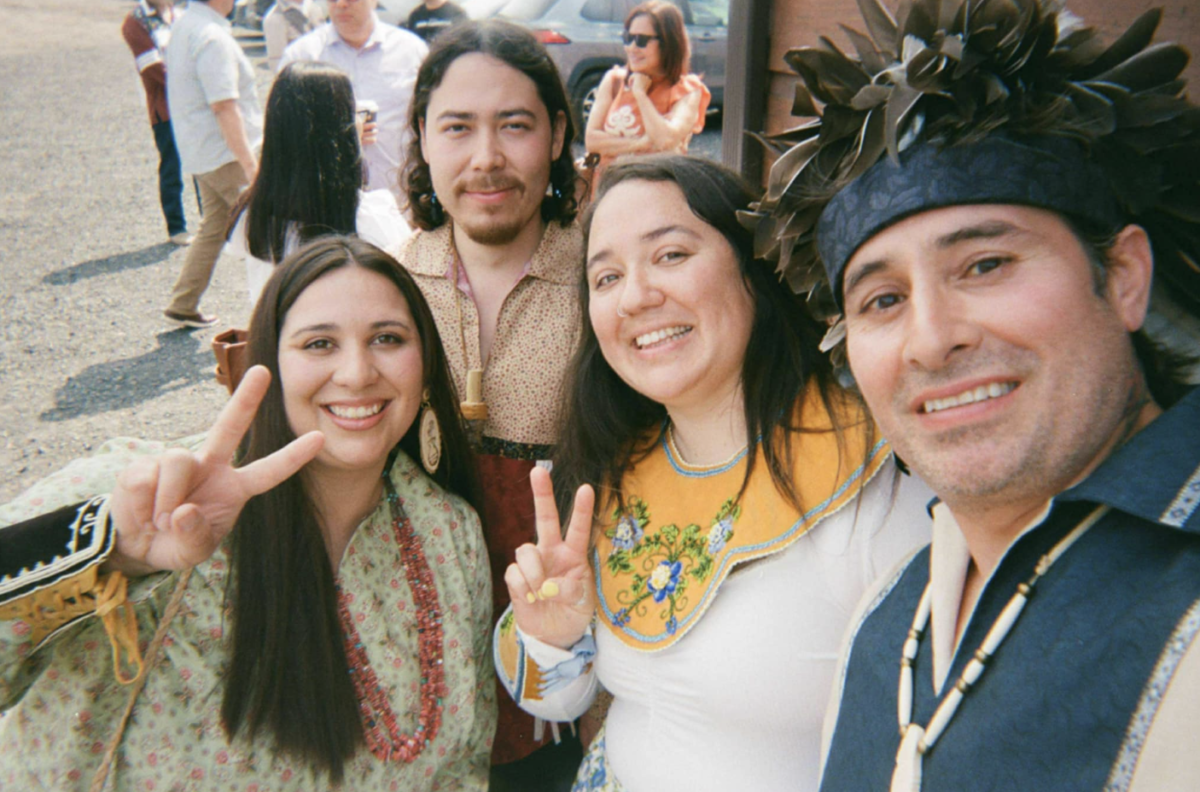
From left to right: Ionhiaró:roks McComber, Ra’shatste Lahache, Katsi’tsohrónkwas Jacobs, and Raienthókwas Horn, all graduates of this year’s Kanien’kéha Ratiwennahní:rats Adult Immersion Program. Courtesy Katsi’tsohrónkwas Jacobs
Katsi’tsohrónkwas Curran Jacobs has long been a teacher, but two years ago, she realized it was time for her to be the student.
“I was teaching stuff about our culture, but I was getting to this point where I didn’t know anything further, and I realized that I needed to come home and spend some time reconnecting back to the language and culture,” said Jacobs, who had been working with students at schools in Chateauguay, supporting Kahnawa’kehró:non attending school off-reserve.
“I went to school off-reserve too, and so I never studied the language, I never had a big exposure to it. When I started Ratiwennahní:rats, I was a non-speaker.”
When Jacobs decided to apply to the Kanien’kehá:ka Onkwawén:na Raotitióhkwa Language and Cultural Center (KOR)’s two-year Kanien’kéha Ratiwennahní:rats Adult Immersion Program she knew that it often takes applicants many tries to be accepted to study.
To her surprise, she soon received admission to the program.
“I told them my purpose is that I want to take care of our young people in the community, and I want them to be exposed to the language as much as possible. I still feel that way, probably even more so after completing the program,” Jacobs said.

There were a few familiar faces in the classroom for Jacobs - she had actually taught her Ratiwennahní:rats instructor, Ro’nikonhkatste Norton, when he was doing his teaching degree.
“We kind of swapped places by becoming each other’s teachers, that was pretty cool,” she said.
At first, it was difficult to open up about the challenges of the program, but once the group started being vulnerable with one another, they began to feel like family.
“I’m a crier, when I get frustrated I cry, and I remember crying in class because we were doing an activity where they’d be repeating words to me and I couldn’t repeat them back, I was just so frustrated,” she said. “One of my peers told me, ‘You being vulnerable kind of shows us what we’re all feeling inside.’ So we talked about those things, we bonded, it was like being in the trenches together.”
As she entered her second year, Jacobs took advice learned from first-language speakers that she had connected with throughout the program: don’t think, just speak.
“Instead of being focused on saying things correctly right away I just wanted to get out and speak more fluidly in what I was trying to say, and it worked,” she said.

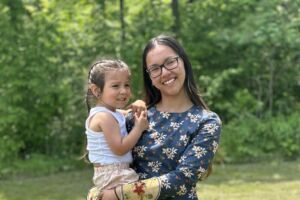


Jacobs loves learning, and continued teaching at Bishop’s University in Sherbrooke as well as working on curriculum development for school boards throughout her time at Ratiwennahní:rats. She said she felt like a double agent at times, being both a student of the language and a student of their teaching methods.
“My experience of being a teacher allowed me to look at the activities that they do, and to adopt some of that in supporting other people in the beginning of their language learning,” said Jacobs, who applied some of those methods when she taught a beginner’s Kanien’kéha class last year.
Throughout Ratiwennahní:rats, Jacobs was surrounded by her family, who came out to support her on graduation day.
Her mother, Candida Rice, said that she’s been overwhelmingly proud of her daughter’s decision to pursue language-learning.
“She is one who has dedicated her life to learning, and this time it is closer to home, it’s our language and cultural ways of being which she has compassionately and whole-heartedly made a part of her life,” Rice said.
“We are lovingly forever going to be cheering and celebrating her.”
Sign up for email updates from The Eastern Door
Nowadays, Jacobs feels confident enough to continue her language journey on her own, without the training wheels of Ratiwennahní:rats guiding her.
“I’ve been given all the tools that they could give me in order for me now to continue to learn in the way I want to learn, and to become a speaker in the way I want to become a speaker,” she said.
Long-term, Jacobs wants to have a family, and wants to raise a speaker, carrying on her dedication to the language by passing it to the next generation. She plans to maintain her close ties with her cohort, and continue nurturing her love of education in her new role at the Kahnawake Education Centre (KEC), where she’ll be supporting off-reserve students as the new provincial school liaison facilitator.
She wants to focus on making new connections in the language too, taking advantage of her hard work to speak Kanien’kéha with other speakers and elders in the community.
“My relationships to people are my drive to help me keep learning, to help them keep learning, and keep us connected,” she said.