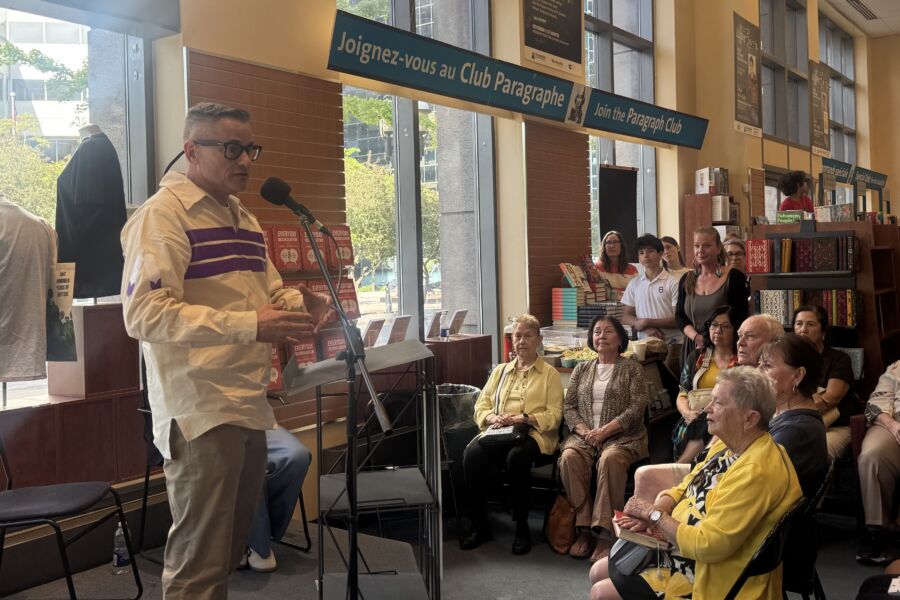
Deer impresses audiences
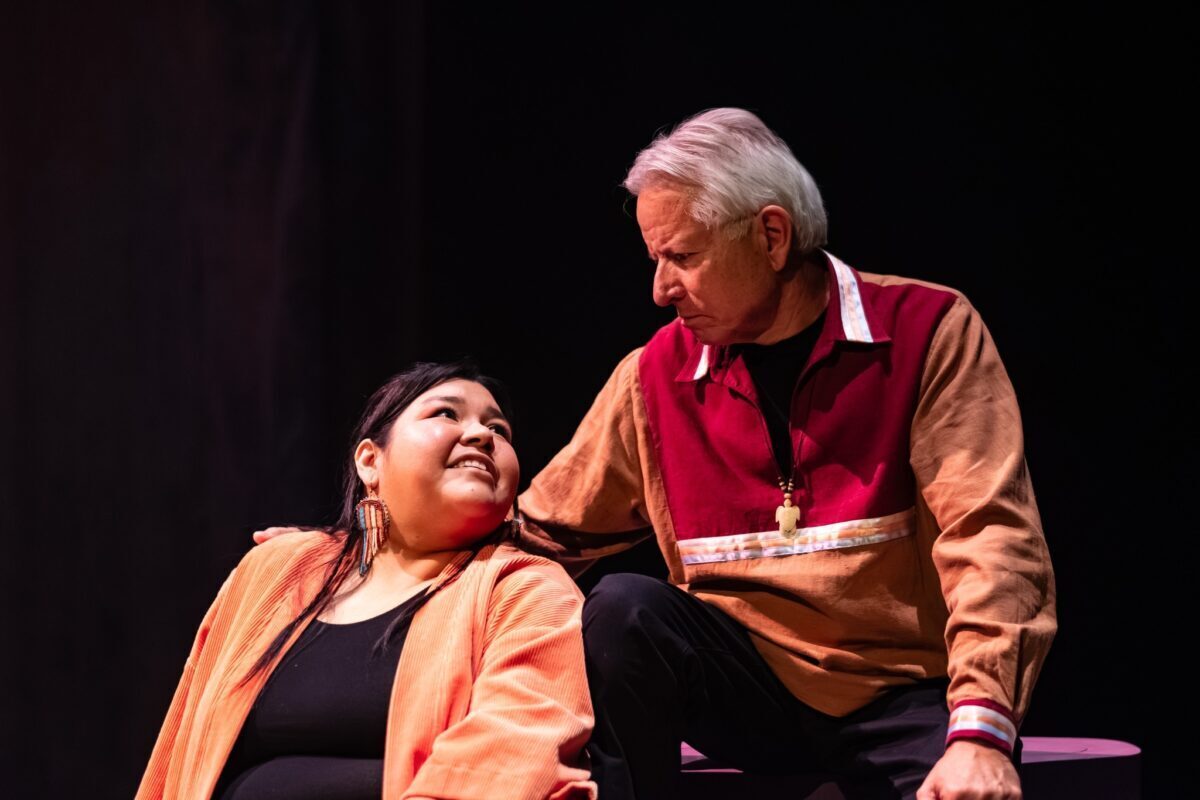
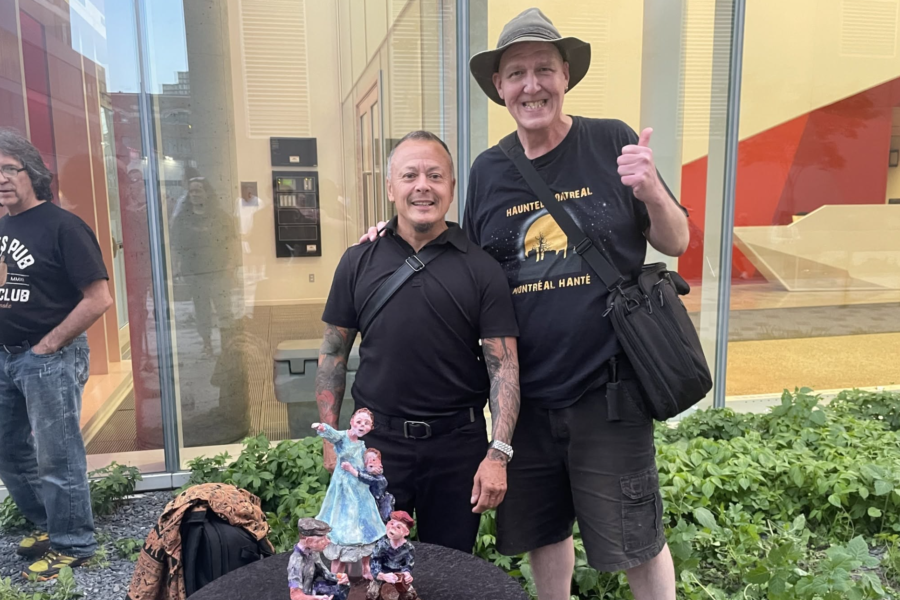
Kevin Deer (right) taught Sharon Fontaine-Ishpatao (left) to speak in Mohawk for Tupqan, being performed this month at the Duceppe Theatre.
Ka’nasohon Kevin Deer wasn’t sure how spectators would receive Tupqan, a new play he’s been performing in at the Duceppe Theatre in Montreal - but if the standing ovations from audiences are anything to go by, he and his castmates seem to be doing a good job.
“At the end of our performance, when I look out from the stage, the seats are full,” said Deer. “For me, this is another way to raise awareness about who we are as people, and how we have to understand how Indigenous knowledge, teachings, and understandings can help us live in a better world.”
Tupqan centres the fictional Indigenous community of Whitefish, as it wrestles with the legacy of a wampum belt stolen from them 30 years ago.
When one of the members of the community disappears, connections are made between the missing wampum and the missing person, and Polam Nicolas - played by Étienne Thibeault - takes it upon himself to find the stolen wampum, while simultaneously embarking on an election campaign to become chief of the band council.

Deer’s character is known as “le porteur,” or “the carrier,” and he serves as a knowledge holder throughout the play, sharing the meaning of the wampum and helping shed light on the history of the belt as the search continues. He speaks in Kanien’kéha throughout.
The cast has been performing for the entire month of March and will conclude their 45-show run on April 4.
Outside of Deer’s Kanien’kéha lines, the play is performed in French, with a special performance today (Friday March 20), at 8 p.m., including English subtitles for audience members.
While Deer is the sole Kanien’kéha speaker in real life, he’s not the only character who speaks it during the play - he taught Sharon Fontaine-Ishpatao, who is Innu, to speak in Kanien’kéha for her role as his daughter.




“I have my own techniques of how to get people to speak the language, and I do most of that through song,” Deer said. “She had to learn a conversation, and I always work through song, so that’s what we did.”
Fontaine-Ishpatao picked it up quickly, speaking credible Kanien’kéha in just two weeks.
“It’s really good,” Deer said. “I enjoy working with people.”
For Deer, the narrative is an important one for Indigenous and non-Indigenous audiences alike.
Sign up for email updates from The Eastern Door
“It deals with contemporary issues of reserve life, and there’s a lot of significance with the wampum,” Deer said. “For me, it’s about connecting with aspects of the spiritual and with the historical, it’s about keeping history alive.”
Tickets for the play can be purchased at duceppe.com - discount tickets priced at $40 each are available for Onkwehón:we, as well as discounted tickets for Friday and Saturday evenings. Additionally, special pricing will be available for $18 for teens on Friday, March 27.