Summer Student Scoop: Where I stand on artificial intelligence
By now, most people have undoubtedly heard of artificial intelligence, more commonly
known as AI. Its usage has spread far and wide, but what exactly is it? AI is a computer-
generated system that completes tasks that are usually done by a human being.
It could be something as simple as asking Alexa to play a Taylor Swift song. But the monumental rise has led people to use AI to generate photos, to businesses incorporating it into their practices, to people forgetting to take out their ChatGPT prompt before uploading their status to Facebook.
As children begin to argue with ChatGPT, and teenagers ask it for advice, they are
simultaneously becoming responsible for the destruction of our environment. I personally have chewed out my niece for arguing with ChatGPT (which she agreed to
stop using after I explained to her how using it was harming the turtles).
This is because the large infrastructure that is used to host data centres to power AI, has a huge environmental impact that stems from its large, expansive use of water and
energy that remains extremely harmful to the environment.
People have begun to protest against the construction of planned data centres being

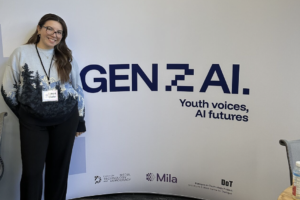
built. I was able to attend a protest against the proposal of an AI data centre in Phoenix,
New York, before the school year let out, similar to the one planned in Massena, which is located right next to Akwesasne.
Despite my attendance at the protest, I personally believe that AI has both pros and
cons. I’ve seen people use AI for things that are actually useful, such as using it to
enhance or restore an old photo of a loved one who is long gone, and heard of people
using it for early cancer detection, but I don’t think it should be used to create art in any
way, shape, or form, as I believe that it takes away people’s critical thinking skills, and
reduces their creativity; which I think are both essential to creating something that is
thought-provoking and worthwhile.
I’ve personally witnessed teachers beginning to incorporate the usage of AI within the



classroom. This past semester, I was assigned a project in school in which we were able
to use artificial intelligence to generate photos for a graphic novel we were tasked to
create, but the limitations were astonishing and perhaps surprising. There were certain
things that artificial intelligence would refuse to generate. For example, in the story I
was telling, I asked AI to generate a photo of a child upset after an argument with their parents, which AI refused to create.
As I’m sure many people have by now, I’ve experimented with AI before I knew the
environmental impact it has on the planet. I’ve asked ChatGPT to edit photos, such as making my dog Odie look like a police officer, or removing people in the background of a photo before I went to post it on Instagram.
I’ve had classmates who have said they used AI in their assignments, who had to face
sanctions for violating academic integrity. I’ve personally been asked to incorporate AI
into my assignments such as using it to help with outlines in certain assignments, which I felt was both pointless and harmful to the environment.
Sign up for email updates from The Eastern Door
I was also able to use ChatGPT to plan my trip to Boston a few years ago.
I had to cross-check and fact-check multiple websites to ensure that the information it gave me was accurate and not something that was pulled from Reddit or outdated.
I’ve noticed how the rise of AI has led to a decrease in creativity among myself and my peers. When I go to consume art, whether it be a television show, music, or an online
article, I look for something that I can connect to.
As more and more people begin to incorporate the use of AI into their everyday lives, it distracts from the creativity that people crave when interacting with certain media forms.
By taking away the part of the message that makes it human, it feels as though the future we’re headed towards is closer to an episode of Black Mirror than the idealistic society portrayed in The Jetsons.
As AI continues to advance, my stance stays the same. AI shouldn’t be used to create art, or to enhance or expand on someone’s original thoughts. If it has to be used at all, I think it should be used as a learning tool, such as to explain things in a way that is easier for others to understand, not to create things at the expense of an individual’s creativity.