Column: Plugging away to 20
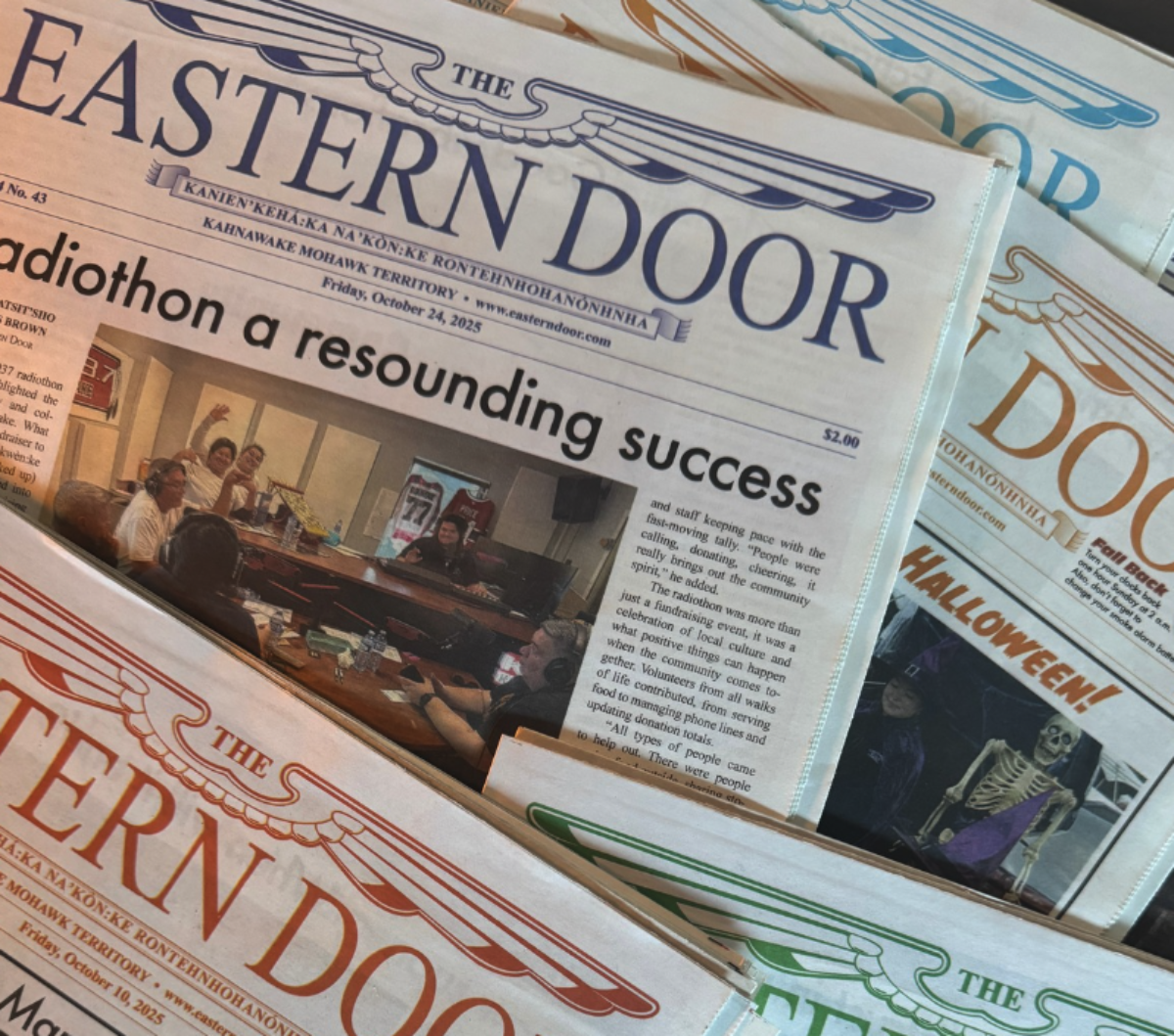
I now understand why people earn a full pension after 20 years in the military. The newspaper business is a similar grind.
I used to think that 20 years was a relatively short time to call something a career, but it has now been 23 years for myself in journalism, and 18 years of owning The Eastern Door as of July 1, and let me tell you, it’s a long haul.
That includes a volatile mix of good and bad that can reward or drive you insane – sometimes both, sometimes in the same week, even with the same people or story.
The day-to-day grind is what they never tell you about, because how could they? Whoever they are.
Experience like this cannot be simulated and cannot be bought. It certainly can’t be written about by AI. Well, it could, but you would be utterly disappointed, as we are, with how many people have become AI robots, devoid of their own thoughts online.
You must go through it on your own – learn and make plenty of mistakes along the way - and you need to go through the shit, as I always say, to become what you’re striving to be.
And that looks different for everyone, but for me it’s being able to write a column like this, chock-full of nostalgia and the ups and downs, in hopes people learn from it.
Because how can you understand what 23 years of journalism and 18 years of being at the helm of one of the most important newspapers in Canada means?
You can’t. Unless you’ve done it.
And one day I won’t be leading it anymore. That’s inevitable. I never thought I would be looking at the end so calmly, almost lovingly, knowing what’s coming, but that’s what it does to you.
It’s a heavy grind.
When I hit 20 years of owning TED, will I still be here? What impact will that have? Who will really notice? We will see.

You can write the most beautiful stories, prop up our youth in sports, celebrate our achievements in film, and cover all pertinent local and non-local political implications, and you will have the person who is pissed because their name appears in the Police Blotter - for something they did.
Or an error appeared in the mass list. Or their kid is pictured in a joyous public occasion meant to celebrate our community and they didn’t like it.
Or, worse, they will be pissed at you for reporting on their family member driving recklessly and killing someone. We didn’t drive the car, ma’am, he did. And now he should pay for it, not us.
I liken it to the military because of the similar implications; the military serves its unit and the branch itself; while we serve the community and the people directly.
But either way, sets of eyes are always watching what we do. Waiting.
So, we live our lives differently. Isolated. Tiny inner circles. Few people we trust, although tons of people trust us to tell their stories, which is vital to continue the important work we do.
Yell at a soldier and he listens to his commanding officer. Yell at us and it’s our job to talk you down. To calm things down. To hold our duty as servers of the people to the highest standard.
Sure, we could yell back, but it wouldn’t ultimately help the situation, which is simple: people want to be heard.
So, we listen, and in the end, those angry folks say thank you.
Here’s a hypothetical: If we report on a teacher who was abusing your child at school, would you be happy with it, even if no names were used?
Would you be angry because that allegedly abusive teacher is your husband or wife, brother or sister or son or daughter?
That’s where our decision-making comes in. Not all stories are fit to print, but the ones that are, need to be put out there to the community at large. And we need to have the balls to do them, even if we know some people will be pissed.



Because you have a right to know.
Journalism is in my blood, and it means, as a person, I take a backseat to it every single day.
“There’s The Eastern Door,” they will say, not “Oh, there’s Steve.”
With each story comes an impact, and, especially with social media being so powerful, you see that impact quickly. The likes, the shares, the good and bad comments - I can’t escape journalism if I tried, and if you’re doing the kind of good journalism we do, the average person cannot separate you from it.
We get it. But it ain’t easy.
As I plan for what comes after this journalism life, I adapt, I learn new things, and I pivot. Because I refuse to let a few things happen:
I refuse to let the haters win; I refuse to stand idly by and watch my family struggle; and I’m always up for a good test, a career pivot, even if it’s not in the journalism world.
Besides, running an Airbnb or a corner store or seeking out fun adventures that are not part of journalism, is what will keep me somewhat sane for whatever time I have left.
It isn’t just the people picking at stories or errors or whatever they are upset about; it’s the grind of the weekly deadline, the time away from family, the pressure that comes with running a newspaper that matters.
Make no mistake, The Eastern Door is the paper of official record for our local history, and that will never change.
Handing over those reigns, sooner rather than later, will be tough, because you don’t just sell it to the highest bidder. The history of TED, from Kenneth Deer and all the volunteers to our current staff right up to myself: that work needs to be protected. That legacy is worthy of preservation. Because, ultimately, The Eastern Door is about the community, not a group of individuals.
It must succeed because if it fails, everyone will pay that price. You may not think so, and we hope you don’t see it one day, but if it happens, it will be a tragic day, indeed.
Sign up for email updates from The Eastern Door
Real journalism costs money, so there’s that pressure of finding employment grants, of finding the right people who want to do real journalism and putting it together to make it work.
Knowing you have people who rely on feeding their kids with the money you pay them is a pressure unto itself.
Didn’t cover a certain story?
Why not?
Covered THAT story?
Why?
We produce work that everyone gets to critique, week in and week out, and there is no job quite like it.
What we do is worth protecting, supporting, promoting and fighting for.
And we thank everyone who has done so, knowing full well the importance of a vibrant, independent newspaper that puts the community before its own interests.
Check back with me when I hit 20 years, in two short ones.