Annual Justice Commission report released

Court of Kahnawake. File Photo
The Kahnawake Justice Commission’s inaugural annual report is striving to show Kahnawa’kehró:non what Kahnawake’s Justice System and its four administrative components are doing as it continues to expand.
“The community should be aware of what’s going on within its justice system, and it helps increase accountability and transparency for everyone involved,” said commissioner of justice Kevin Fleischer.
“And also, I just think it’s interesting to read.”
Inside the 12-page report are sections on each of the four components of Justice Services – the Office of the Commissioner of Justice, Court Services, Skén:nen Aonsónton, and Ionkwatahónhsate Victims Services (IVS) – giving an overview of what they are and what they have accomplished in the period covered by the report, which is April 1, 2024, to March 31, 2025.
That includes 30 courts sessions held at the Golden Age Club, 77 criminal cases created and authorized by the prosecutor, five civil marriages, five presentations by IVS to promote its services, 14 files resolved through Skén:nen Aonsónton’s efforts to provide restorative justice and alternative dispute resolution, and the approval of five Mohawk Council Executive Directives and two Records of Decision during that time.

It also highlights the challenges faced by Justice Services, particularly in terms of staffing additional justices of the peace in case the lone justice of the peace, Stephanie Cross, ever became unavailable, which would halt court sessions.
Staffing challenges are part of why this report is the first annual one, as Fleischer said it has been in the works for a few years now.
“We made it a priority to make sure that there was something out to cover the year 2024-2025, and a lot of work went into it,” said Fleischer, who added that now that this first report has been done, it will be easier in the future to have it done annually.
“I think it’ll help increase not only transparency and accountability, but in general, public confidence in our justice forms,” said Fleischer.
“It’s important for people to understand, because our justice system might impact people at some point in their lives, and it is good to be aware of what exactly is happening there, how it could impact their lives, or maybe people that they know.”



Mohawk Council of Kahnawake (MCK) chief Tonya Perron, the lead on the justice portfolio, echoed Fleischer’s thoughts on the importance of community members being informed of what Justice Services can do for them.
“It is run by our own people. It’s based upon our own policies, procedures, governance, documents, all of that is important for community members to know, that they have something to turn to in the community. They don’t have to go outside, and it’s ours, it belongs to us,” said Perron.
This report is also an important tool for the Council table, said Perron.
Council mandates the Justice Commission to oversee Justice Services, as Council is not involved directly in its affairs. As such, the report makes it easier to ensure that Justice Services is fulfilling its mandate, said Perron.
She said that the report shows that even with the challenges it faces, Justice Services has already been providing a lot for the community, and the inaugural report shows that.
Sign up for email updates from The Eastern Door
“I can’t underscore enough the significance and importance of that report, considering the work that it shows has been carried out,” said Perron.
As Justice Services looks to continue to expand in 2026 – with the opening of the Community Justice Center as a permanent place for court and Skén:nen Aonsónton sessions to be held, and the continued implementation of the Justice Act – Perron said there is still a lot to do, but things are on the right track.
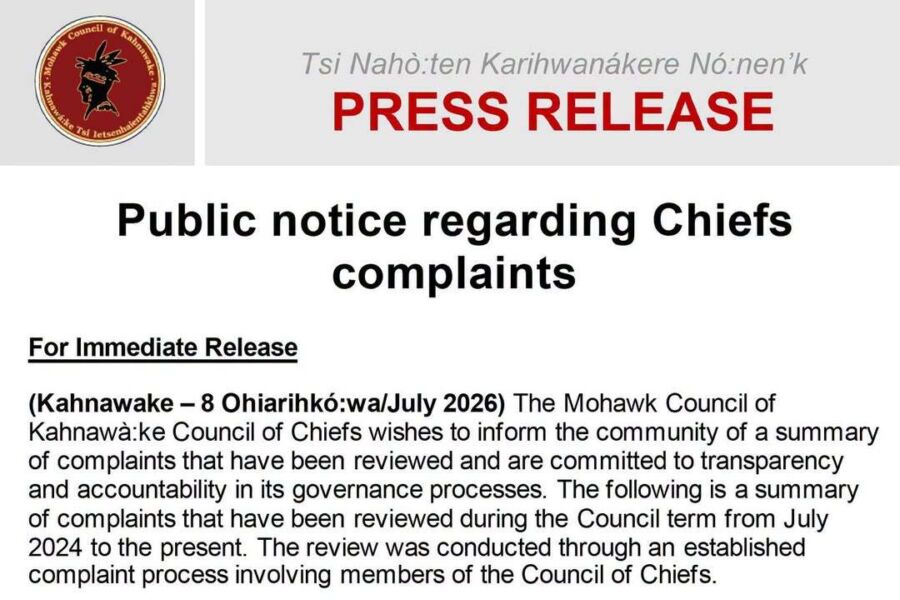
The full report is available on the MCK’s website.