Report details services for sterilization survivors
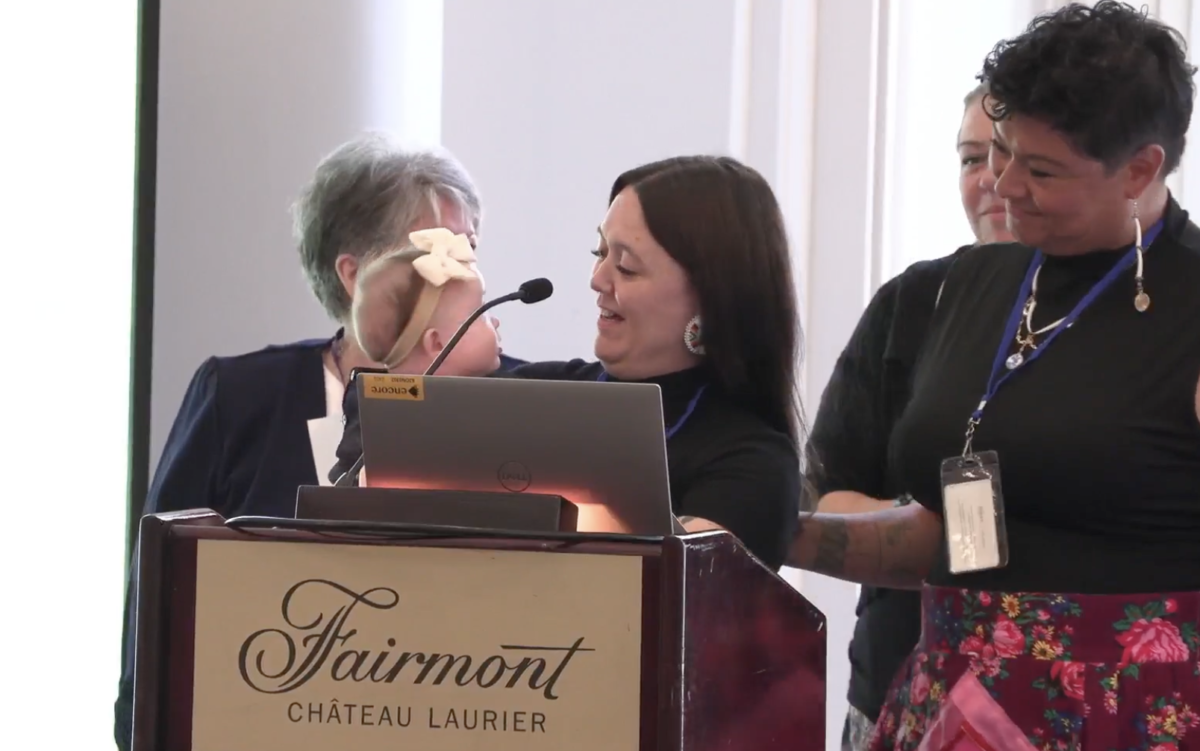
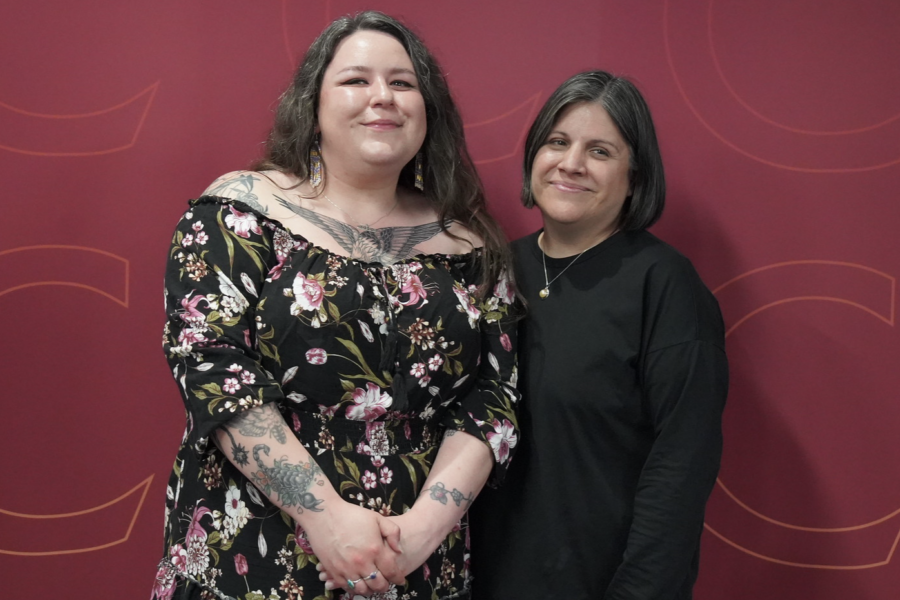
Katy Bear, a survivor of coerced sterilization, addressed the media at a press conference yesterday with her baby daughter, who was conceived after she underwent a tubal ligation reversal. She co-developed a new report on Assisted Reproductive Services for survivors. Courtesy Survivors Circle for Reproductive Justice
Since a damning report exposed evidence of ongoing practices of obstetric violence and imposed sterilization of First Nations and Inuit women in Quebec back in 2022, more research has brought to light further, wide-reaching implications, with a new report this week revealing the financial burden faced by victims who wish to restore their fertility.
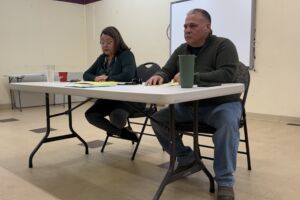
The report, titled “Assisted Reproductive Services to Restore Fertility for Forcibly Sterilized Indigenous Survivors: Options and Costs” was produced by the University of Ottawa Centre for Health Law, Policy and Ethics and the Survivors Circle for Reproductive Justice, and was officially shared at a press conference in Ottawa yesterday, where representatives from both organizations were joined by senator Yvonne Boyer, who has been vocal about the issue in the Canadian senate.
The report includes testimony from survivor Katy Bear, who is Algonquin. Bear co-developed the report and shared her experience with coerced sterilization and her journey of seeking a tubal ligation reversal, with the goal of creating a guide for other survivors looking for solutions to their imposed sterilizations.
She attended the press conference with her baby daughter, Sage, who was successfully conceived after that procedure.
“This is part of a concrete step for Indigenous women taking back their bloodline and their hereditary rights to have children once again. Although a lot of work is being done, one thing that stood out to me is the lack of culturally informed care,” Bear said.
“But with all the hard work that the Survivors Circle is doing, and senator Boyer, and everyone, I’m very hopeful, and I look forward to seeing what comes from it.”

Four assisted reproductive services are outlined in the report as viable options for Indigenous women who have been subject to forced sterilization: tubal ligation reversal, in vitro fertilization (IVF), surrogacy, and egg donation.
Each of those options can incur immense financial costs, the report found, with tubal ligation reversal costing up to $10,000 and IVF ranging from around $9,000 to nearly $33,000 per cycle - many families require multiple cycles to successfully conceive. Surrogacy and egg donation can also be extremely expensive, as well as introducing additional legal expenses that can induce further trauma for survivors. The Survivors Circle has a Healing Support Fund which includes funding of up to $30,000 for survivors, an identified need within the report.
Vanessa Grubin, a representative of the research team from the University of Ottawa who worked on the report, said that it’s crucial more action be taken to address the impacts of obstetric violence beyond making assisted reproductive services more readily available.
“Access to those services alone is not enough. Addressing the trauma of forced sterilization requires culturally safe and appropriate care. Health care providers must acknowledge traditional healing practices, incorporate Indigenous languages and cultural perspectives, and provide trauma-informed support,” she said.
That kind of support includes the involvement of elders and knowledge keepers, integration of community support, and the offering of sincere apologies to recognize the harms that have been done.
“Ensuring that Indigenous survivors can reclaim their reproductive autonomy is not just about health care access, it’s really a crucial step towards reconciliation and justice,” she said.

Claudette Dumont Smith, co-chair of the Survivors Circle, emphasized the ongoing nature of imposed sterilization – the 2022 report, which was published by the Universite du Quebec en Abitibi-Temiscamingue (UQAT), Canada Research Chairs, and the First Nations of Quebec and Labrador Health and Social Services Commission (FNQLHSSC), first brought to light the testimonies of 35 people who had experienced or witnessed obstetric violence, many in recent years.
In 2023, The Eastern Door also spoke with a number of women from Kahnawake and Kanesatake who have reported traumatic experiences and birth incidents at nearby hospitals.
“We know that there are many more women that need to be reached, and we all need to work together to stop the genocide that continues against Indigenous people, and particular against Indigenous women, who suffer the most,” Dumont Smith said.
Senator Boyer, who is Metis, discussed her efforts to protect women from forced sterilization at yesterday’s press conference. Boyer has been a major advocate for the progression of Bill S-250, which would amend the Criminal Code to make forced and coerced sterilization punishable by up to 14 years in prison.
The bill is currently awaiting a first reading in the House of Commons, having already passed through the Senate.
“It was your voices that inspired this to ever happen, and it’s your voices that are keeping it going and are going to see it right through the House of Commons and into Royal Assent to become law in Canada,” Boyer said. “It will be one more tool that we have in our toolbox to stop this from happening ever again.”
Sign up for email updates from The Eastern Door
The full report is publicly available to view online.