Rail maintenance prompts outcry
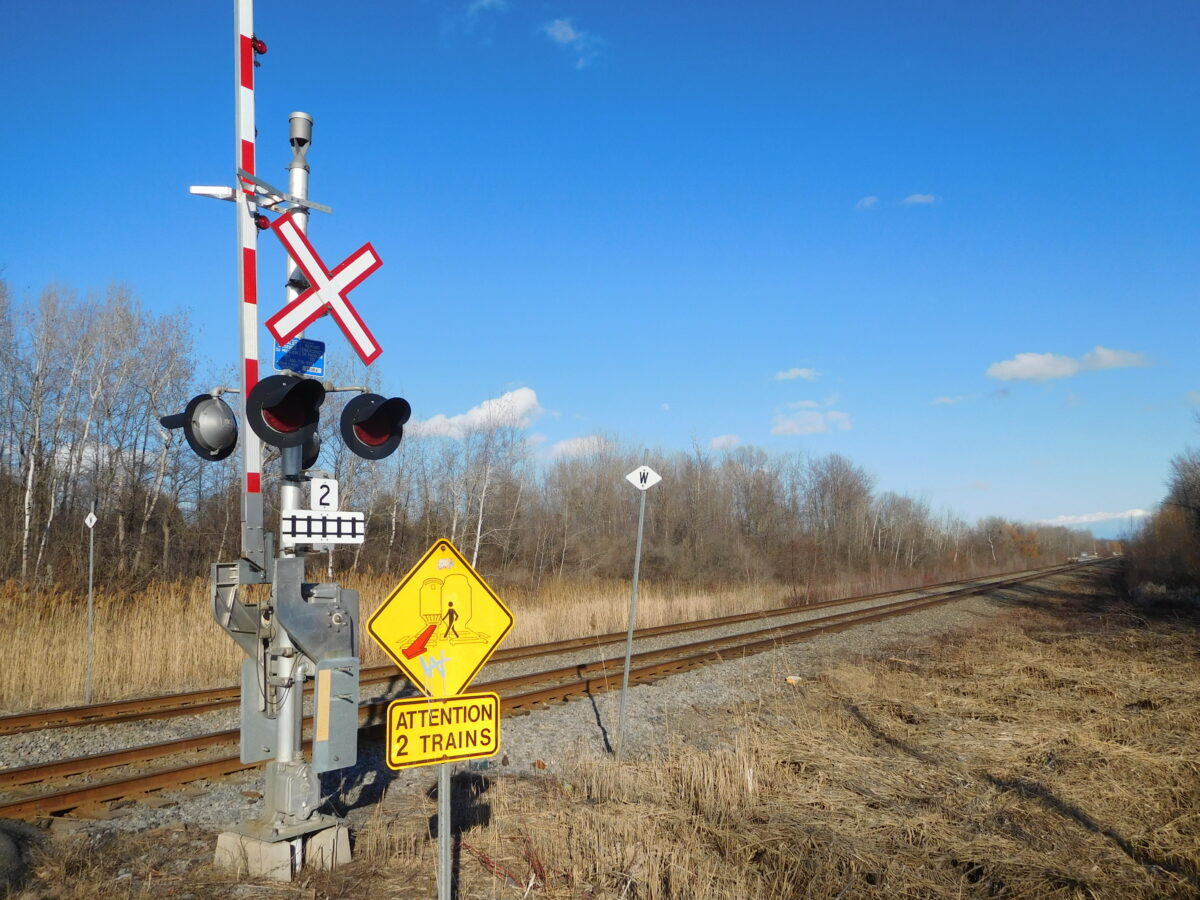
The rail line is known for using glyphosate-based herbicides to control the growth of plants around the tracks. Miriam Lafontaine The Eastern Door
The council table will no longer sit idly as the Canadian Pacific Kansas City (CPKC) rail line sprays glyphosate in the territory. The rail company has a history of spraying the chemical herbicide alongside the tracks that run through Kahnawake, but it won’t be permitted to continue any longer, Mohawk Council of Kahnawake (MCK) chief Jeremiah Johnson said.
“This year when we met with them, I said, ‘Look, we have to find alternatives now. The spraying of chemicals is not going to happen anymore in our territory,” said Johnson, a Council chief on the environment file.
“We’ve had enough problems in the territory with pollution, oil spills, and chemicals in the ground for so many years now. We’re done.”
Glyphosate is among several chemical herbicides the rail line routinely uses, and one that Johnson particularly opposes. While Health Canada approves its use in the country, the International Agency for Research on Cancer (IARC) has raised alarm over it, calling it a “probable carcinogen.”

The rail line has long sprayed chemical herbicides around the tracks to prevent plant overgrowth, something it does early each summer in the territory. Rail lines are required by law to do so, to reduce the risk of weeds hindering the operation of signals and switches and causing malfunctions. Overgrowth can also increase the risk of track fires and impede workers from carrying out inspections, according to CPKC.
Johnson said if there’s a need to clear weeds, some other kind of alternative must be used. He stands against the use of any chemical herbicide, putting him at odds with the rail line, which maintains their use is unavoidable.
“Herbicides are an important tool in railway vegetation management. This is especially true in areas where non-chemical methods cannot be employed or are not effective,” the rail line wrote in its 2025 Integrated Vegetation Management Plan.
Johnson and other Council chiefs like Ryan Montour demanded a resolution be found while meeting virtually with three representatives from the rail line on March 19.






“They’re concerned with rail safety. Rail safety is what they kept saying, ‘Rail safety, rail safety, rail safety.’ I said, ‘I’m concerned with community safety,’” Johnson said.
“There are many alternative methods for the removal of vegetation. The simple fact is that it’s cheap. It’s a lot cheaper and efficient, and easier, to go and spray some chemicals on the tracks and be done with it, than to actually go and find one of those alternatives, and that’s what it boils down to.”
The Eastern Door reached out to the rail line regarding whether it would consider a non-chemical alternative to managing vegetation around its tracks, but the company declined to comment.
“They don’t have a choice. They will not be spraying any more poisons on our territory,” said Johnson, who prior to becoming a Council chief would protest alongside the tracks whenever workers were scheduled to spray.
Sign up for email updates from The Eastern Door
Workers for the rail line will still be welcome to come and carry out their usual maintenance on the tracks come this June, Johnson said, but spraying is out the question.
“To hell with rail safety,” he said. “They could take those tracks up if they want, take them out of here.”