Collaboration agreement signed
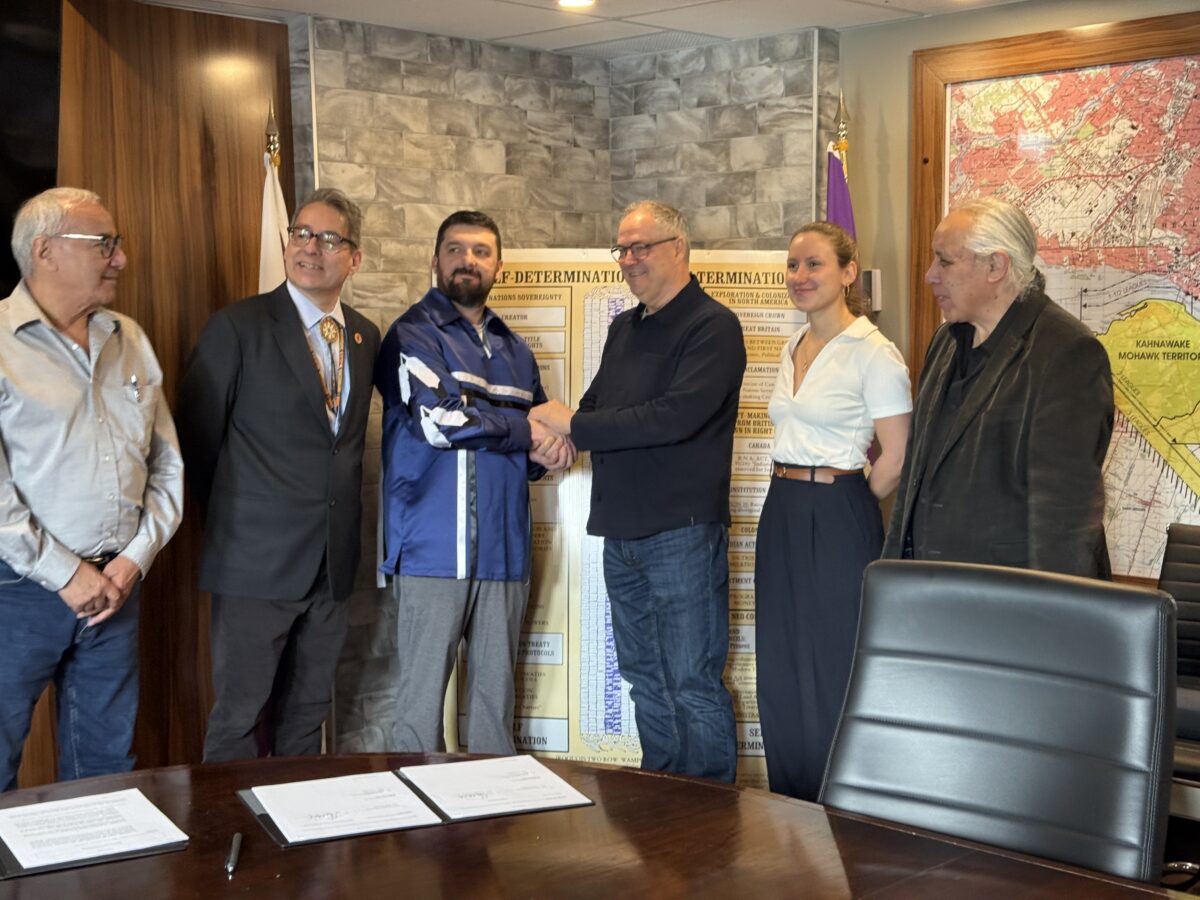
The collaboration agreement between the MCK and Abenaki Councils has been billed as historic. Left to right: MCK technician Dennis Diabo, MCK chief David Diabo, MCK grand chief Cody Diabo, Abenaki Council of Wôlinak councillor Stéphane Landry, W8banaki strategic advisor Sandrine Royer, and MCK chief Ross Montour. Marcus Bankuti The Eastern Door
A new memorandum of understanding between the Mohawk Council of Kahnawake (MCK) and the Abenaki Councils of Odanak and Wôlinak is being billed as a historic agreement that will create economic opportunities and strengthen opposition to governmental interference.
The document was signed on Tuesday by MCK grand chief Cody Diabo and Abenaki Council of Wôlinak councillor Stéphane Landry at a press conference hosted by the MCK on Tuesday. W8banaki strategic advisor Sandrine Royer was also present.
While the memorandum of understanding is expected to pave the way for economic development initiatives between the Abenaki communities and the Mohawks of Kahnawake, the representatives in attendance this week were emphatic about the importance of collaboration in defending inherent rights.
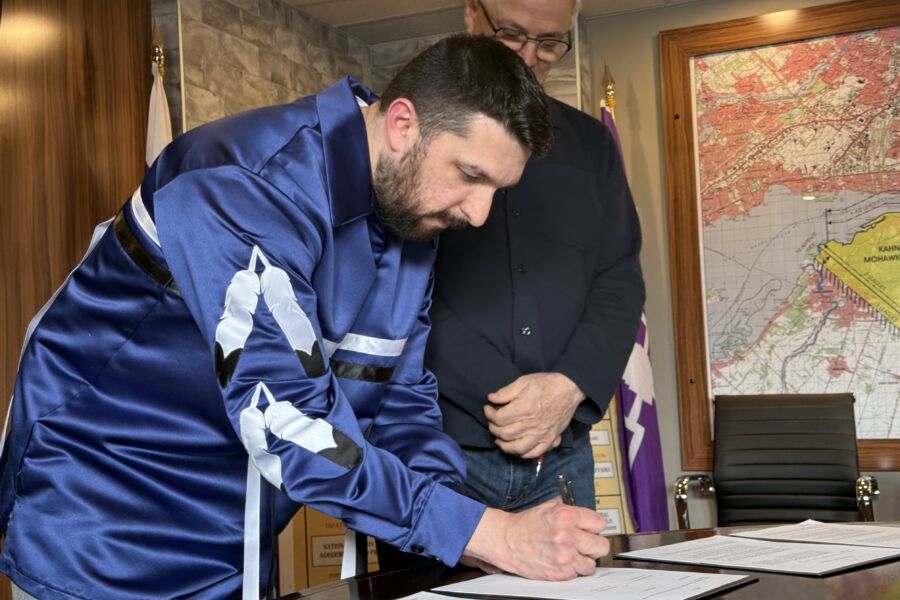
“I think what scares Canada the most is when First Nations actually start working together instead of playing part of their divide and conquer,” said MCK grand chief Cody Diabo. “This is one step in terms of that, and glad to be doing it.”
This sentiment was echoed by Landry.

“If you have the same problem on your side and on my side, let’s make a deal. Let’s make a meeting with Canada and say, ‘No more. It’s us who will decide what we’re going to do with our land, not you.’”
It was a theme Landry returned to often, such as relating how his community decided to oust Quebec when it comes to matters of harvesting.
“We are able to manage our own decisions regarding fishing and hunting, for example,” he said. “That’s why we decided to say the government of Quebec, get out. No more. It’s our permit.”
He said now Kahnawake and the Abenaki will have the opportunity to share expertise and experiences.
On the economic side, Landry pointed out that Kahnawake, Odanak, and Wôlinak are all located in the south of Quebec, in the midst of all kinds of business activities around Montreal and Quebec City.
This creates opportunities, he said. He named energy as one important sector, with his community and Kahnawake both engaged in projects and looking for new ventures.

Real estate could be another example, said Diabo.
Diabo also emphasized that agreements between First Nations create a stronger front for negotiations with Canada.
“We’re in it together and push for the strongest deal, the best deal for our communities,” he said. “No more ‘we’ll give you so much per year and just be happy with that.’ We have needs that need to be met, communities that need services.”
After all, he said, prime minister Mark Carney’s economic strategy depends on resources that belong to First Nations.
“There is no Canada without First Nations,” Diabo said. “This is our land and our resources first.”
The signatories will also be able to share information relating to consultation.
Sign up for email updates from The Eastern Door
“There might be development projects that are happening that we’re not included in economically, but it could affect our shared territories,” said Diabo.
MCK chief Ryan Montour said that within five minutes of being in the room together, Landry shared a connection that could be of value. “These are the small things we can help them with and they can help us with,” said Montour.
“The more alliances we have, the stronger we are.
Abenaki Council of Odanak chief Richard O’Bomsawin missed the event but is expected to sign the agreement soon.
Marcus Bankuti, Local Journalism Initiative Reporter