No charges in pandemic response probe
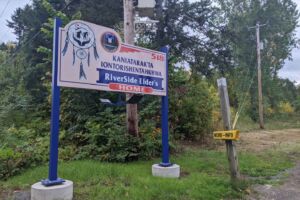
File photo
Meeting with complainants this week, prosecutors revealed there will be no charges in a multiyear investigation into Kanesatake’s pandemic response team, the Emergency Response Unit (ERU), following allegations of improper financial practices.
“I think it’s a vindication for the efforts of the people involved,” said Serge Otsi Simon, who was Mohawk Council of Kanesatake (MCK) grand chief at the time that the ERU managed millions of dollars of pandemic relief funds at the height of the COVID-19 pandemic.
He was one of eight people who signed a vigorous response following the presentation of the executive summary of a forensic audit that alleged sloppy accounting and pay scales that many found shocking, making waves in the community.
“They may not like it, but there are many people here who are still alive thanks to what the ERU did, despite the high compensation,” said Simon, noting that at least some of this remuneration was due to overtime rules.
Simon, who was not part of the ERU but participated in its oversight as grand chief, was among those who met with prosecutors because he is a representative of the MCK as a caretaker chief.
The prosecutor’s office confirmed to The Eastern Door that charges will not be laid.
“The role of the Director of Criminal and Penal Prosecutions (DPCP) was limited to determining, after a thorough and objective analysis of the evidence obtained from the police, whether there was a reasonable prospect of conviction for one or more criminal offences,” said Lucas Bastien, a spokesperson for the DPCP.
“It should be noted that the DPCP’s work did not consist of analyzing the situation reported by the complainants from a legal perspective other than that of criminal law,” he added.

The decision to decline to pursue the file after months of analysis - it was transmitted to the prosecutor’s office this spring after a multiyear investigation by the Surete du Quebec (SQ) - appears to mark the end of a chapter that has roiled the community for years, even as many may find the conclusion unsatisfying.
“The bar is set very high for proving criminal intent, and it’s set very high for a reason,” said John Harding, one of the community members who formed a group in 2020 in response to rumours about the ERU’s compensation. “In this case it’s still easy to see that certain individuals in power helped themselves and each other in a morally reprehensible manner to exorbitant amounts of funds meant for community relief.”
He suggested that imprecise spending requirements for pandemic relief funding played a role in the situation.
“That doesn’t mean that an immoral and selfish act wasn’t committed,” he said. “At the end of the day, a handful of people took advantage and were bathing in cash.”
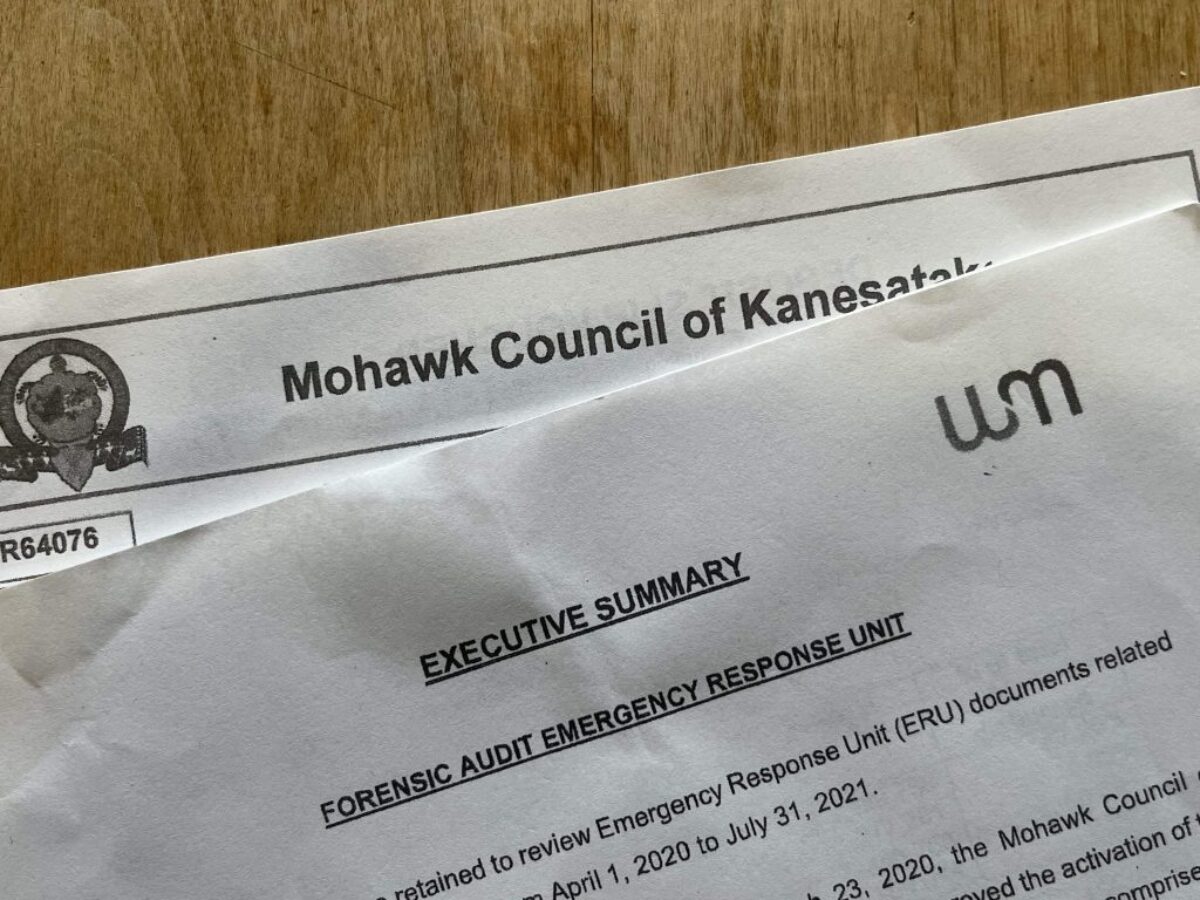
The executive summary of a forensic audit was presented at a community meeting in July 2022 by the KHC board and Victor Bonspille, MCK grand chief at the time.
That audit covered April 2020 to July 2021, a period during which the ERU managed $3.9 million. Especially galling for some community members was the idea of compensation combining ERU rates and top-ups to existing MCK or KHC salaries or fees.
Nearly $600,000 was disbursed to a single individual, ERU incident commander and former MCK vice-chief Patricia Meilleur, over 16 months. Longtime KHC executive director Joyce Bonspiel-Nelson’s compensation totalled $375,152 during that period. She could not be reached for this article but said previously that pay rates were in line with other health organizations at the time. Robert Bonspiel, whose compensation totalled $285,000, told The Eastern Door previously that he was working as many as 80-90 hours a week.
ERU members also complained they were not given access to the full audit, nor consulted during it.



Other allegations in the audit summary included ERU members paying out-of-pocket and then being reimbursed for expenses well in excess of a $5,000 limit, over which a vote would be required under MCK policy. Bonspiel-Nelson told The Eastern Door in August 2022 that the ERU fell under KHC’s policies and procedures, not MCK’s.
Bonspille went on to frequently invoke the police investigation throughout a remarkably fractious term of Council, often headlining meetings he called with promises of updates. He did not reply to a request for comment.
Simon felt numb this week as prosecutors explained that thresholds for prosecution had not been met.
“Everything I’ve been saying for years, finally someone in authority, someone who looked at everything, all the evidence, comes out and vindicates what I’ve been saying: there was no criminal activity,” he said.
“Everybody focuses on the high salaries, and you know what, I may not agree with it either, but the fact is, what price do you put on a member’s life?” he said.
“I always said no criminal charges are going to come out of this because I’m confident they followed every procedure.”
KHC executive director Teiawenhniseráhte Tomlinson, hired following the termination of Bonspiel-Nelson, was part of the group that had demanded answers on the ERU’s activities. He said he is not surprised that no criminal charges were filed in the case, however, citing the high bar.
According to Tomlinson, prosecutors pointed to complex funding arrangements with the federal government during an unprecedented period, leaving communities with a high degree of discretion and a lack of clear standards. “Without that clear standard, it is very difficult to establish the clear and marked deviation,” he said.
Sign up for email updates from The Eastern Door
“In the matter at hand, it wasn’t about whether the conduct was ethical or morally correct. It was whether it was criminal.”
Once the matter was in the SQ’s hands, he turned his attention to restoring and improving operations at KHC, he said.
“It’s hard to say what will happen in the community. Our people tend to hold onto so much. We still hear political stories and conflicts dating back 40-plus years. I feel I could speak endlessly about these things, but we need to learn and accept. It’s in some of our oldest teachings,” he said.
“I appreciate how this can bring high emotions from different perspectives. I hope we can keep moving forward.”
While the complainants were given a rationale for the prosecutor’s decision, the DPCP declined to publicly provide specifics.
Marcus Bankuti, Local Journalism Initiative Reporter