Locals lead social work course
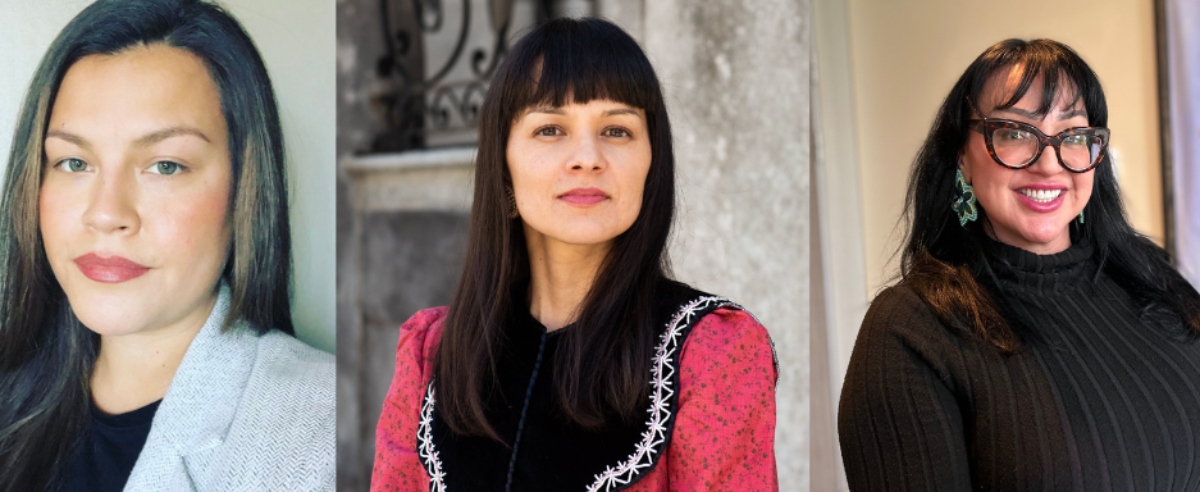
For the first time, undergraduate students in McGill University’s social work program will be able to learn from not just one but three of the brightest minds in Kahnawake, who have each signed on to be course lecturers for the winter semester at the university.
“We’re so excited,” said Loanna Zacharie, a counsellor at Kahnawake Shakotiia’takehnhas Community Services (KSCS) who will be one of the three lecturers for “First Peoples and Social Work,” a mandatory class for all third-year social work students at McGill. “This is monumental.”
Zacharie had taken a leap of faith when she taught the class for the first time last year alongside fellow Kahnawa’kehró:non Thomasina Phillips, who will also be teaching a section this year. Despite having no prior teaching experience, Zacharie excelled and was invited back as a lecturer this year, as well as Taylor Goodleaf, a current McGill Law student and social worker who will be teaching for the first time.
The three Kahnawa’kehró:non will lead separate sections of the class, helping to train the next generation of social workers at McGill with key information about the policies that affect Indigenous people across Turtle Island.
“I feel honoured to be teaching the course to begin with, but to be working alongside two other Kanien’kehá:ka women will enrich this course and the overall experience for all of us,” said Phillips.

Zacharie and Phillips are both graduates of McGill’s social work master’s program, and Goodleaf has worked at various shelters in Montreal as well as in youth protection at KSCS, having received her master’s degree in social work from the University of Toronto. Phillips is also particularly well acquainted with the university’s daily life, serving as the Indigenous Case Manager at McGill’s health centre and as the university’s associate director of Indigenous Student Success.
“Taylor and Loanna bring valuable areas of knowledge and experience and their own point of view as individuals, and I have a couple of years of experience and understand the way the university works, so we’re fortunate and well positioned,” Phillips said. “We’re already collaborating on content, and there is built-in mutual support.”
Third-year social work students will be split into three sections, likely of around 20-30 students, which will allow for more intimate learning environments.
Zacharie said that when she taught the course last year, working in these small groups meant that students could more productively engage with materials - something especially important to ensure, since the vast majority of students in the program are non-Indigenous.
“I really want them to leave feeling confident that they understand, rather than just spitting out a bunch of stuff on paper and making it look good with references, but not really getting it and feeling it,” Zacharie said. “I feel like that would be a disservice to my history. I want these students to go and be social workers having really connected as human beings with the human experiences of Indigenous people.”
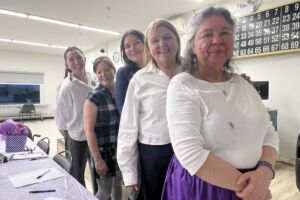

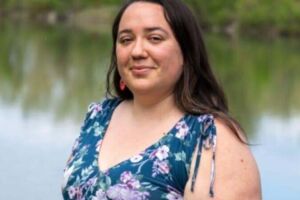
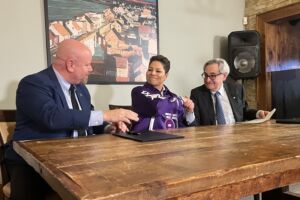

Students will study modules that cover areas like the Indian Act, residential schools, and Indigenous governance and self-determination, and guest speakers will be visiting the course to share additional information, ensuring that students learn from those who have experienced the realities being taught.
“We want to bring in Metis perspectives and Inuit perspectives, because we’re not experts on that,” Goodleaf said. “We’re acknowledging that we’re situating ourselves here in Kanien’kehá:ka territory and this is where we speak from, but we’re making sure we don’t exclude other voices in this course.”
Students will be asked to reflect critically on their own positionality and the role social work has played in relation to colonialism and reconciliation, and will be tasked with translating that understanding into an actionable plan that they will match to one of Canada’s 94 Calls to Action outlined by the Truth and Reconciliation Commission.
Goodleaf said it’s vital students be guided through these processes by Indigenous lecturers, adding that it’s been a special process for all three women to work together on the curriculum.
“I never really thought it would be an option. It just seems so historical that all of this is happening, and I’ve advocated throughout all my educational career that these courses need to be taught by Indigenous people, because otherwise we’re just perpetuating different biases, and you’re not getting the full story,” she said.
Sign up for email updates from The Eastern Door
“Usually, we’re always taught from the Western perspective, and we’re really trying to flip that.”
Goodleaf, Phillips, and Zacharie will welcome students to their classrooms starting next week.
This article was originally published in print on January 3 in issue 34.01 of The Eastern Door.