Kidney Walk coming to Kahnawake
The organizers of last year’s Chateauguay Kidney Walk might have chosen a resident of that city to be the face of their event, but instead they looked to Kahnawake, where Angus “Nias” Bordeau has become a leading advocate for locals suffering from kidney disease.
Bordeau may live here in town, but he is no stranger at Chateauguay’s Louise Auger Hemodialysis Center, where he spends four hours three times a week receiving dialysis. In the words of Mohawk Council of Kahnawake (MCK) chief Arnold Boyer, who once accepted an invitation to accompany Bordeau to treatment, the longtime patient is the centre’s go-to support pillar and class clown rolled into one.
Yet Bordeau is familiar not only with the community and solidarity shared with other patients, but the fatigue, endless winters, and the strain on the spirit when even clearing the car to go to dialysis becomes too much to bear.
“It’s finally being talked about. Before, nobody was saying anything about it,” said Bordeau of the realities of living with kidney disease.
Now Bordeau will get a chance to serve as ambassador of the inaugural Kahnawake Kidney Walk, which will take place on June 6 and raise money for the Kidney Foundation of Canada.
“We couldn’t have asked for a better representative to help promote this important challenge that many of our community members face every day,” said Derek Montour, executive director of Kahnawà:ke Shakotiia’takéhnhas Community Services (KSCS).
The longtime patient has become an invaluable resource for those suffering from the condition in the community - he estimates that Kahnawake has around 15 patients who depend on dialysis to stay alive - so, while he continues to advocate for the creation of a support group and a local dialysis clinic, he sees the move to bring a kidney walk to Kahnawake as a positive development.
“I’m proud we’re going to have our own kidney walk,” said Bordeau.

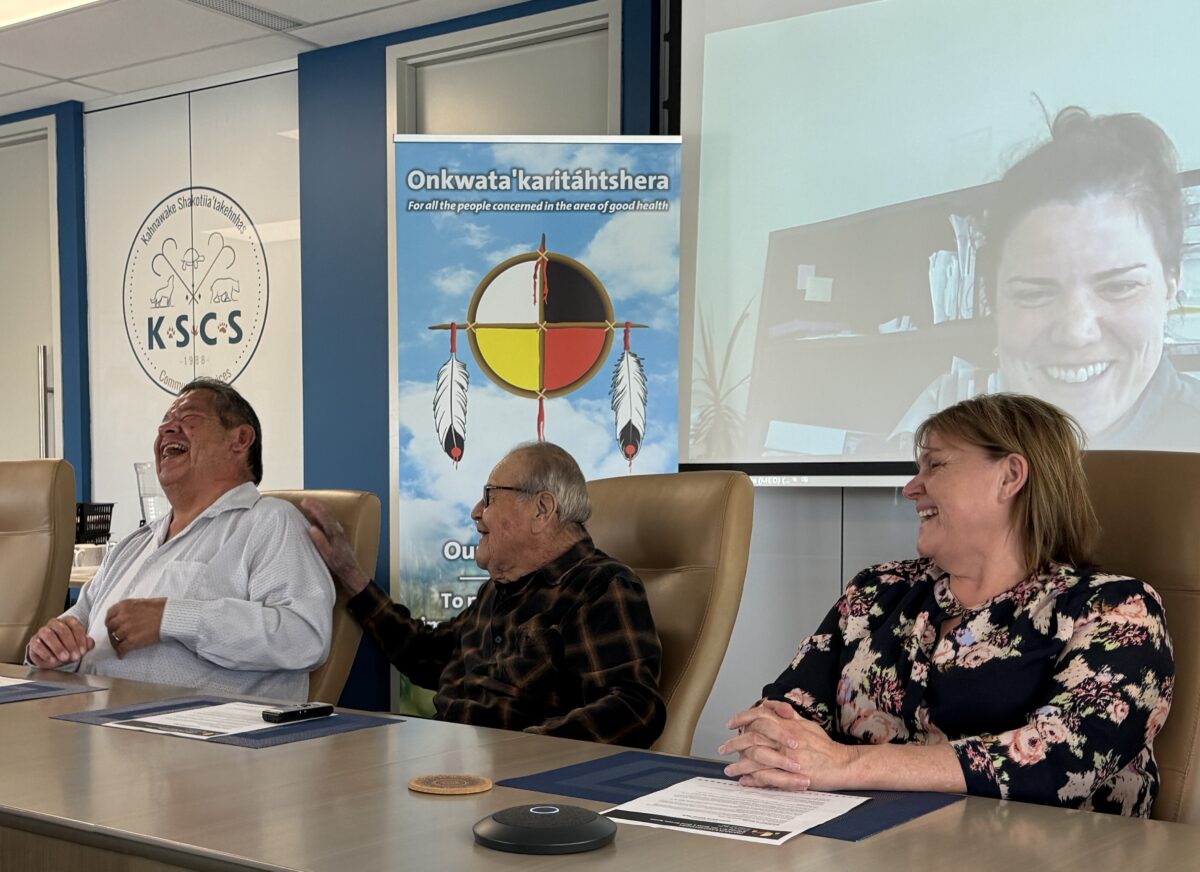
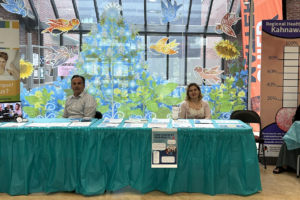
The news was announced on Tuesday by Onkwata’karitáhtshera, Kahnawake’s health and social services agency. Representatives from each of its constituent organizations - KSCS, Kateri Memorial Hospital Centre (KMHC), Kahnawake Fire Brigade (KFB), and the MCK - were on hand for the announcement, along with Bordeau, kidney specialist Dr. Dominique Dupuis, and the Kidney Foundation.
The decision to launch a kidney walk in Kahnawake reflects the reality that Onkwehón:we populations are at a greater risk of kidney disease.
“Kidney disease affects certain populations and ethnic groups, including Indigenous communities, which have higher rates due to a combination of factors such as increased prevalence of diabetes and hypertension,” said Hélène Boisvert, programs director at the Kidney Foundation.
According to Diabetes Canada, over 17 percent of Indigenous people living on reserve across the country have diabetes.
Boisvert said the foundation is working to lobby Canada to recognize kidney disease as a chronic condition in Canada and pressing countrywide public health issue.
“The consequences of the disease extend far beyond kidney function. It affects physical and mental health, social well-being, and financial stability,” she said.
The foundation offers a range of services, she said, such as financial assistance, peer support, scholarships, summer camps, and more.
“We know the statistics are higher because of being Indigenous,” said KMHC executive director Valerie Diabo, noting high-blood pressure and diabetes puts Onkwehón:we at higher risk of kidney disease.



She said the hospital has been exploring the possibility of bringing dialysis treatment to Kahnawake. While this is not currently a reality, community members can now benefit from consultations related to kidney disease at KMHC, with referrals to local specialists, such as nutritionists, and an emphasis on prevention.
The KMHC is also in communication with the Chateauguay clinic, which contacted the hospital to see if any volunteers from Kahnawake would be open to keeping patients company during dialysis to help them stay occupied and feel closer to home.
“This walk is really about promoting and giving the education that our community needs on chronic kidney disease,” said Diabo. The Kidney Foundation offers a range of services from which community members could benefit, she added.
Boyer, who is the portfolio chief for health, has been in frequent contact with Bordeau about the need to expand services for those suffering from kidney disease.
The issue is personal for Boyer, whose mother died from chronic kidney disease.
“After her passing, I wanted to reach out to the Kidney Foundation to see what could be available for community members with chronic kidney disease,” he said.
“This was strengthened when Nias came to see me before the election to say we need something in the community here for our dialysis treatment.”
While this may come in the future, he said, he believes there is a need to raise awareness and get people talking about an issue that community members are often quiet about.
Sign up for email updates from The Eastern Door
“Some people don’t want to talk about this. They close up,” Boyer said. He noted this could be especially true with elders who are reluctant to burden their children with talk about health issues.
The MCK, which participated in last year’s Chateauguay walk, is a sponsor of the Kahnawake Kidney Walk, with a donation of $3,000. The goal for the Kahnawake Kidney Walk is to raise $20,000 for the Kidney Foundation.
The 5KM Kahnawake Kidney Walk will take place at Karonhianóhnha School from 10 a.m. to noon on June 6. Kahnawa’kehró:non seeking more information or who want to register for the walk can contact Sarah Gaudio at 450-632-6880 ext. 36019.
Marcus Bankuti, Local Journalism Initiative Reporter