Kanehsatake marks 35th anniversary of Siege
Marcus Bankuti The Eastern Door
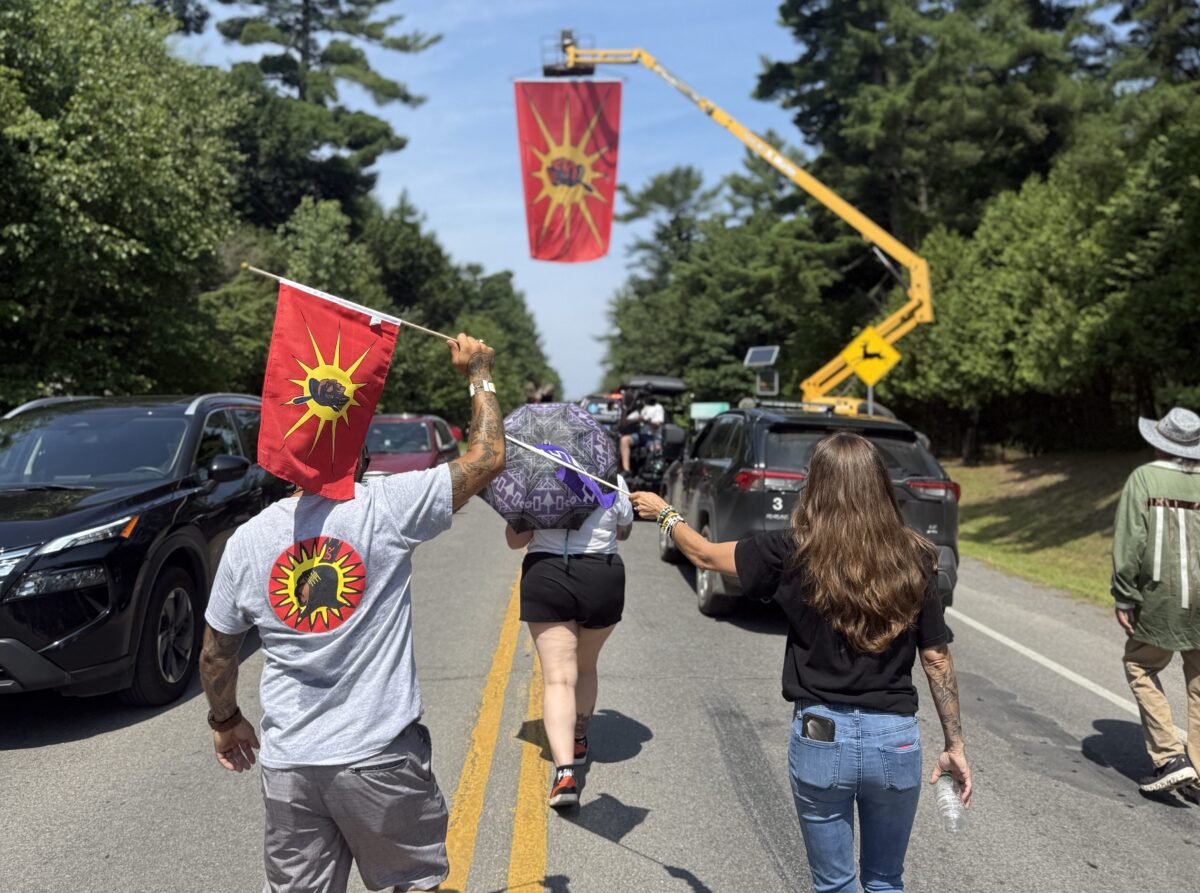
Just days before turning 80, John Cree was one of the Kanehsata’kehró:non who marched through the shady Pines and the sweltering heat of Oka streets to commemorate the Siege of Kanehsatake.
For him, it’s about relighting the fire that was lit in 1990. “It’s the fire of defiance, that this is our land, not their land. It’s our land. We have to reassert that and let them know that we didn’t go to bed and fall asleep,” he said. “We still remember what they did. We’re trying to teach our young generation what it means to stand up and say no.”
By walking, he hopes to set an example to younger Kanehsata’kehró:non that if a man of his age can do it, so can they.
“I think I’m at the edge of the road, but as long as I can walk and my mouth can flip and flap and make all kinds of noises, I’ll still do it,” he said.
Cree was just one of about 50 community members who turned out on July 11 to remember what took place in 1990 and to demonstrate that the Kanien’kehá:ka of Kanehsatake are still taking a stand for their territory.

Marcus Bankuti The Eastern Door
“I wanted to be here because myself and a few of my friends, we were the original 11 women up in the front,” said Shirley Bonspille, one of the organizers of the march. “We took the front lines that day, and we just wanted to come together and remember why we were there, what we were standing up for, and to let people know that we are still here and we are still fighting for our lands.”

The march began at the lacrosse box at 10 a.m., moving through the Pines, down residential streets, and stopping at l’Annonciation and Highway 344 before going up the hill back to the lacrosse box.
“It’s all about remembering that day and what happened to us that day. Some of it I can’t remember still, like a blackout. I have good memories, and I have bad memories,” she said.
“We all came together as one and we fought together as one to let everybody know that Indigenous Peoples are still here, and we’re still fighting, for 500 years or more, for our lands.”
Cree remembers 1990 as an experience that fortified his already strong convictions about what it means to be Onkwehón:we.
“I believed in our rights and our culture and who we are, but it even strengthened me that I needed to try to have the young ones understand how important it is, and be proud,” he said.
“You can work in white society, you can speak their language - I speak three languages. You can work there, but don’t ever give up who you are as a Kanien’kehá:ka person. Follow your ways. That’s the only way you’re going to find yourself, the pride that you’re looking for. It’s not in the churches; it’s in your custom, the language, everything. That’s where it is.”
Marcus Bankuti The Eastern Door

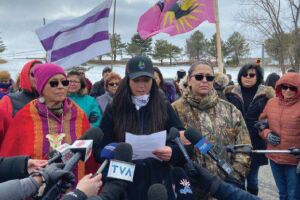
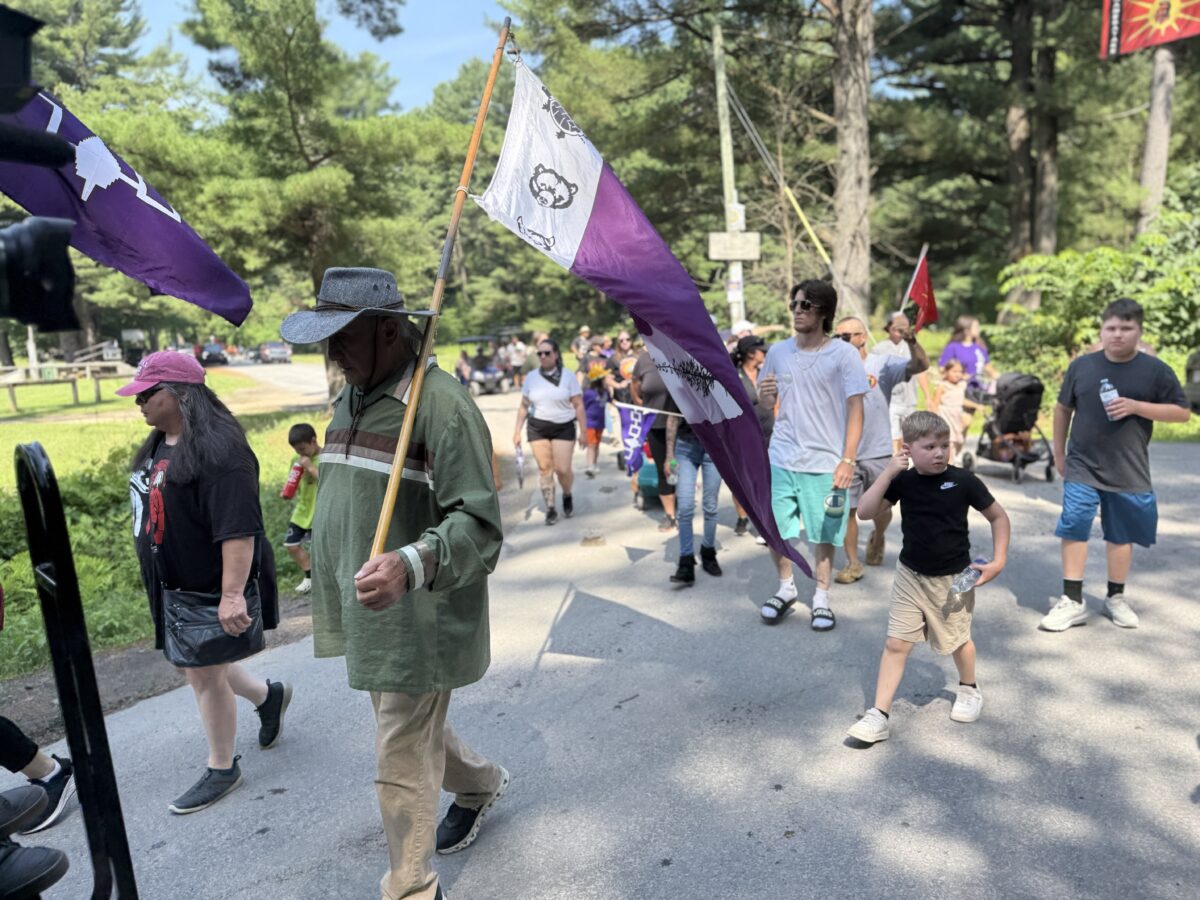
While many of the marchers were too young to have witnessed the events of 1990, they expressed a desire to carry forward a legacy they grew up with at home, in many cases passing this legacy on to the next generation, with several young children being pushed in strollers or pulled in wagons.
“I remember taking these walks with my parents when I was a young kid, so I’m trying to teach my kids about the history and why it’s important to remember the day and what happened,” said Kimberly Simon.
“I think it’s really important because we’ll probably hear less and less about it as time goes on. It’s important to teach them the history of their community and what happened and how they’re lucky to still have this land today to enjoy,” she added.
“It feels good because we’re not usually unified on many things, so it’s nice to see everybody just come together for something important.”
Kahontóktha Beauvais said that even though the summer of 1990 was five years before she was born, she is keenly aware of the significance of the events, not least because the Oka Golf Club had threatened to desecrate the cemetery where Kanehsatake’s ancestors are buried, including many members of her own family.
“It was very traumatic for our people, but we’re still here. We’re still letting them know that they can’t just take what’s ours and get away with it,” said Beauvais, who spoke of her appreciation for being able to march with her fellow community members.
“This walk is healing, it’s healing for me,” she said. “It’s nice to see everybody here. We’re all supporting each other, supporting those who’ve passed on that fought for this land for us and our future generations. I’m very proud to walk, proud that my parents, my cousins, my uncle fought in the Oka Crisis, and I’m glad that he did, because if you didn’t then you wouldn’t have that.”
Sign up for email updates from The Eastern Door
For Cree, seeing Kanehsata’kehró:non across generations march together for this commemoration is something he felt in his heart as he walked.
“It makes me feel proud that somewhere along the way, they heard some of the words we spoke, not just me, but other elders,” he said.
Marcus Bankuti, Local Journalism Initiative Reporter