Funds to fight crime not for Kanesatake
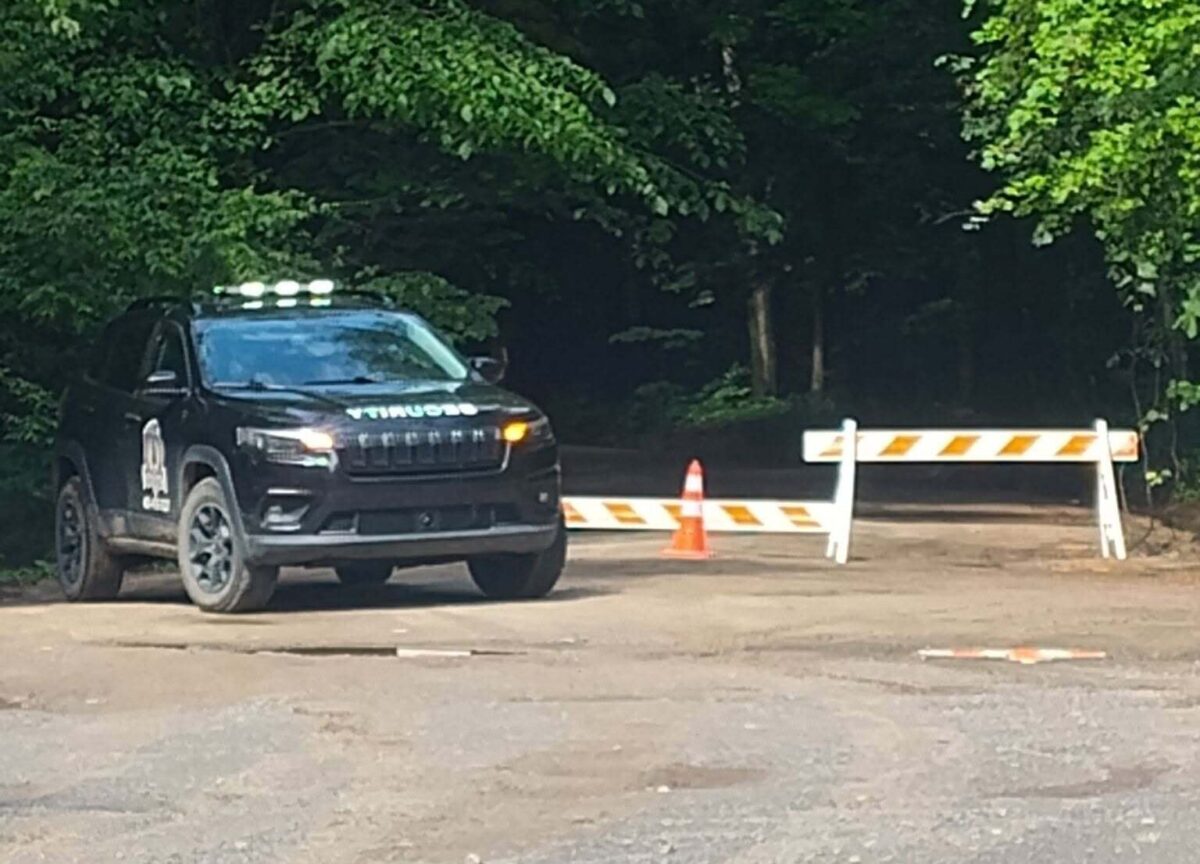
Courtesy Kanesatake Perimeter Security team Facebook page
A federal-provincial action plan to target the growth of organized crime exploiting Indigenous communities in Quebec does not include direct funding to Kanesatake, according to the Ministry of Internal Security, while funding for Kanesatake’s community security stays in limbo.
Last week, the long-awaited crime-fighting plan was announced with federal minister of Public Safety Gary Anandasangaree committing $2 million in funding for increased collaboration between the Surete du Quebec (SQ) and Mohawk communities in the province.
Kanesatake does not have an Indigenous police force, so instead, the SQ will establish partnerships with Mohawk communities such as the Kahnawake and Akwesasne, said the Ministry of Internal Security in a statement.
“Consequently, these new teams and the enhanced collaboration will undoubtedly have a positive impact on the Kanesatake territory by strengthening intelligence, investigative, and intervention capabilities against organized crime activities,” the statement reads.
The announcement comes after Quebec vice-premier Ian Lafrenière previously told The Pines Reporter the action plan was expected to be announced by early June. In the story, minister Lafrenière also revealed something specific to Kanesatake was also in discussions.
Two weeks ago, The Pines Reporter published minister Lafrenière said the federal ministers of Public Safety and Indigenous Services Canada had agreed to extend funding for the Kanesatake Perimeter Security (KPS) “for a few more months.”
In a statement this week, Maxime Tardif, a spokesperson for minister Lafrenière’s office, reaffirmed the federal government’s funding for the KPS, but could not share details regarding the agreements.

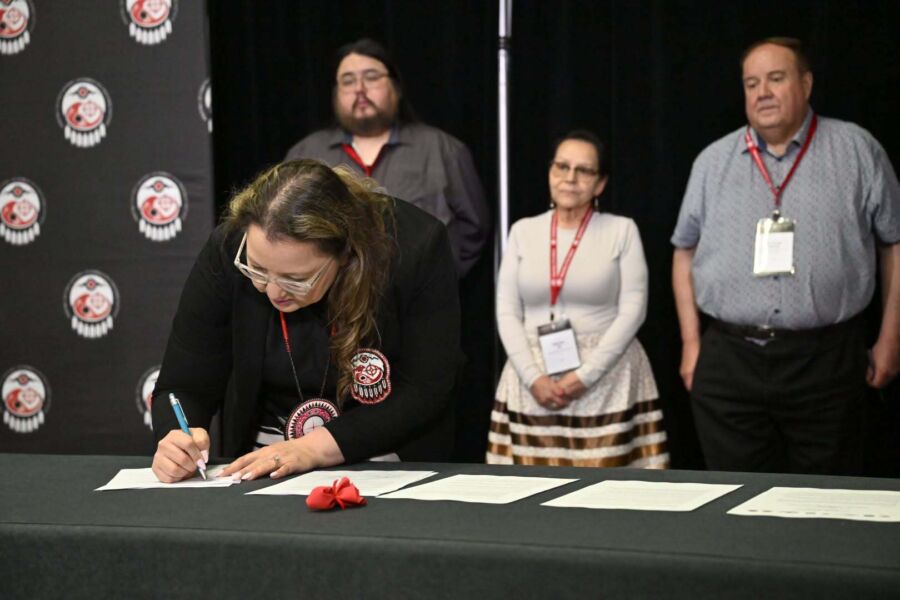
While neither federal ministry has confirmed the funding as of publication, Mohawk Council of Kanesatake (MCK) caretaker council member Brant Etienne said Council is still in discussions with federal ministers regarding funds for the KPS.
“Nothing official right now,” said Etienne. “Once things are official, we’ll make an announcement. Everybody will be informed. It’s just we’re waiting on that final confirmation.”
In a statement, the Ministry of Public Safety said it is “in continued discussions with the Caretaker Council of the Mohawk Council of Kanesatake regarding the Perimeter Security funding request. Any funding decision will be informed by direct discussions with the Caretaker Council of the Mohawk Council of Kanesatake.”
Current funding for the KPS funding is set to end in September, said MCK caretaker council member Serge Otsi Simon. But financial support will be extended for about another six months with a fund by the First Nations Quebec-Labrador Health and Social Services Commission (FNQLHSSC), and about $500,000 in funds the MCK will divert to the KPS.
Financial support for the KPS has been precarious after the team’s five-year fund under the Pathways to Safe Indigenous Communities Program from Indigenous Services Canada (ISC) ended on March 31.
Once the long-term funding ended, the MCK re-allocated a community mobilization fund from FNQLHSSC towards the KPS to cover expenses until September.
The KPS may “carry forward unspent funding into 2026-27,” from the Pathways Funding, according to a statement from ISC. However, Etienne said there is little to nothing left over from ISC’s funding.





The KPS has evolved from Kanesatake’s pandemic response team, the Emergency Response Unit (ERU), a task force charged with managing checkpoints and containing the spread of the coronavirus. Now, the security team intervenes on local emergencies, collaborates with the SQ, fire departments, and paramedic teams, and helps community members with civic issues, such as supporting elders.
Former candidate for Kanesatake’s 2025 election, Amanda Simon, has long criticized the MCK’s approach to securing funding for the KPS. Simon, who plans to run in the next election, told The Pines Reporter the community should be consulted on what kind of security and justice system the community wants, and questioned whether the expanded mandate of the KPS was optimal. Simon said the KPS members and the community’s lives are at risk because the KPS lacks training a certified police officer has.
Simon conceded it would take years to develop a security and justice system in Kanesatake, and criticized the MCK for never putting one in place before. She also questioned whether the KPS would continue to provide security services to the community while a formal policing and justice system was being put in place in Kanesatake, but also said she does want the KPS to stay in the community.
“Well, how can you fund a million dollars to KPS, and then ask the federal government for almost $2 million to have bona fide police? I mean, that’s like asking the feds, ‘I want to keep my pretend force on payroll while … I put a real one in place.’ I mean, if you were a fed, what would you say?” said Simon.
“Do I want the KPS to stay? Absolutely. I think they’re doing a great job. I think it’s also a good way for people to have employment opportunities. I think it’s a very good thing, but people need to draw the line in the sand and understand that the KPS are not a police force. There has to be that distinction because they need to be protected,” said Simon.
When asked whether the community should be consulted before establishing a security team, Etienne said it is better to provide security than to ask the community if they want security. He also disagrees that the community’s opinions have not been taken into consideration with the KPS’s expanded their services.
“I think that’s only true if you close your ears to everything the community is saying,” said Etienne.
Sign up for email updates from The Eastern Door
KPS coordinator Kane Montour said he believes the KPS is the interim solution that will give the foundation for a police force in Kanesatake in the future. Montour also said the KPS has received extensive training to respond to a myriad of emergencies, including health emergencies, such as drug overdoses.
“I don’t think they’re going to build a brand-new police station from the ground up. I think if the Quebec government gives money for a police station, they’re going to follow something that’s already put in place,” said Montour.
“As far as KPS right now, I think we are the solution for the time being because I think if they let KPS fall, there’s going to be no security here whatsoever,” said Montour.
Hadassah Alencar, Local Journalism Initiative Reporter