Kanatahkwèn:ke gets accessible
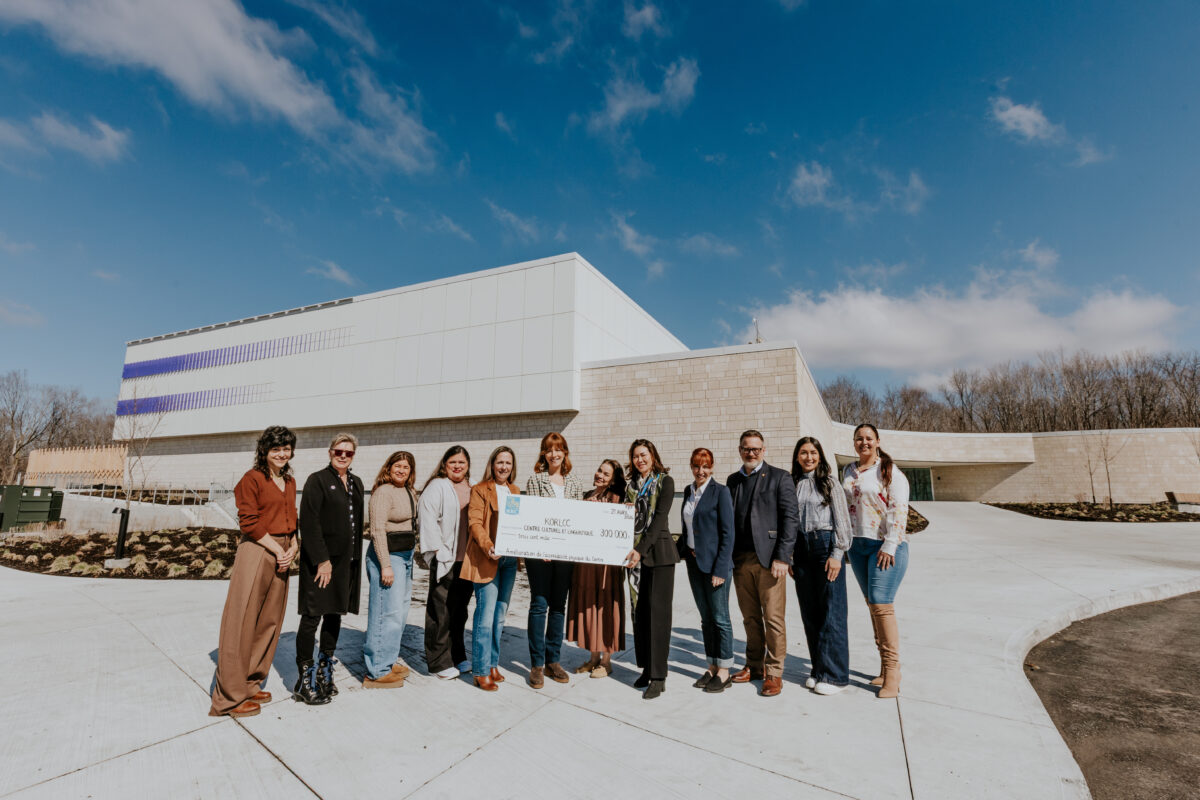
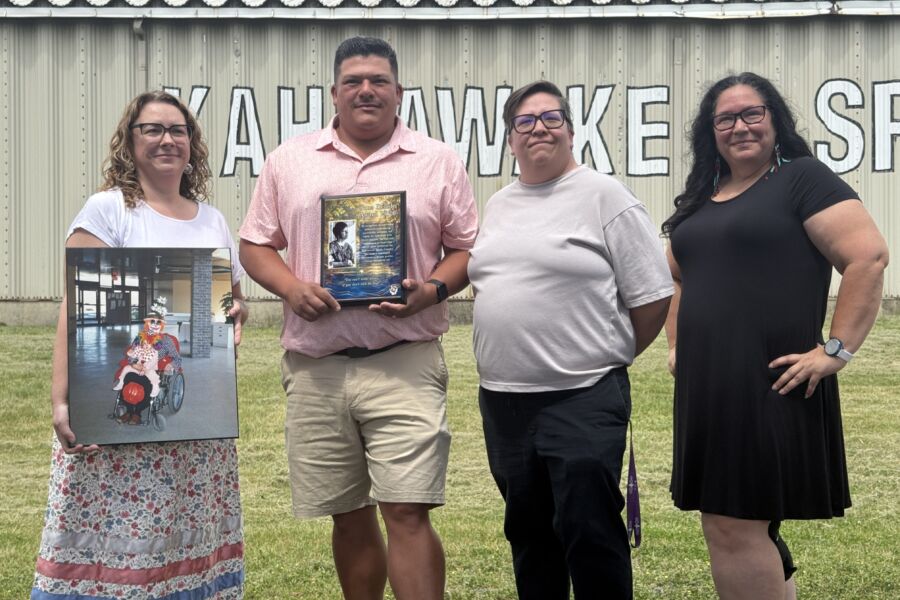
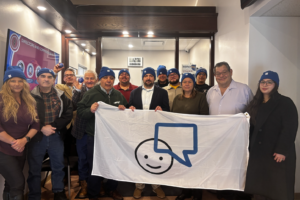
Members of the Kanatahkwèn:ke team with members of the RBC Foundation, who are funding a $300,000 accessibility grant for the building. Courtesy Kanatahkwèn:ke Building Committee
With elders being a key demographic of future users of the Kanatahkwèn:ke Cultural and Arts Centre, the organization’s Building Committee has known that accessibility needs to be top of mind.
Now, thanks to a $300,000 grant from the Royal Bank of Canada (RBC), the building will be home to what the committee describes as “state of the art” accessibility features, all of which will help them in their goal of achieving Rick Hansen Accessibility Certification (RHAC) to ensure accessibility long term.
“When you don’t have any accessibility issues, you don’t think of these things,” said Lisa Phillips, a member of the Building Committee and executive director of the Kanien’kehá:ka Onkwawén:na Raotitióhkwa Language and Cultural Center (KOR), which will be housed in the building. “Now I’m older, I suffer with really bad arthritis, and I definitely pay more attention to these things. The littlest thing makes a huge difference.”
The accessibility features were designed to meet criteria in the RHAC, ensuring the highest standards are met throughout the building. That involves elevators, as well as ramps to ensure that stairs don’t prevent anyone from accessing parts of the museum, including a museum ramp with a maximum slope of 1:20 (5 percent), widely considered the ideal ratio for comfortable walking and ease of navigation with a wheelchair.
The ramps are also equipped with a high-contrast handrail, to ensure that those with vision impairments can easily see where to grip. The handrail is continuous, meaning those who benefit from assistance while navigating the ramp can feel secure making their way throughout the building.

Washrooms were also a consideration when ensuring the building’s accessibility, and accessible washrooms have been installed throughout, including barrier-free stalls. Three fully accessible washrooms are also equipped with emergency call systems, to ensure safety for users accessing the services.
Throughout the building, power-assisted doors have also been installed with actuator buttons positioned at appropriate heights to be accessed by a range of users, including those in wheelchairs. That means the building can be navigated without having to open heavy doors, an important step in ensuring those with a range of abilities have full access to the building.
The Building Committee also has a running list of enhancements they want to one day include in the building - next year, they intend to apply for more funding from RBC’s Foundation Community Spaces Grant to add braille tactile signage throughout the building for visitors who are blind or have impaired vision. They have also discussed the possibility of having some wheelchairs accessible on site, for individuals who may not typically use a mobility aid but who might benefit from it during their visit to the building.
Connecting Horizons advocacy program coordinator Iris Phillips said it’s promising to see the team behind the new building embrace accessibility - as she likes to say, “If it’s not accessible, it’s not acceptable.”
“We sincerely appreciate the care and thought the Cultural Center has put into incorporating accessibility into their new building plans. Their commitment to inclusive design ensures that everyone regardless of ability can feel included and fully participate in their exhibits,” she said. “We’re truly grateful for the consideration of creating an environment that serves the community.”


The RBC Foundation Community Spaces Grant is specifically geared towards projects that contribute to more sustainable and inclusive community spaces.
“Over half of buildings in Canada are either not accessible or only partially accessible,” said Marjolaine Hudon, regional president, Quebec, at RBC, in a press release. “RBC Foundation is proud to support Kahnawake’s new Cultural & Arts Centre through the RBC Foundation Community Spaces Grant, helping enhance accessibility so that more people can connect with and participate in this important community space.”
Building Committee member Trina Diabo said that the team worked hard to ensure a thorough application to the grant, discussing with Connecting Horizons and considering disabled users of the building, as well as the large number of elders who will use the space and may have limited mobility.
“The building is for everybody, so we want to make sure everyone feels welcome, everybody feels safe, and everybody has access,” Diabo said. “In the community, we see a lot of buildings that are not accessible, and so this being our newest building, our goal was to not have it just environmentally friendly, but accessibility friendly too. It’s at the forefront of the project.”
Lisa Phillips said the Committee was hyper-aware of the issues Kahnawake has with accessibility, and wanted to make positive change in the community when they designed Kanatahkwèn:ke.
Sign up for email updates from The Eastern Door
“We’ve been in buildings that didn’t have elevators, we’ve been in buildings where it was hard for even wheelchairs to come through, and we just want to open the door for everybody to be able to have access to the building and to the services,” Lisa said.
She said that accessibility is an ongoing project and not just a one-time consideration, noting that she borrowed wheelchairs from the Kateri Memorial Hospital Centre (KMHC) this week to help elders with the walk through the building.
She said that she’s already asked Connecting Horizons for support finding more solutions to cut down on the amount of walking time for elders in the building, whether that be considering wheelchairs or scooters that are accessible permanently at the site.
“We want to welcome everybody into our building,” Lisa said. “It’s about making sure absolutely everybody has access.”