Staying motivated at Ratiwennahní:rats
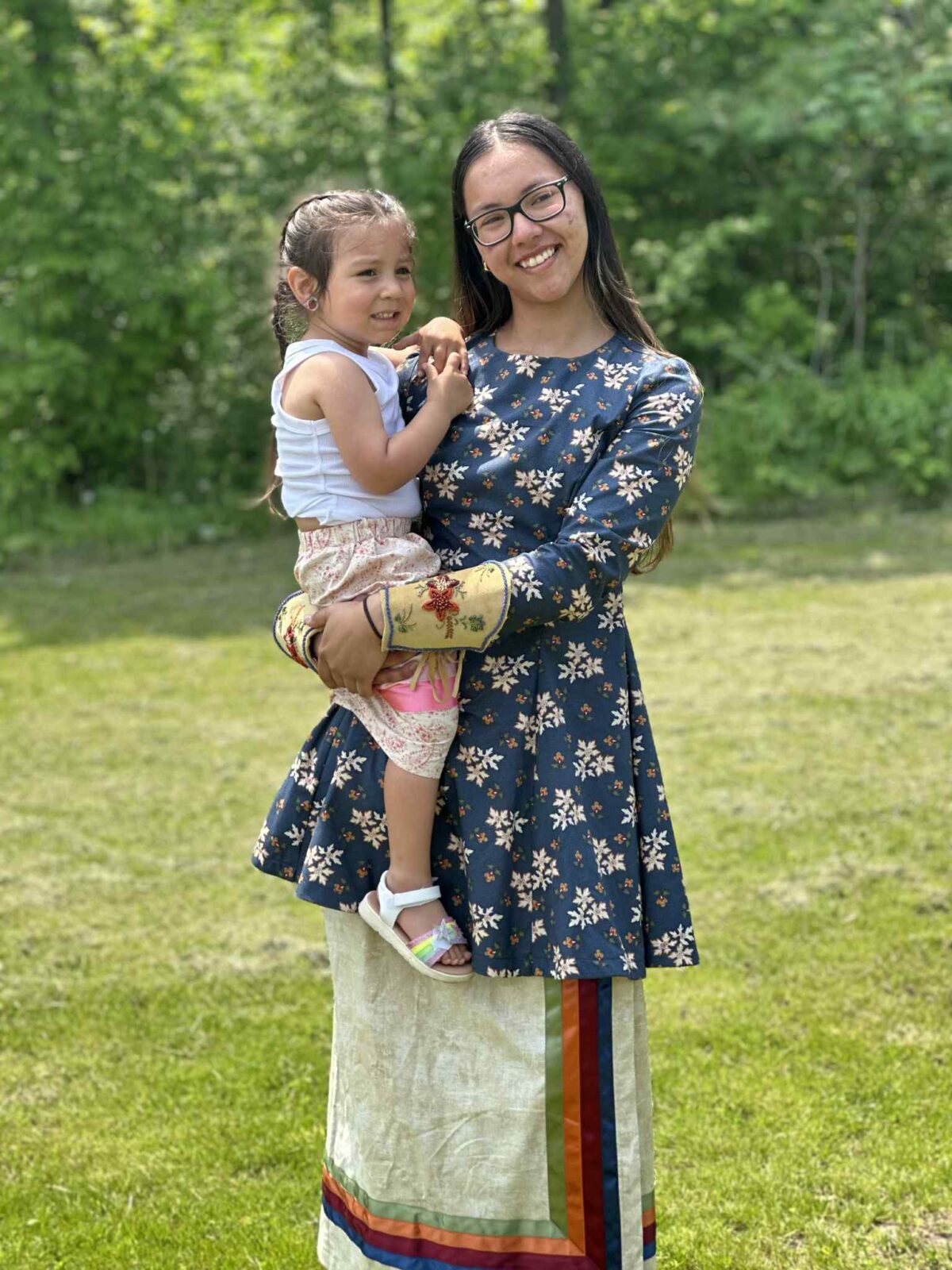
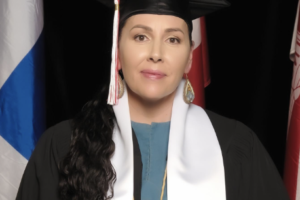
Ieniehtisákhe’ Kaycee Diabo with her niece, Konwanatón:ni, at her graduation from the Kanien’kéha Ratiwennahní:rats Adult Immersion Program. Courtesy Ieniehtisákhe’ Kaycee Diabo
Like many who apply for the Kanien’kéha Ratiwennahní:rats Adult Immersion Program, Ieniehtisákhe’ Kaycee Diabo had been in a Mohawk immersion environment for elementary school.
Though that experience gave her a good foundation in the language, it wasn’t until many years later that Diabo realized how much going to an English-speaking high school had impacted her proficiency.
“I didn’t use it as much as I should have. I took it for granted because I thought it’d always be there, I just thought I’d always have it,” she said. “You realize when you don’t use it as much, you really start to lose it, and a few weeks into Ratiwennahní:rats I realized, wow, I really don’t remember it.”
The first few weeks of the Ratiwennahní:rats program, offered by the Kanien’kehá:ka Onkwawén:na Raotitióhkwa Language and Cultural Center (KOR), are overwhelming for most students. It’s a flurry of emotions as participants navigate an entirely new environment, getting comfortable with new teachers, new classmates, and a mountain of new Kanien’kéha knowledge.
Even those with a strong Kanien’kéha background can find it hard to keep up, and for many, it can be emotional, and often disheartening, to feel lost in a language that they want to feel like home.
But for Diabo, the way through that period was to ignore what she didn’t know and grab onto what started to feel familiar.

“After that first month, all these words finally started coming back all at once, like a wave,” she said. “I started writing everything I could remember down in my notes app, everything that could possibly help me.”
As the weeks went on, Diabo felt the progress. She realized quickly that it wasn’t about how many hours you could put in studying at the kitchen table - while those counted for something, the real way to measure change was by practicing the hardest part: speaking.
“Every day in class we talked about what we did the day before to get used to speaking about our routines so I started doing it when I came home, just talking to myself about what I did the day before in Kanien’kéha, just trying to use it as much as I could,” she said.
She relied on friends in her cohort and those who had completed the program before - her close friend Winter Goodleaf graduated from the program in 2023 and was a big inspiration in her decision to apply.
Having support systems around her who could help her bring an immersion environment to her own home made all the difference, Diabo said, and it was particularly special to feel connected to the rest of her cohort, something that felt bittersweet as the class said goodbye to one another at their graduation last month.
“Anytime we’d get together with our class outside of school and play board games, we’d set a timer for 15 minutes and just talk the whole time. That was the way we found that wasn’t such a traditional way of talking,” Diabo said. “It’s not really like school, it’s not like math where you go home, open a workbook, and you’re done. To know it, you have to use it.”



The biggest challenge was finding the time to practice, Diabo said. Like many Ratiwennahní:rats students, she juggled multiple jobs with the program, even completing a paramedic program at the fire hall during her studies.
“I was a bit crazy for doing that, I have no doubt about it, and there were certain times where my mind was elsewhere even at school, and I had to say to myself, ‘Okay, I’m here now, I’m at school, let me just forget whatever I’m thinking of and be present,’” she said.
At times it was hard to keep ploughing ahead, especially when there were just a few hours between the end of Ratiwennahní:rats classes and the start of her paramedic ones, but usually it wasn’t long Diabo felt something “click,” and she was reminded of why the program is worth it.
Around Christmas time in her first year, she was able to catch her breath and realize what a remarkable amount of knowledge she’d absorbed in such a short period of time.
“That’s when the ball really started rolling with me, and everything started coming back,” she said.
Moments like that gave her renewed determination to continue with the language, and she encourages all future Ratiwennahní:rats learners to find within themselves that same grit and motivation.
Sign up for email updates from The Eastern Door
“It’s not an easy program, that’s for sure, it’s not one you can take lightly. If you’re going to apply, and if you want to get anything out of it, you have to be serious, you have to be motivated, you have to be committed to learning it every day,” she said. “I had to remind myself every day, I applied for a reason, and that’s what kept me going.”