Bridging the infrastructure gap
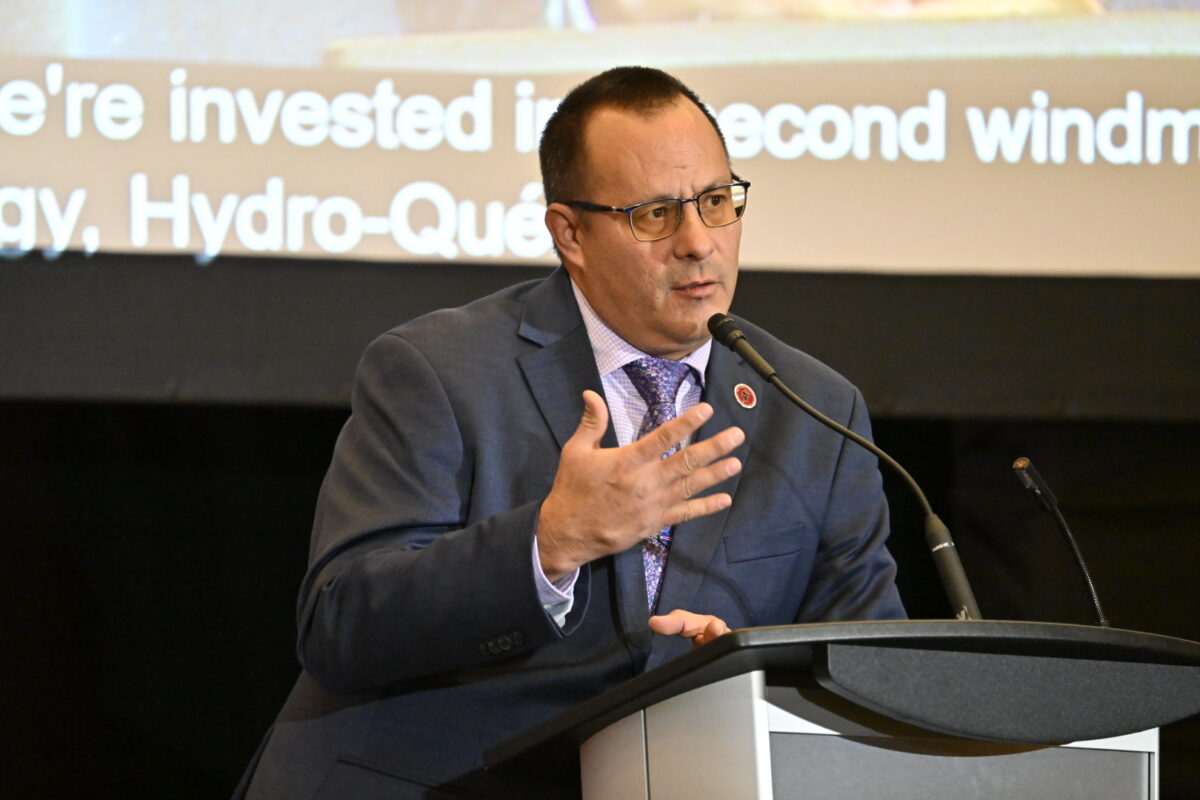
Mohawk Council of Kahnawake chief Ryan Montour delivered the Host Nation address to those attending the Economic and Infrastructure Summit in Tiohtià:ke. Courtesy Assembly of First Nations
The Assembly of First Nations (AFN)’s three-day Economic and Infrastructure Summit held in Tiohtià:ke brought together Indigenous leaders and experts to exchange knowledge and engage in dialogue on closing the socioeconomic, housing, and infrastructure gaps in Indigenous communities when compared to the rest of the country.
That included discussions on current Indigenous-lead projects, what economic development looks like right now in communities across Turtle Island, and what it means to close that gap.
The Mohawk Council of Kahnawake (MCK) was present at the summit, with council chief Ryan Montour giving an address at the beginning of the first day.
“I wanted to make a lasting impression of what the Mohawks of Kahnawake have been involved in, some of the groundbreaking projects that we currently have, and how we negotiated. The whole point of my presentation was to inspire First Nation leaders to do something for their people,” said Montour.
He said that he presented himself as someone who had run for Council on a platform of actions speaking louder than words, and he hoped other leaders in attendance would take that to heart.
“There was no other place in the world where this many government institutions, First Nations, and financial institutions were all gathered in one place. If you can’t do something here, you can’t do it anywhere,” said Montour.

During the summit, Montour said he had many discussions with other Indigenous communities as well as institutions and companies that are willing to partner with them, not just work in their territory.
“These companies that specialize in engineering, they’re looking to partner with us for major infrastructure projects across Canada. For years, First Nations were left out of this,” said Montour.
Francis Verreault-Paul, regional chief for the Assembly of First Nations Quebec-Labrador (AFNQL), gave the opening address for the summit.
He said that balancing economic development with sustainability was needed.
“I think that more than ever, we must play a frontline role in economic development,” said Verreault-Paul.
“That being said, when we say that kind of thing, we aren’t putting aside a holistic vision of the future as First Nations. Yes, economic development is extremely important, but not by going against the preservation of our ecosystems, of our fauna, and of our traditional ways of life. I think we are capable of reaching a balance between all those elements and economic development.”
He said that building bridges between nations – whether it be with other First Nations in Canada or the United States, or even at the international level in Europe and Asia – is a way forward towards economic self-determination and sovereignty.
“We must keep all of our opportunities open, to give the most opportunities possible to nations to self-determine and to make the best decisions for their community,” said Verreault-Paul.
“In that sense, I think it’s extremely important for us, at the Quebec and Labrador level, to establish those links and those connections, possibly even establish partnerships with other nations in other provinces and territories.”
The MCK has already been doing that with their potential trade partnerships with the other members of the Iroquois Caucus (Kanesatake, Akwesasne, Six Nations of the Grand River, Tyendinaga, and the Oneida Nation of the Thames) and the Tsuut’ina Nation in Alberta.
The summit has already brought forward even more of these partnerships, said Montour, especially as the MCK laid out some of its big plans: the Hertel line, its housing initiatives, wind farms, work with the Port of Montreal’s Contrecoeur expansion project, and more.
“I’m happy with the contacts I made,” said Montour, who said many have stayed in touch in the days since to discuss potential avenues for future collaboration.
Sign up for email updates from The Eastern Door
The summit was also a good opportunity to hear success stories from those other nations in attendance.
“They can be very inspiring if they can be adapted to our realities and our needs,” said Verreault-Paul.