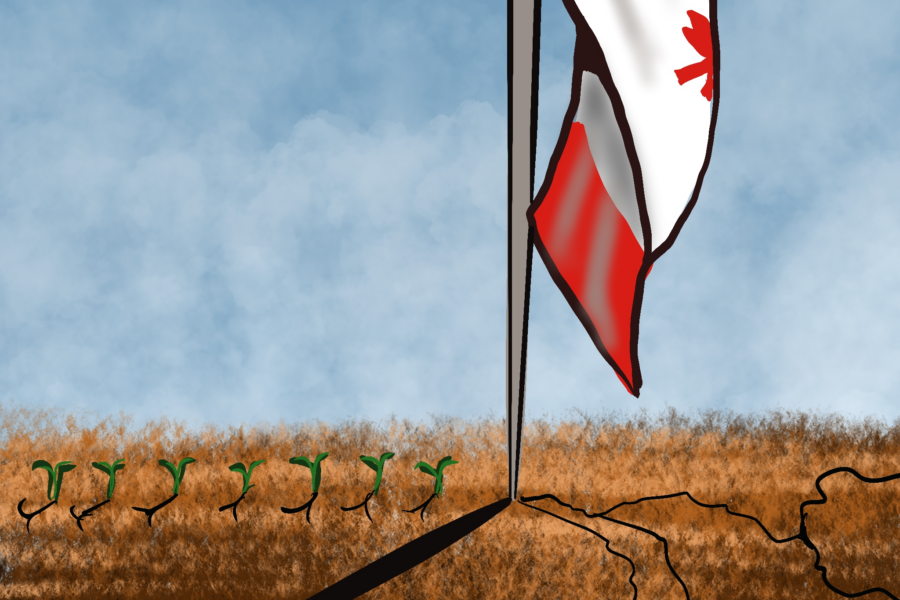
Agriculture as a powerful tool
When we think of what producing our own food means, with the food sovereignty movement and everything that kind of economic power entails, we immediately think of the things that sustained us for so many years.
The Three Sisters, for example, corn, beans, and squash, each play a role of utilizing the others’ strengths as shade, to grow up on, and to feed.
They work so well in unison, we often forget how smart our ancestors were in planting these three staples in the way they did, to sustain whole communities and subsidize the hunt.
We have been hunters, gatherers, farmers, and semi-nomadic peoples seeking out new opportunity, but in the current reserve system, we have been told, often and quite firmly, to stay in our little corner.
But it doesn’t have to continue this way. In fact, it can’t. With a growing population of smart, conscientious, and ambitious people, things will change. We just don’t know how quickly yet.
Having a garden is a way to take control of your own future, even in winter with a greenhouse or indoor plants, to feed your family, barter, and share your crop with those in need.

Gardening happens in ways that are acts of sovereignty themselves, from the city plots reclaimed to rooftop gardens in areas with little greenspace, to the plot that was the site of a resurgence a few years back on the side of Highway 30; we all play our roles in using food as a tool.
Don’t kid yourselves, food is also a weapon – not one to attack with, but one that will help us reclaim all we lost with colonialism’s ongoing hold on our communities.
But personal gardening can only go so far. We have a small number of people, little money dedicated collectively to the act of gardening, and only so much land.
We are no longer farmers, so we can’t rely on vast tracts of land to feed us.
So, what do we do? Having the power over your own food supply is a much bigger beast, a project that needs tons of help to come to fruition.
Land claims are abysmally slow, and we don’t know what will come of it, but why not find ways to borrow money to buy back some of our traditional land until this whole land claims fiasco is behind us?
You can do like Canada does and add it to the bill of an eventual settlement. One day, the land we bought will no longer have to be paid back, and we will have a lot more of it to plant on and build economic power with.
But this sitting and waiting is not moving us forward.
And that’s what it boils down to; tóta’s garden is nice and it helps people in a small way for a short period of time, but exercising food sovereignty by having complete control over what we eat and how much it costs our people?
That’s economic clout.
And it’s one way – agriculture as a response to colonialism and the reserve system – that we will take our power back.
Signing an agreement with Hydro Quebec is one thing, and it’s good the Mohawk Council is forcing them to include us – although they could have given more money – but food as sustenance and financial power? Now we’re talking.
Sign up for email updates from The Eastern Door
Excess food, and there will surely be plenty for all, would be sold to neighbours and shipped internationally, as Kahnawake becomes a leader in Indigenous-produced produce for all to eat.
So, as we put our seeds and plants into the ground this weekend to celebrate a way of life we have practiced for millennia, we are doing our part to take our power back.
Now all we have to do is push forward and force the outside governments to accept a real push that would take the control of what we eat away from them and put it squarely on in our own hands.
This editorial was originally published in print on May 17 in issue 33.20 of The Eastern Door.