Whale of a time at First Peoples Festival
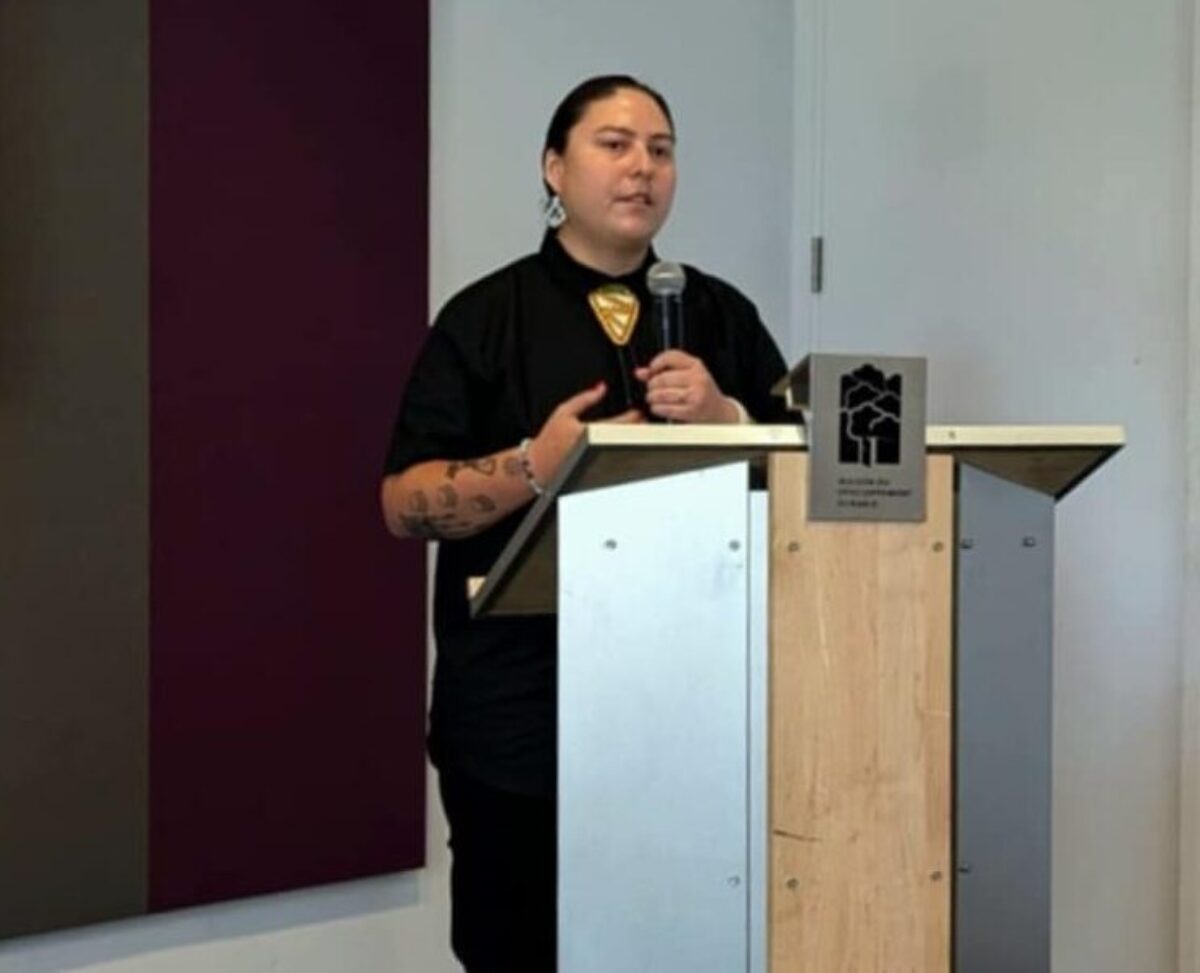
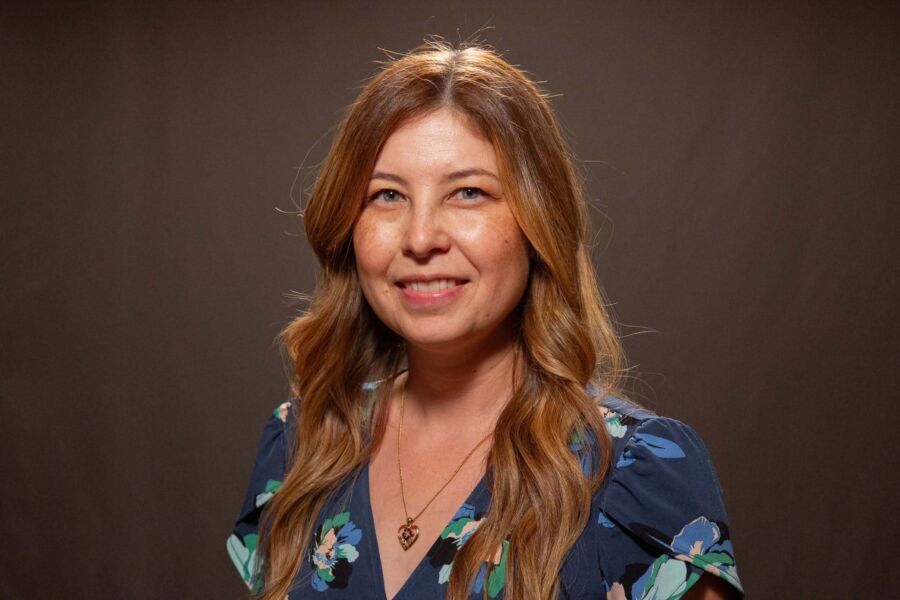
Cross-Delisle spoke to a sold-out room at Presence Autochtone. Courtesy Katsi’tsahén:te Cross-Delisle
Attendees at the 35th edition of the Montreal First Peoples’ Festival were treated to a mini-conference hosted by Kahnawake’s own Katsi’tsahén:te Cross-Delisle, as she shared an archaeological perspective on trade networks, focusing on the role of water and whales.
The conference, which took place on Sunday in downtown Montreal, was sold out, and saw around 40 people come by to learn more about the history of trade in Tiohtià:ke.
“It was a surprise, it sold out before I even had a chance to promote it, so it was really cool to know that there are people out there who are really interested in the work that I’m doing and who are following the journey that I’m on,” she said.
The opportunity to present at the festival came about as a result of a presentation Cross-Delisle had done with Archaeo-Quebec last year, where she had spoken about her role as an Indigenous archaeologist.

Organizers at Archaeo-Quebec wanted to present something related to whales for the First Peoples’ Festival, and asked Cross-Delisle if she had done any work on the subject. She knew it would be the perfect opportunity to talk about beluga whale artefacts she’d explored that shed more light on the history of trade in Tiohtià:ke and beyond, and created her conference presentation around the title “Echoes Across the Water: Stories of Whales, Trade and Togetherness.”
One of the main discoveries she shared with the group related to an archaeological dig she was a part of back in 2018, which took place at a site on Peel and Sherbrooke streets in Tiohtià:ke. There, she and her team had found a beluga whale tooth.
“A beluga tooth is very rare to find in downtown Montreal, because there hasn’t been whales coming up and down the St. Lawrence River since the 1940s,” she said. “For the scientific community, it was a huge discovery, but for us in Kahnawake, we knew that whales were going up and down the river. It wasn’t new to us, but it meant we’d found evidence we needed to show that our oral traditions lined up with what was found in the ground.”
Using the evidence found in the ground, Cross-Delisle showed the bridge that can be built between the world of archaeology and the world of oral tradition and culture.
“I talked about the language and certain words we have for whales and talking about the waters, and about how those words we used in the past are not the same words that we’re using now to describe whales,” she said.
She was accompanied by Dr. Jennifer Bracewell, who Cross-Delisle said was one of the first allies she worked with in her archaeology career. She shared with attendees the importance of Indigenous and non-Indigenous archaeologists coming together in the field in a culturally mindful way.
“It was a great opportunity to show the public how we’ve been working together for almost 10 years now, I started out as her student and she was my mentor, and now fast forward 10 years, I get to kind of mentor her in understanding who Kahnawa’kehró:non people are and what our culture really means to us,” she said.
Cross-Delisle said that presenting at such a well-attended festival shows that there’s a rising hunger to hear from Indigenous folks across specialties and industries, and she said there was a real mix of non-Indigenous and Indigenous people in attendance, pointing to positive change in the world of archaeology.
Sign up for email updates from The Eastern Door
“I do this work because it’s what I need to do to help the ancestors, it’s what I need to do to help the culture and help my community, so it’s really cool that our voices are being heard,” she said.
“The work we’re doing isn’t just for my community and my culture, it’s for the general public to get this knowledge and for the people who are just moving to Canada to learn about the Indigenous people here, and not just know what the government tells them.”