Remembering the Great Peace of Montreal
Ella Paulin The Eastern Door
June 21 was a momentous day in Montreal, marking no less than three separate occasions: National Indigenous People’s Day, the summer solstice, and the 325th anniversary of the signing of the Great Peace of Montreal.
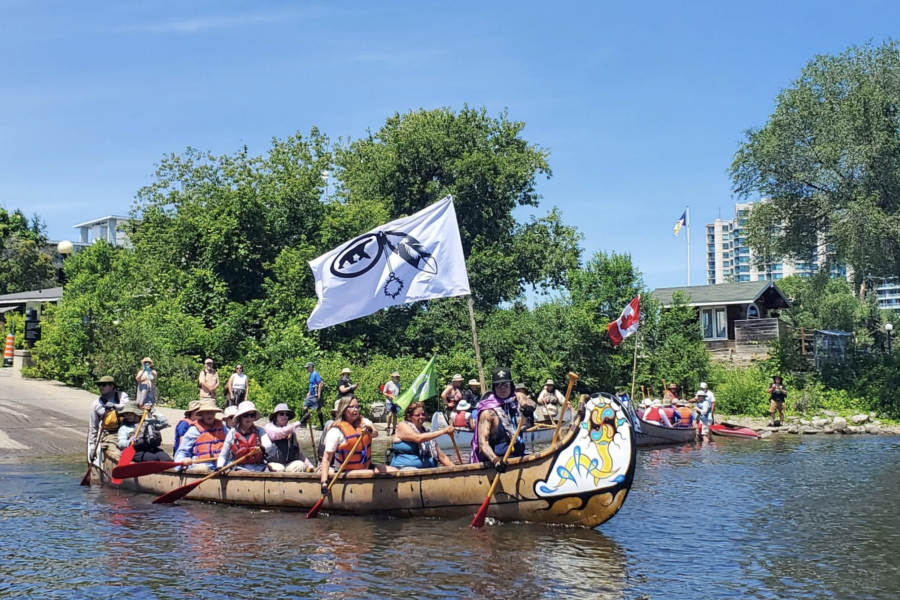
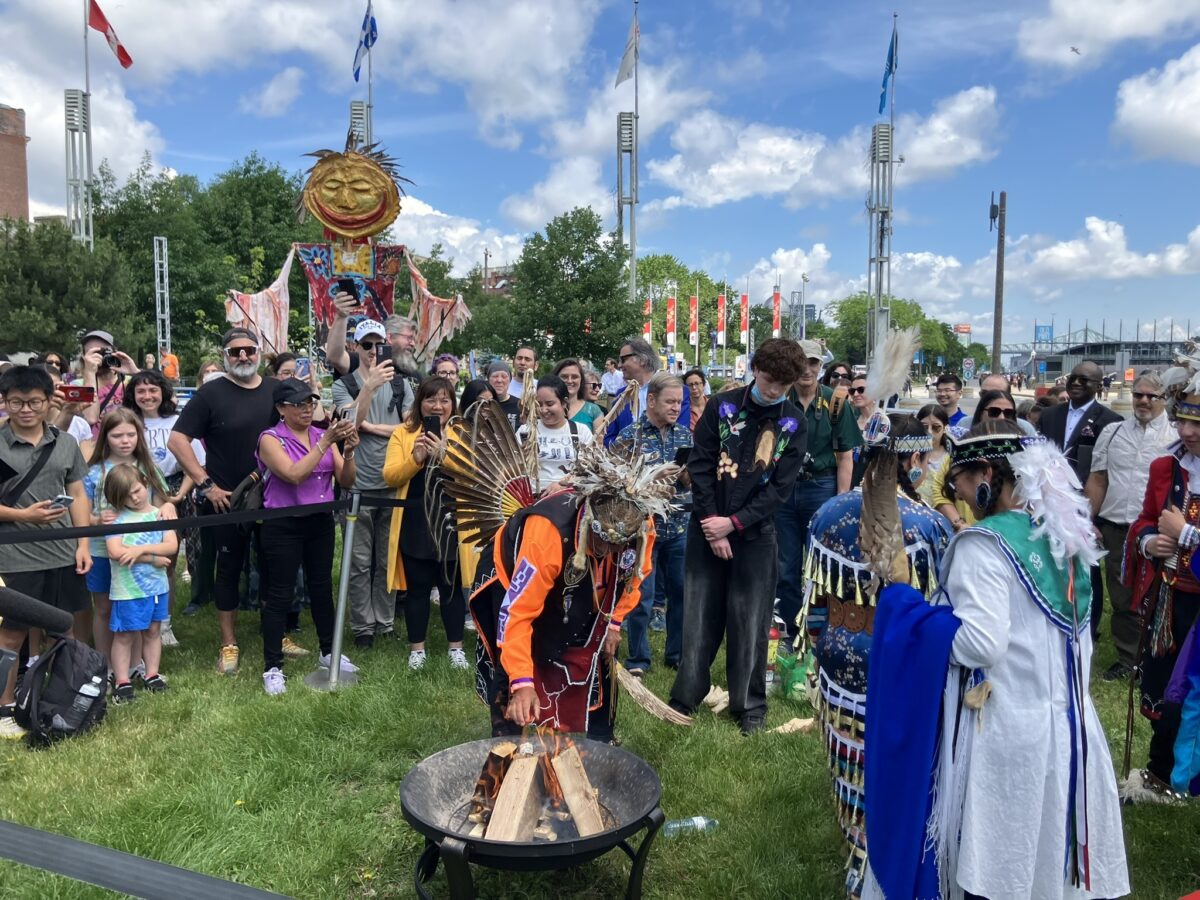
To celebrate, a crowd gathered in the Old Port on Sunday morning. The event began with dances and speeches before a procession to the Pointe-à-Callière Archaeological Museum, where the original copy of the treaty signed at the Great Peace of Montreal is on display until September 20.

“It is nice to be here in the Old Port, because this is the place where the delegation of Indigenous nations came, and this was the meeting place and the place for trades, and for diplomacy, and probably love stories, too,” explained André Dudemaine, co-founder of Land InSights, which organizes the event.
“In 1701, the delegations were always stopping in Kahnawake, and after that they crossed the river and arrived here in Montreal.”
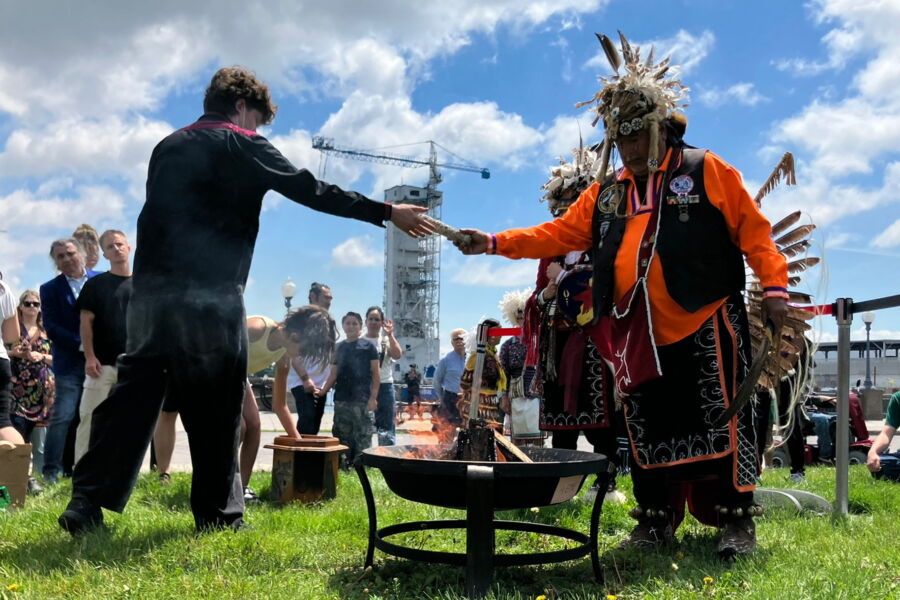

While the sky initially looked gray over the Old Port, the sun came out just in time for the Ohén:ton Karihwatéhkwen and the lighting of the fire, which together marked the beginning of the celebration. Participants and passersby alike were invited to put tobacco down.
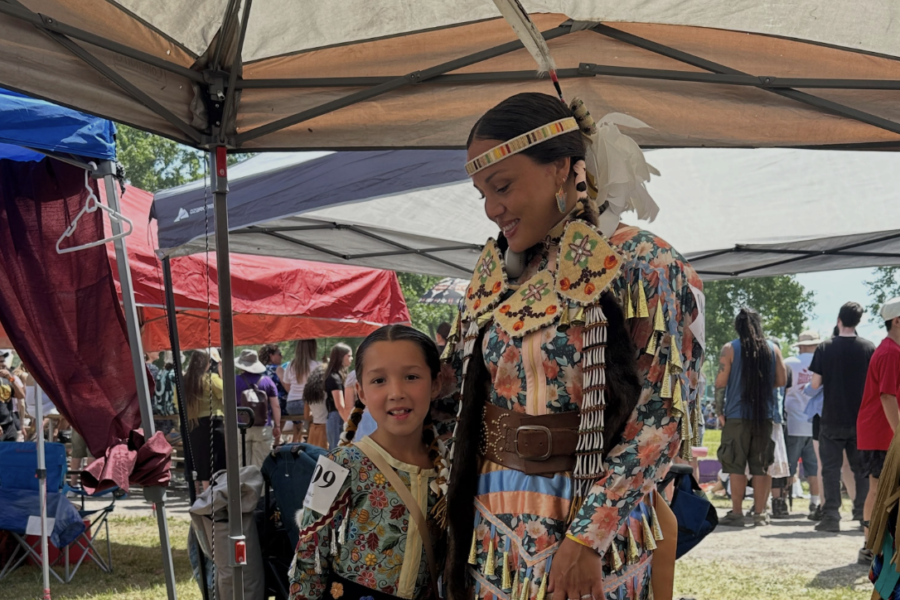
With the fire still burning, the men’s and women’s dances began, announced by members of the Deer Family Dancers. The dancing was followed by speeches from several officials from the Old Port, the Archaeological Museum, and the city - including Montreal mayor Soraya Martinez Ferrada.
Ferrada emphasized collaboration and a new reconciliation strategy that the city of Montreal is in the process of planning.
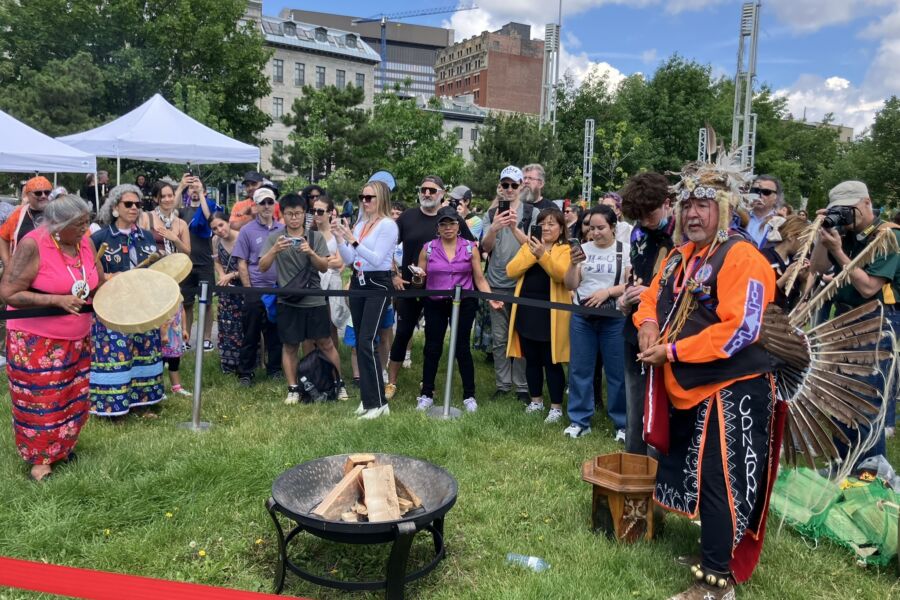
“This is an important occasion to build a relationship founded on respect, listening, and confidence. Because at the heart of it, reconciliation cannot be only a principle or an intention - it must be lived concretely in our decisions, our institutions, and the services that we have,” Ferrada said during her speech.
“It is in this spirit that we are currently working on a new strategy for reconciliation with the city of Montreal, which we hope to build with you. Since the beginning of the year, we have been engaged in listening and consultation with community members, Indigenous organizations, boroughs, and municipal services.”



The speeches closed with a poem, Women’s Declaration of Peace, originally composed by Virginia Pésémapéo Bordeleau et Hélène Pedneault for the 300th anniversary of the Great Peace treaty in 2001, and read for the ceremony by the Wendat actress Dominique Pétin.
At that point, the outdoor portion of the ceremony began to wrap up as the clouds darkened. The procession towards the Archaeological Museum left around 2:00 p.m. - almost making it to the museum before the rain started.
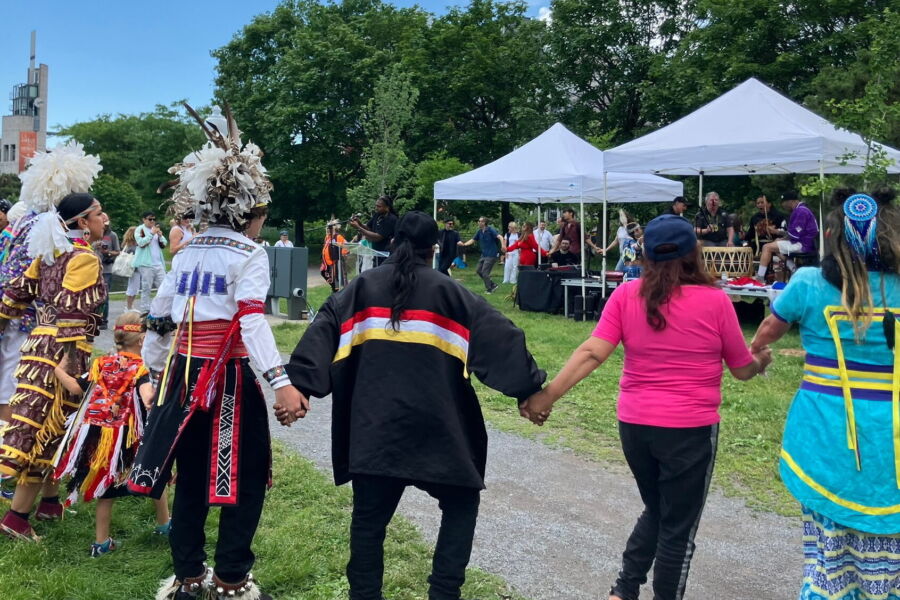
“It held up until the very end - the timing was almost perfect,” Ray Deer told The Eastern Door. “We got caught up in the rain, but Mother Nature’s going to do her thing, and we have to respect her for that.”
Once safely inside the museum, participants had the opportunity to see the original copy of the Great Peace of Montreal treaty. The treaty, which is permanently housed in an archive in France, was last displayed in Montreal 25 years ago for the 300th anniversary of the signing.
“What is really touching is that the treaty was signed here - really here, on this place, because Callière’s house was right here. In fact, we are probably standing in his garden,” Christiane Dufresne, director of exhibitions at the museum, told The Eastern Door.
Sign up for email updates from The Eastern Door

Dufresne went on to explain that while there were likely multiple copies of the treaty at one time, the one displayed at the Archaeological Museum this summer is the only known remaining copy.
The treaty is well preserved and clearly shows both the French written component of the agreement as well as 39 pictograms drawn by the 39 Indigenous nations that signed the treaty. Many of the pictograms represent important animals, tools, or parts of the landscape.
While the ceremony is over, the treaty remains on display at the museum until September 20.