The more things change...
Megan Kanerahtenha:wi Whyte The Eastern Door
When Indigenous leaders head to the National Assembly in Quebec City, a satisfying outcome is hardly likely. So last week, when they made the trek to bring their concerns about provincial justice minister Simon Jolin-Barrette’s hare-brained scheme to pass a polarizing (and legally dubious) Quebec constitution in the party’s waning days, it was a predictable exercise in futility.
By now it’s obvious that the CAQ crew just doesn’t understand Indigenous issues, nor the importance of anyone’s identity besides their own, let alone those of the First Peoples. Of course, we’ve never seen much different from the leaders that came before them either, whose worldviews have all been rooted in colonialism and the fallacy that Quebec inherently belongs to them.
We can only conclude, as we watch their policies and personalities unfold, that far from simple ignorance of Indigenous rights and communities, Jolin-Barrette and his ilk have an assiduous aversion to a just recognition that this land was Native land long before it was French.
The political class that boasts that multiculturalism is not a Quebec value are still working to impose their will and their singular vision of who belongs here onto a territory that will never rightfully be theirs.
The issues at stake with the constitution project are at once simple and complex, and you could certainly throw bottles of ink at them. But like a picture, symbols tell stories like mere words never could.
That’s why the main takeaway is who wasn’t there and why, because it’s a vivid example of the inflexibility and hypocrisy of the enforcers of colonial values.

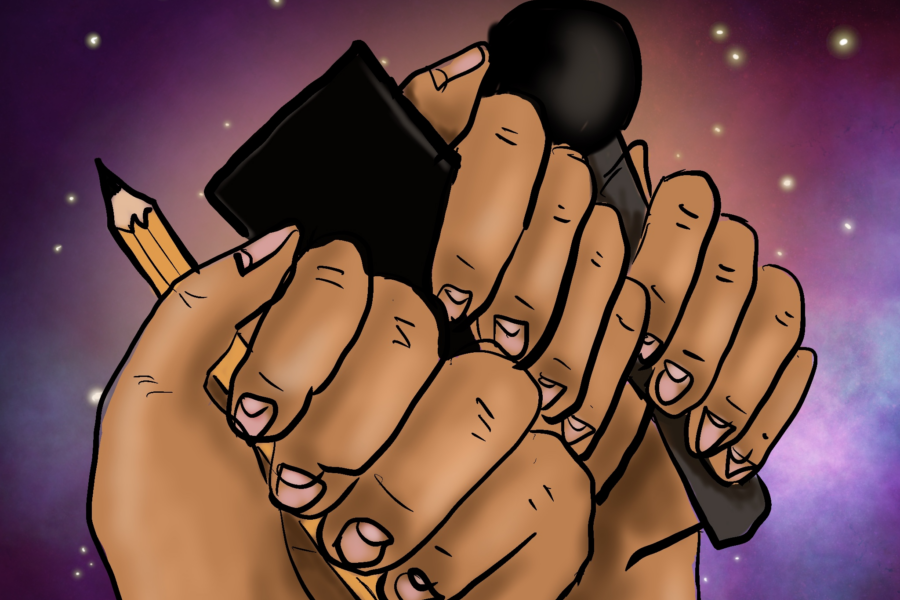
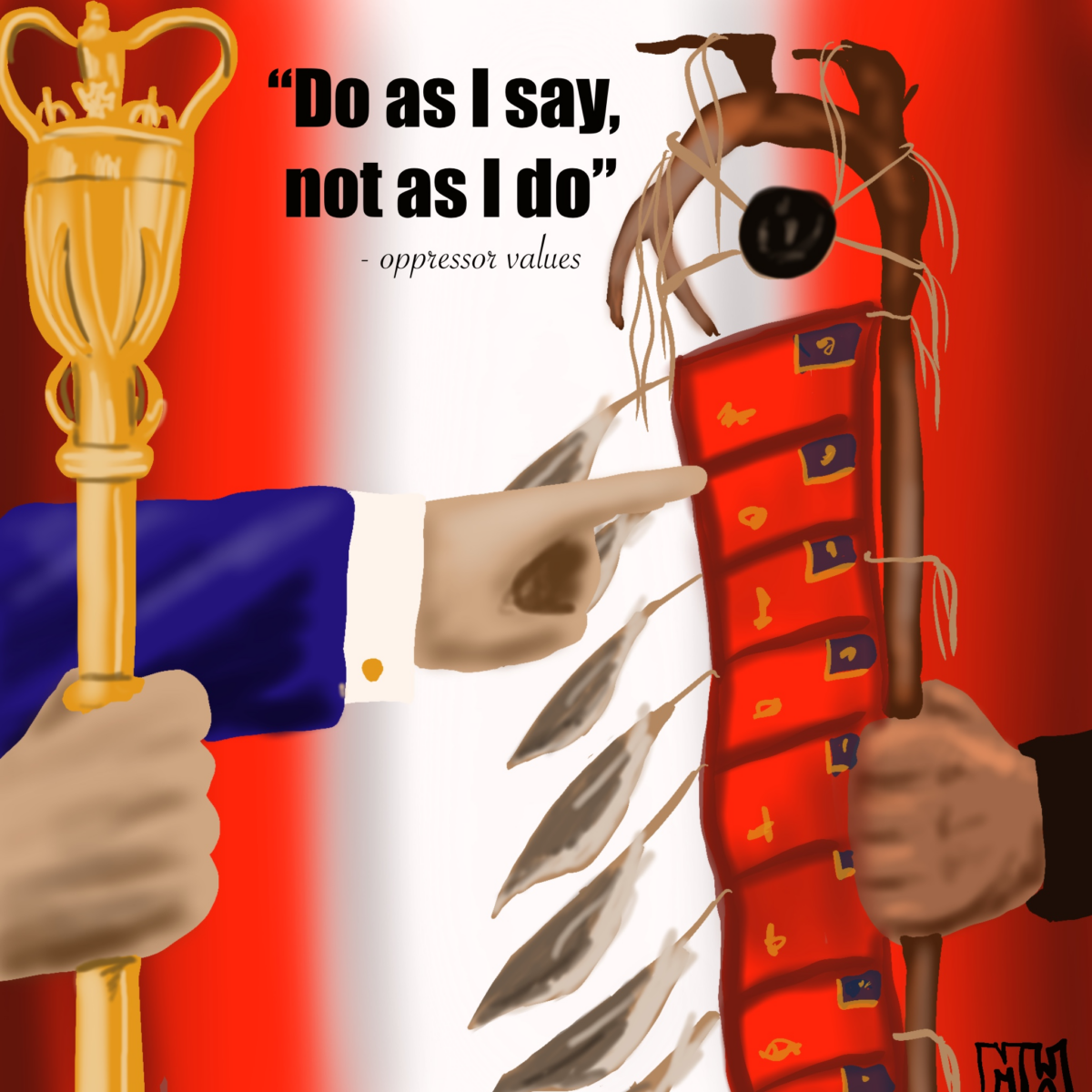
Atikamekw Council of Manawan chief Sipi Flamand brought an eagle staff with him as a representation of his community, and when he was denied entry to the building, he called in Indigenous relations minister Ian Lafrenière to broker some help.
In the end, he was still asked to stow his eagle staff away in the National Assembly’s cloakroom like it was just another Canada Goose jacket at the club. When he refused to do that, he was eventually allowed into a separate room, not the committee room where his fellow chiefs spoke.
Assembly of First Nations Quebec-Labrador (AFNQL) regional chief Francis Verreault-Paul sharply pointed out that while the eagle staff was so objectionable to the National Assembly, ceremonial staffs of the parliamentary persuasion are not only allowed but held up as a symbol of the sanctity of the institution.
It’s called the mace, which yes, is a type of weapon, and it precedes the speaker of the National Assembly when she strides down the aisle in the Blue Room. Why do they fear the staff in the Indigenous chief’s hand but not the one in the hand of the sergeant-at-arms?
There’s many ways to answer that question, none of them good, and we probably don’t have to spell it out for you.
Despite hundreds of years of abuse at the hands of those who roam the National Assembly, they consider it the locus of civilized society and not the den of thieves it has so often been.




So what happens? Verreault-Paul is told to move on to the subject at hand, which is basically just to receive lip service from the government that’s just going to do what it wants anyways, and as if that weren’t paternalistic enough, he was even told he “knows the rules” by André Bachand, a CAQ member of the National Assembly (MNA).
(Mohawk Council of Kahnawake grand chief Cody Diabo later pointed out that paternalistic colonialism is the calling card of the CAQ’s approach to Indigenous issues and demanded a carveout.)
Verreault-Paul, to his credit, did not heed the call to immediately move on. Instead, he stood his ground when Bachand made the jaw-dropping complaint that to allow the eagle staff could have set a precedent. As if that would have been a bad thing?
The regional chief correctly pointed out that setting precedent is the only path to reconciliation. That’s to say, things need to change, and why not start today?
When debate did turn to the matter at hand, the Quebec so-called constitution, there’s nothing we can even begin to reflect on that’s not frustrating. To start with, all the Indigenous communities in the province had to share half an hour, total, to make their case.
Quebec didn’t even bother consulting its own citizens before announcing an effort to hand down the most fundamental of laws - it’s called “Bill 1,” after all - in a most haphazard and lazy fashion, causing a coalition of legal experts to voice their opposition loud and clear.
Sign up for email updates from The Eastern Door
Now, with the CAQ making their case to the people of Quebec for the past four months, Onkwehón:we get their half hour.
This is a document that claims, among other things, that the “territory of Quebec is the historical homeland of the nation and constitutes its common heritage” and goes on to assert the French language as the only one that matters.
In one way or another, we’ve written thousands of editorials about this, and we’re sure we’ll write thousands more. It’s exhausting. So on the matter at hand, where to begin? WTF comes to mind.
That might seem lazier than the Quebec constitution, but what can we really say that the eagle staff does not?
TED Staff