Students say shé:kon to the future
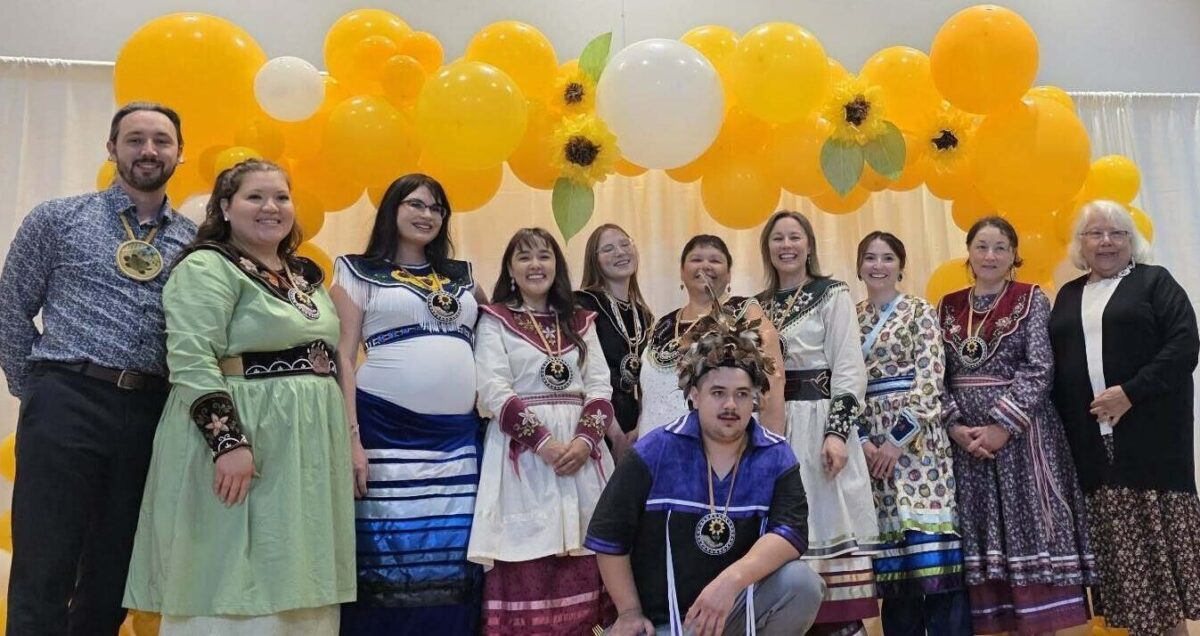
The nine graduating Ratiwennenhá:wi Kanien’kéha language immersion program students. Courtsey Samantha Karonhiio Simon
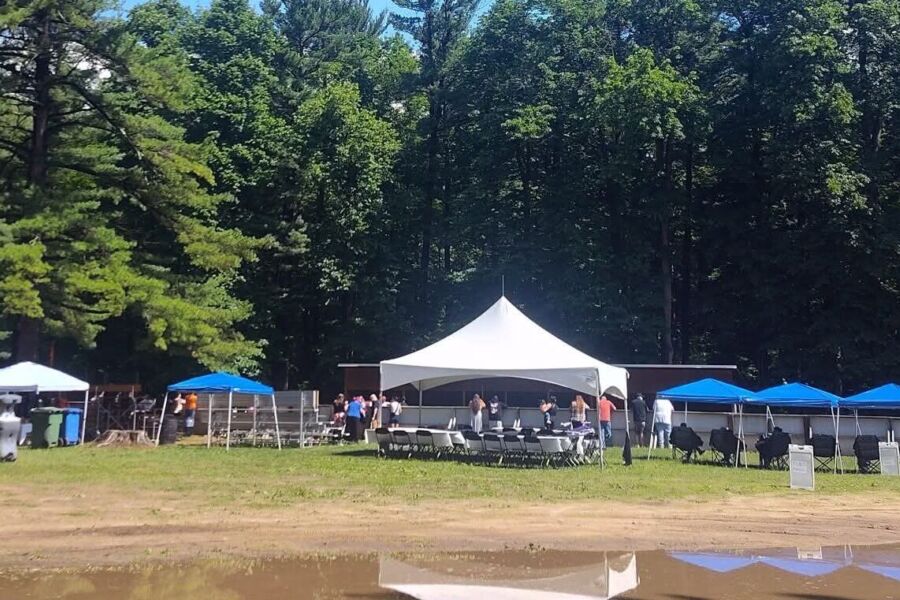
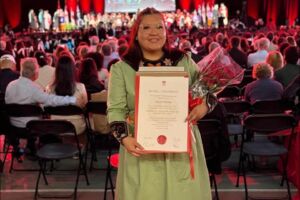
More than 150 family members, community members, elders, and language learners gathered to celebrate and honour the graduating cohort of the Ratiwennenhá:wi Kanien’kéha language immersion program over the weekend.
The ceremony on June 6 honoured the nine graduates who completed the intensive three-year immersion program. So far, this has been the largest graduating cohort for the program.
“There is always the fear that when students from the program graduate, they get lost within the community,” said Wenn’tiio Will Gareau, a language teacher at Ratiwennenhá:wi. He added that it’s always a struggle to maintain the Kanien’kéha speaking community.
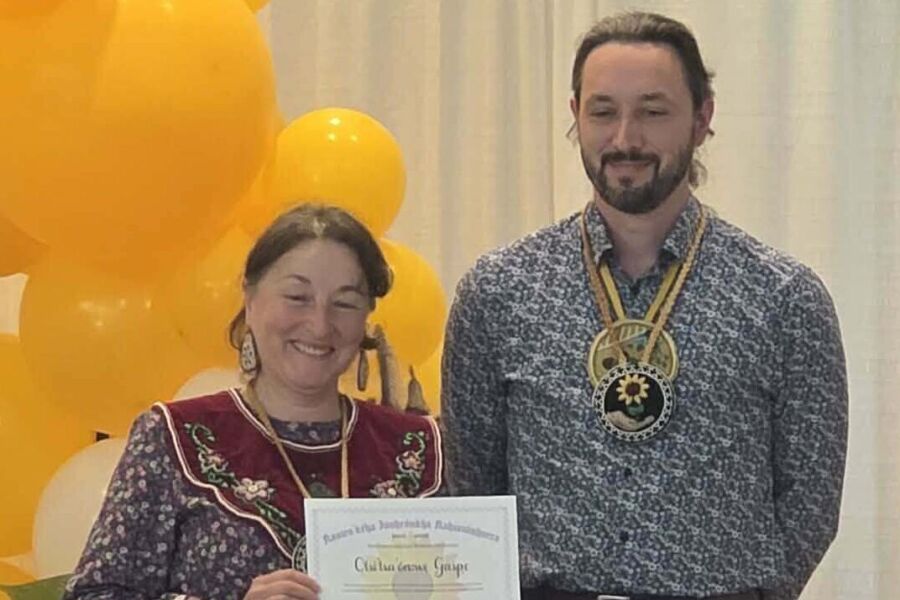
“S,o it’s great to see that since this cohort has finished, they seem even stronger in their conviction towards our language, to save our language, and to keep speaking,” said Gareau.
“That’s what they showed at the graduation, the confidence and pride for how far they’ve come,” said Gareau.
For Gareau, this event was particularly meaningful as it was his first cohort as a teacher.

Each student gave a speech entirely in Kanien’kéha during the ceremony.
“I wasn’t expecting much from their speeches,” said Gareau, who was thinking students would have shorter speeches or mix in English. “But they all killed their speeches.”
Graduate Otsi’tsa’ón:we Gaspe admitted that standing in front of elders, fluent speakers, and family members to deliver her speech in full Kanien’kéha was intimidating.
“We were told we had to give a speech in Kanien’kéha, so that was nerve-racking for me,” said Gaspe. “I’m not a fluent speaker yet. I still struggle a lot.’
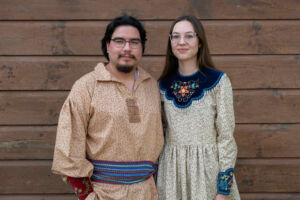
Gaspe said that all the graduating students had spent over a year sewing and beading intricate yokes to add to their regalia they wore for the ceremony. Gaspe had just added the finished touches to her regalia the morning of the ceremony.
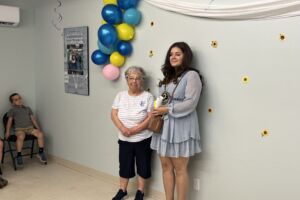
The graduates were also gifted intricate beaded medallions decorated with sunflowers during the ceremony.
“It was nice to see all that support from everyone, our families and all the people who have been working with the language through all the years,” said Gaspe.
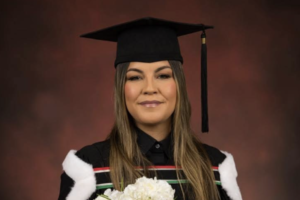
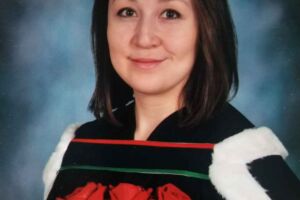
One of Gaspe’s favourite moments during the ceremony came while she was seated on stage with all the graduates.
“I hear my grandson go ‘Tóta’ and I look to find him waving from the crowd,” said Gaspe. “That was special.”
Michelle Kennedy, co-director at the Office of First Nations and Inuit Education (OFNIE) at McGill, attended the graduation.
“One of the touching things of the ceremony is that I had no idea what they were saying pretty much the whole ceremony,” said Kennedy, who as a non-Kanien’kéha speaker had to rely on other guests seated beside her to translate what was being said.
“It was very inspiring,” said Kennedy. “I think everyone in the room was kind of just in awe when they stood up and gave their speech.”
The graduation ceremony also offered inspiration to the current cohort of language students, many of whom attended the event.
“It was nice for current students to see that it is possible,” said Gareau. “Even though it’s really tough, in two years they’re going to be on that stage, giving their speeches, and they’re going to be as fluent as the current graduates.”
Sign up for email updates from The Eastern Door
As the language program continues, for Gareau a sign that the program has succeeded will be that in the next decades, there will no longer be a need for the Ratiwennenhá:wi Kanien’kéha language immersion program.
“Maybe the idea is to make it irrelevant, so there doesn’t need to be programming anymore, because our language is revived, and we just live in our language,” said Gareau.
Fern Marmont, Local Journalism Initiative Reporter