Research comes to town

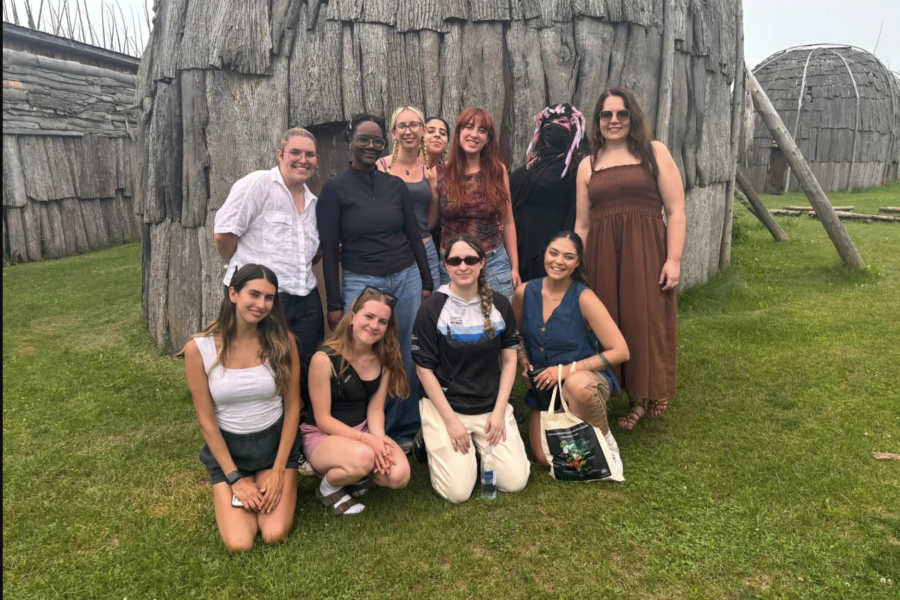
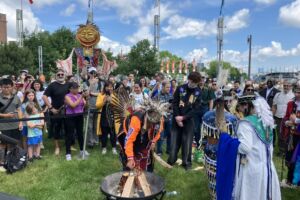
Indigenous and non-Indigenous researchers came together as part of the Onkwehón:we Project’s first annual conference. Courtesy Gerald Taiaiake Alfred
The first annual Onkwehón:we Project Conference was a success last week, with participants learning about cutting-edge research in the fields of archaeology and archive work, as well as sharing knowledge about their own research into Indigenous history.
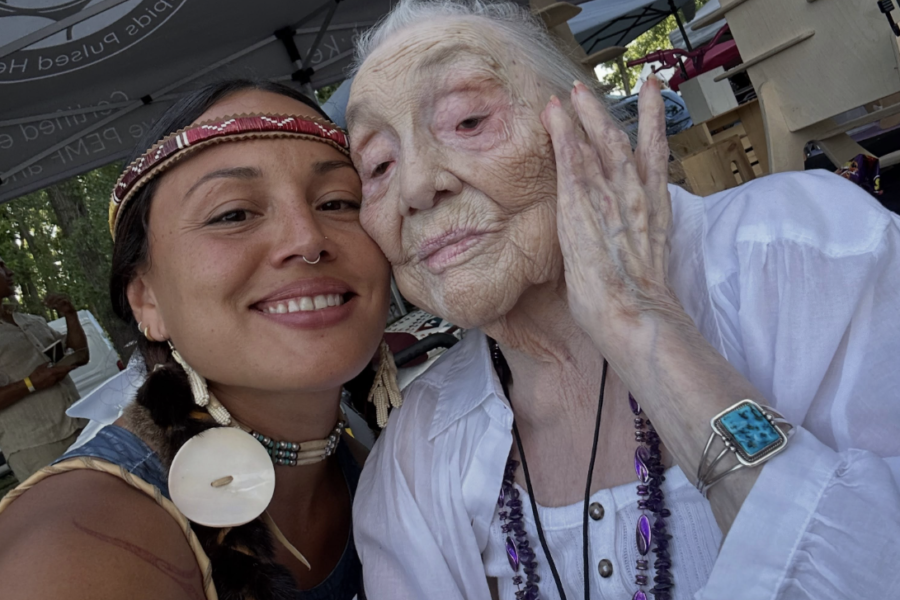
As an archaeologist, Katsitsahente Cross-Delisle often works alone, days in the field gently sifting for signs of the past in the soil and even more time researching their origins.
For her, last week’s first annual Onkwehón:we Project Conference was a reminder of why all that work is worthwhile.
“It’s like the light at the end of a long, long tunnel,” she said. “It shows that the work I’m doing reaches youth, it reaches elders, it reaches all the ages in between and it can inspire other people.”
Cross-Delisle is part of the steering committee behind the Onkwehón:we Project, a research initiative bringing together academics and stakeholders across communities and academic institutions to further research into ancestral Iroquoia.
The project, which is funded by a Social Sciences and Humanities Research Council of Canada (SSHRC) Partnership Grant, aims to enhance the information available to researchers, communities, and the general public, bringing together and digitizing data to be analyzed within a collaborative and decolonial framework to make it as accessible as possible.

Last week’s conference started with two days of sessions at McGill University, with speakers covering topics like ancestor care, radiocarbon dating, and archaeological collections management.
The final day, last Saturday, saw at least 100 participants head out to the Legion in Kahnawake for a day of presentations. Those speakers focused on local archaeology, rematriation of ancestral remains, and discussions about coming to a shared understanding of the “Saint Lawrence Iroquois” - and guests were even treated to food courtesy of Kahnawake’s own Messy Kitchen.
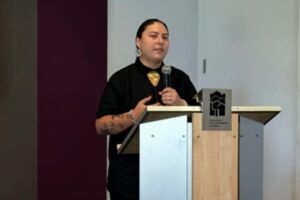
Cross-Delisle was a featured speaker across the event, sharing her experience as an archaeologist and moderating panels.
“It’s really rekindled the fire that I already had for this type of the work, and it’s also shown me and been a confirmation for me that even if you don’t see recognition all the time, the knowledge and information is being spread out and is going to the right people that need to hear it,” she said.
Gerald Taiaiake Alfred, director of the project, said it was productive to have sessions in the city and in Kahnawake, and that he was glad to see community members come out for the conference.
“There’s a lot of people in Kahnawake and we’re in connection to our stories, people have artifacts and things left by our ancestors,” Alfred said.
He said he was glad to bring together non-Indigenous and Indigenous stakeholders at the event to help build connections that will provide long-term benefits for research into Indigenous history.
“They have a lot of scientific knowledge, a lot of information that they’ve developed through their mechanisms and techniques and ways of knowing that can inform us about our own past,” Alfred said. “They’re willing to share and they’re proud to be in this relationship where they’re actually assisting us and our nations.”
Ross Montour, the Mohawk Council of Kahnawake (MCK)’s lead portfolio chief for Indigenous Rights and Research was also at the event - he said it was particularly meaningful to have a space for researchers and attendees to discuss their knowledge and meet one another in person.
“It was a really, really good turnout, and I look forward to having it come again,” Montour said. “People talked about new discoveries, new technology, there were discussions about decolonization, it was an interesting event.”
Sign up for email updates from The Eastern Door
Cross-Delisle said the event brought together some of the most qualified voices in the archaeological world - she was particularly interested to attend the panel on radiocarbon dating during the McGill session, which brought together experts Jen Birch from the University of Georgia, Christine Prior from the André E. Lalonde National AMS Laboratory, Tanya Hill-Montour from Six Nations of the Grand River, and Bonnie Glencross from Wilfred Laurier University.
“From what I’ve learned in the past, we’ve always had to send ancestral remains like bones or teeth to a lab to be analyzed, but I found out they have new technologies where you can actually use the soil from the grave pit and they can analyze the pollen and soil to give you that information,” Cross-Delisle said. “(Experts) have started to take into account all the conversations we’ve had with them about how destructive these processes can be, and they explained that there’s an alternative now. Technology is growing and we’re learning from our mistakes.”
More events will take place as part of the Onkwehón:we Project in the coming months, as the project continues to grow, having marked more than a year since it was first launched.