Red alert for Red Dress Alert
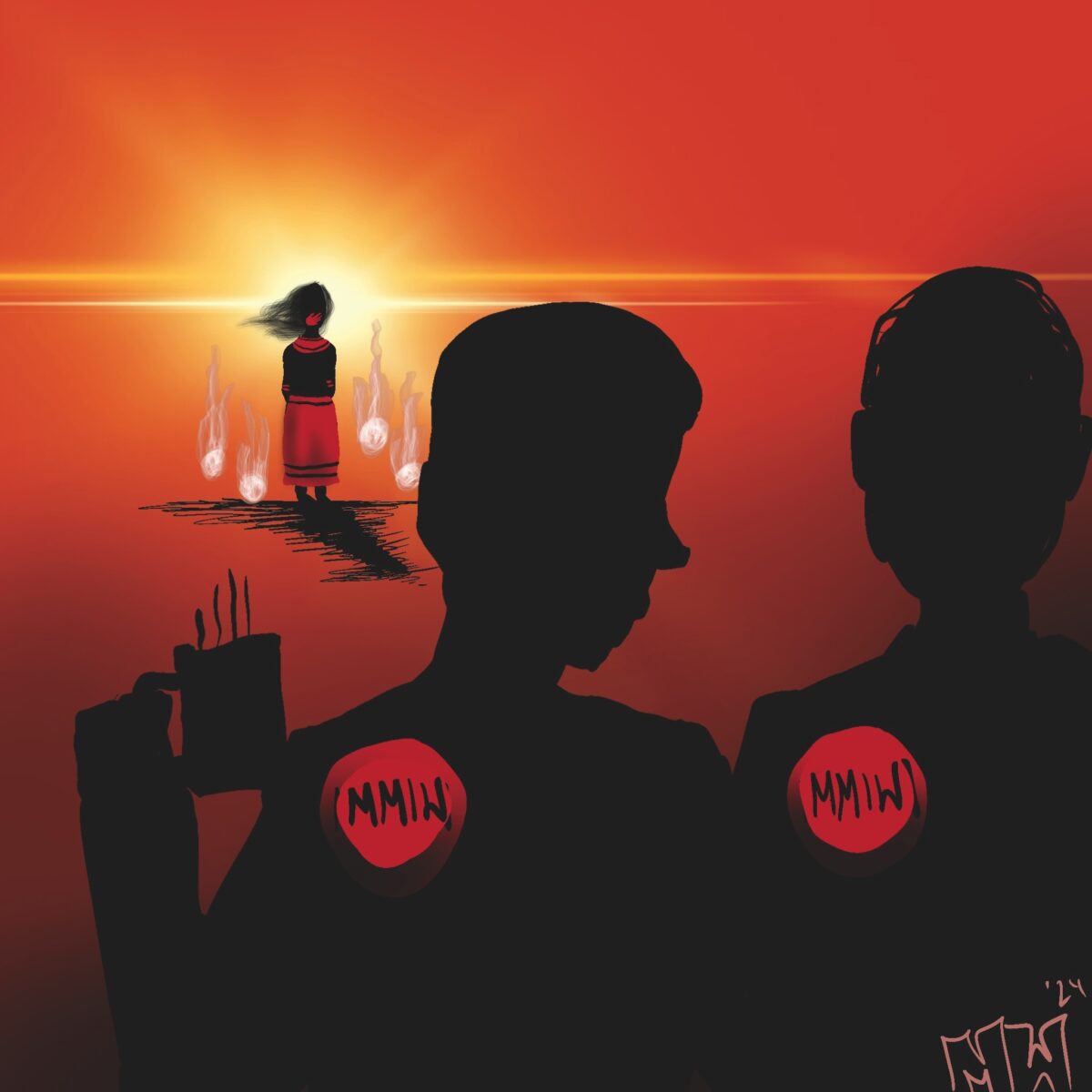
This Sunday, May 5, marks the National Day of Awareness for Missing and Murdered Indigenous Women and Girls and Two-Spirit People (MMIWG2S) – better known as Red Dress Day. It was created in 2010 when Metis artist Jaime Black began using the occasion to publicly display red dresses, a stark symbol of a heart-wrenching crisis that is still ongoing.
Along with October 4, the National Day of Action for Missing and Murdered Indigenous Women and Girls, Red Dress Day is a chance to remind people that MMIWG2S is no abstraction. It’s an emergency and a genocide – this was the conclusion of the National Inquiry into Missing and Murdered Indigenous Women and Girls that spent years looking into the issue.
The disproportionate rate at which Onkwehón:we women and girls disappear or are murdered is 12 times higher than other women and girls in Canada, a statistic that brings shame to this country and that should have sparked a flurry of action in 2019 when it was cited by the official inquiry – not that the crisis was exactly a secret by that time.
Of course, as we know well, the government is adept at treating crises as budgetary footnotes, launching a labyrinth of studies and committees like only government can. Whether this is a delay tactic or just plain cowardice, it leads to a glacial pace that goes nowhere or paves the way to paltry solutions that hardly begin to address the issue.
This is the case when the problem is sure to punish the powers that be at the ballot box, like the housing crisis will. And it’s even truer when the affected people are Onkwehón:we, whom the government is too accustomed to treating with disinterest if not disdain.

Talk is cheap, and the current government has enough words to fill a dictionary. It recognizes two days a year to highlight MMIWG2S, but when it comes time to act, it does just enough to keep the rhetoric flowing.
This is what happened when the Liberals released their budget a couple weeks ago. With Red Dress Day coming up on the calendar, they devoted dollars to the long-awaited, urgently needed Red Dress alert – the MMIWG2S equivalent of an Amber Alert – but don’t expect it to be operational anytime soon.
After the government boosted hopes by launching consultations in December for a countrywide system, the recently released budget – the political blueprint for the year ahead – promises only $1.3 million, and this for a regional system that will take three years to develop alongside partners.
So how does Trudeau’s man, Crown-Indigenous Relations minister Gary Anandasangaree, feel about his own government’s pledge that the alert system on which advocates from coast to coast are pinning their hopes will instead get a pilot project in still-to-be-determined cities?
It’s frustrating, he said, how long it’s taking to move forward.
The politician who first advocated for this program in Parliament, the NDP’s Leah Gazan, observed that the money set aside to develop a Red Dress alert is far below the figure committed to fighting auto theft. “The message is very clear that this country cares more about cars than it does Indigenous women, girls, and 2SLGBTQQIA+,” Gazan said, according to the CBC.
What’s more, the government planning to create a countrywide system three years from now betrays its arrogance or its lack of commitment or both, since the Liberals are counting on a miracle to hang on come election 2025, and we all know Poilievre’s Conservatives are not exactly champing at the bit to enact change when it comes to Onkwehón:we.
That doesn’t mean they’re not eager to score political points off the Liberals’ failures when it comes to MMIWG2S, however, with Conservative MP Anna Roberts saying it’s time to hold the government’s feet to the fire on this issue.
But the fact even the Conservatives are openly proclaiming the need for a countrywide system shows how far MMIWG2S advocacy has come, and that’s wholly because of Onkwehón:we raising their voices.
It was Onkwehón:we whose encampments and refusal to let their calls for justice fade who finally secured government commitments to allocate funds for the search of the Prairie Green Landfill near Winnipeg, where it is believed there are the remains of at least two Indigenous women, Morgan Harris and Marcedes Myran, both believed to have been murdered by the same man, Jeremy Skibicki.
Sign up for email updates from The Eastern Door
It’s an answer that again took far too long and that may still fall short, and may have never happened if not for the election of an Indigenous premier of Manitoba, Wab Kinew. It certainly would not have happened without Indigenous resistance.
One Onkwehón:we woman, Jennifer Jesty of Eskasoni First Nation, told a parliamentary committee in March that the Unama’ki Alert System she developed for five Mi’kmaq communities has issued 183 alerts since 2020, locating 67 people, 96 percent of those within one hour.
Just imagine what a countrywide system could accomplish?
Closer to home, all the students at Kanesatake’s Ratihén:te High School will be on the school’s lawn this morning to raise money and awareness, confronting the many outsiders driving past with their message of justice. The entire community is invited to come out and support them.
The reasons for government inaction are many, none of them pretty. At the end of the day, colonial structures and a colonial spirit are hardened against change, hardened in heart, glibly clinging to whatever doesn’t belong to them. But change is coming, and a countrywide Red Dress alert is only one piece of the puzzle, but it’s needed now, not in three years or more.