Reconnecting roots through Kanien’kéha

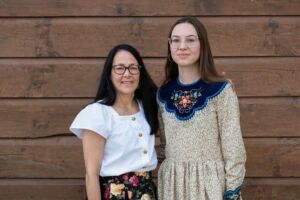
Oró:te Etienne received her certificate at the Ratiwennenhá:wi Kanien’kéha language immersion program graduation. Courtesy Samantha Karonhiio Simon
By the end of each day, Oró:te Etienne’s mouth hurt. As a child, she spent years in speech therapy learning how to pronounce difficult sounds in English. As an adult, Etienne found herself facing a similar challenge, this time while learning Kanien’kéha.
Learning to roll her Rs, shaping unfamiliar sounds, and speaking in the full immersion classes pushed her out of her comfort zone. Combined with dyslexia and the pressure Etienne put on herself to become fluent in the language quickly, the road to becoming a language speaker was often overwhelming.
“There were days where I would just cry because I was so frustrated,” said Etienne. “It’s not easy learning Kanien’kéha.”
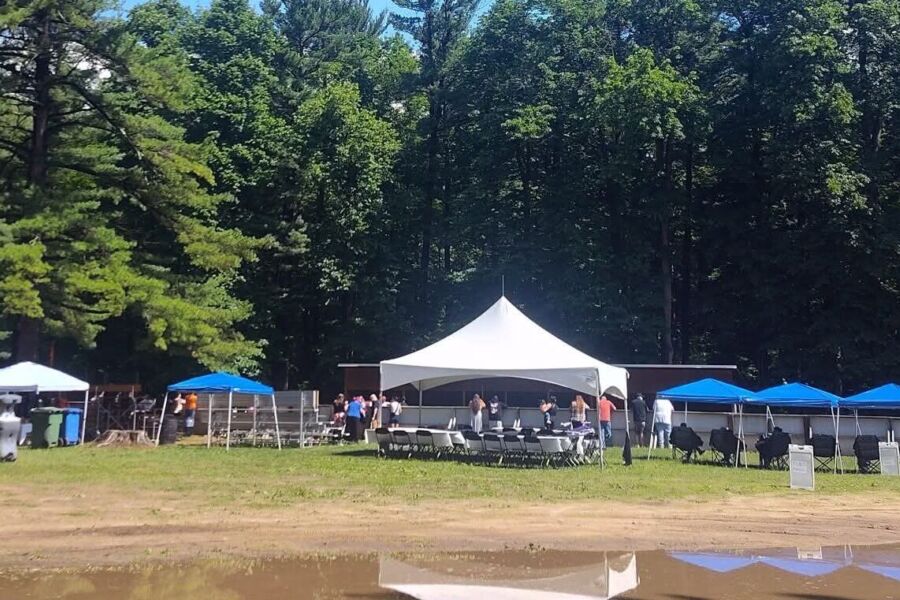
Last weekend, however, Etienne stood alongside fellow graduates as she received her certificate from graduating from the Ratiwennenhá:wi Kanien’kéha language immersion program.
“A lot of blood, sweat, and tears went into it,” said Etienne, who can now speak with elders, family members, and others in the community in the language. “I’m honestly amazed that in the span of three years I learned how to speak the language.”
Growing up, Etienne attended schools off reserve and was often the only Indigenous person in her class. Much of what she learned about Indigenous history came through a non-Indigenous perspective, leaving her disconnected from her roots and struggling with her identity.
“That was my reality, not really being in the community. It was a little isolating,” said Etienne. “I had an identity crisis.”
That struggle intensified when her father passed away during Etienne’s last year of high school.

“My father was my connection to my roots and my Indigenous identity,” said Etienne. “When he passed away, it changed my entire worldview. It changed everything.”
Etienne said that her father’s passing put everything into a stark perspective.
“Life is so short,” said Etienne. “I wanted to spend the rest of my life knowing my language and being connected to my roots and identity.”
After years of trying to learn Kanien’kéha on her own through online resources and notebooks filled with vocabulary words, Etienne enrolled in the Ratiwennenhá:wi Kanien’kéha language immersion program.
Ratiwennenhá:wi provided the foundation and support that she needed, but Etienne still struggled with learning the pronunciation of Kanien’kéha.
“Growing up, I had a difficult time speaking and I went through years of speech therapy. And it was almost like deja vu all over again,” said Etienne.
“I couldn’t even roll my Rs,” said Etienne. “My mouth would hurt every day after class because how we say the words in Kanien’kéha are so different.”
Etienne credited her teachers for getting through the program, as they worked closely with her, offering patience and support as she navigated learning a new language with dyslexia.

“They didn’t give up on me,” said Etienne. “They worked very hard to help me, and they supported me and were understanding of my learning difficulties.”
Teachers adapted their lessons to different learning styles through visual exercises, land-based activities, and interactive games.
“They really put effort into creating different lessons and making learning fun,” said Etienne.
“It became almost like a second home,” said Etienne. “You become really close to the people in the program.”
One of Etienne’s favourite memories while learning Kanien’kéha was actually meeting an Onyota’á:ka (Oneida) language speaker.
“We realized we could understand one another,” said Etienne. “It was amazing because it showed how connected we all are.”
Etienne is now focusing on bringing back Kanien’kéha to her family, introducing the language into everyday conversations with relatives. Etienne regularly teaches words and phrases to her sister.
“I hope one day she’ll learn the language too,” said Etienne.
Sign up for email updates from The Eastern Door
Before her father’s death, Etienne admitted she had planned on leaving Kanesatake. But with her only connection to her culture gone, no living grandparents, Etienne realized that she not only wanted to keep that connection with her culture and community, but be able to pass it on to the future.
“When you grow up in the community, you’re taught that you have to leave things better than you found them,” said Etienne. “If I can make the community just a little bit better for the next generation, that’s what I want to do.”
Etienne is now pursuing a bachelor’s degree through a program with the Office of First Nations and Inuit Education (OFNIE) at McGill. She is also working as a teaching assistant at Rotiwennakéhte Elementary School.
“Learning the language has opened many doors where I am able to give back in such an important way,” said Etienne.
Etienne added that looking back on the years of frustration and loss, the tears and sore muscles from practicing unfamiliar sounds, it was all worth it to be where she is now.
“It’s helped me connect to my community, to my family, and to other people,” said Etienne. “It’s an amazing gift to have.”
Fern Marmont, Local Journalism Initiative Reporter