Prestigious accolades for locals

Two Kahnawa’kehró:non found out this month they’d be awarded the prestigious King Charles III’s Coronation Medal.
They include police chief Dwayne Zacharie, who accepted the medal last week in Montreal, and Frank Deer, a professor of Indigenous education at the University of Manitoba who’ll accept it in Ottawa this March.
The medal is given out by Canada’s Governor General in recognition of those in the country who’ve made significant contributions to their respective communities or region. The award dates back to 2023 following the king’s coronation and will be awarded to 30,000 this year.
“I do the job that I do because I'm invested in this community,” said Zacharie, who accepted the medal at a ceremony at the Royal Canadian Mounted Police (RCMP) headquarters last Thursday. “It’s nice to get recognition, but it doesn’t happen all that often, and that’s fine. I don’t do it for a pat on the back.”
“I was more interested in going so that others there would see that First Nation policing is involved in doing good work for the communities that they serve.”

Who nominated him is secret. Medal recipients don’t get a detailed breakdown of the reasons provided by their nominee either, but if he’d have to guess, Zacharie said it was his dedication to seeing First Nation policing recognized as an essential service.
He’s also vice-president of the Quebec Association of First Nation and Inuit Police Directors (QAFNIPD), which has an active human rights complaint against Quebec over its underfunding of Indigenous-run police forces in the province.
“We’re under-resourced and understaffed and we continue to survive, we continue to work as hard as we can for our community to provide the best service possible,” Zacharie said. “It’s really nice to be recognized, but at the same time, there’s still a lot of work that has to be done.”
Deer found out he’d been awarded the medal this Monday, after receiving an email from the Royal Society of Canada (RSC). The professor is also a member of the society, Canada’s academy of distinguished scholars, humanists, scientists, and artists.
He’s been a member since 2020 and was previously president of one of its councils. He was also working as Canada research chair in Indigenous education over much of his presidency, a term he just recently ended.




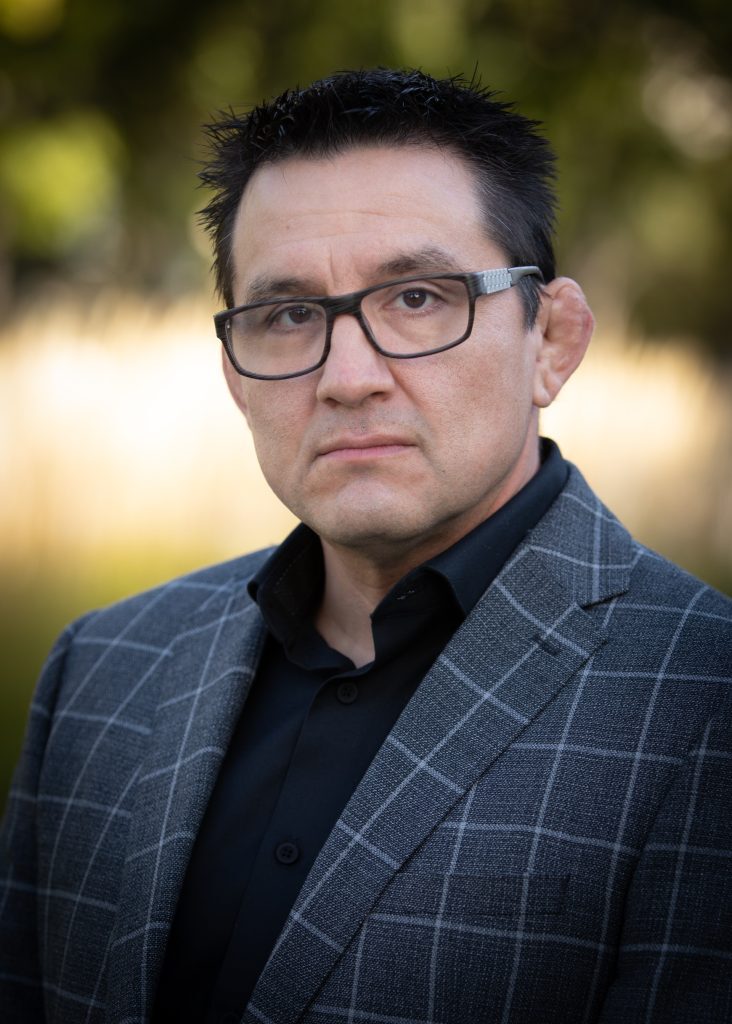
“What I’m being awarded for, as I’m coming to understand, are my domestic and international contributions to Indigenous engagement through the Royal Society of Canada,” Deer told The Eastern Door. “There’s a number of things I’ve been up to since I've been inducted into the society, and all of it has to do with topics that are germane to Indigenous peoples, Indigenous achievement, and working as well as we can with Indigenous peoples to better the academy and to better ourselves.”
Reflecting on his achievements over the last year, the first thing that came to mind was his role in setting up a tri-academy partnership on Indigenous engagement. The RSC, the Royal Society of New Zealand Te Apārangi, and the Australian Academy of Science make up the partners, who met at a conference in Vancouver this past November to talk about the challenges and goals they all share among each other.
Sign up for email updates from The Eastern Door
“Frankly, it was one of the greatest professional weeks of my life,” Deer said. “I had Indigenous scholars from around the world, whom people hold in high regard, descend upon our event.”
Deer was also behind an updating of the society’s selection process to encourage more Indigenous representation among its membership. In the last year, Indigenous people accounted for roughly five percent of all new members inducted into the society.
Thanks to his contributions, a new prize is expected to be unveiled come the fall aimed celebrating the work of Indigenous scholars, scientists, or artists in the society.
“There are people in the society who would be, in my view, deserving of recognition of that sort,” Deer said. “Otherwise, there’s no recognition of Indigenous contributions all that much in the society. One of my goals entering the society was to try my best to help change that.”