Students bring projects north

Courtesy Claudia Flynn
In the weeks before the Quebec Indigenous Science Fair in Kuujjuaraapik/Whapmagoostui, Ratihén:te High School science teacher Claudia Flynn gave a lesson on the topic of magnetism to her grade 10 students.
Little did she know she would soon be hearing one of them, Kaliyah Nelson, explain to her Kanesatake and Kahnawake peers how Earth’s magnetic field creates the Aurora Borealis - also known as the Northern Lights - as students and chaperones alike watched it dance in Nunavik’s night sky.
“Her actually getting to see it and describe it to the other students, you get to witness that sharing of knowledge and realize you really did make an impact on those students,” said Flynn.
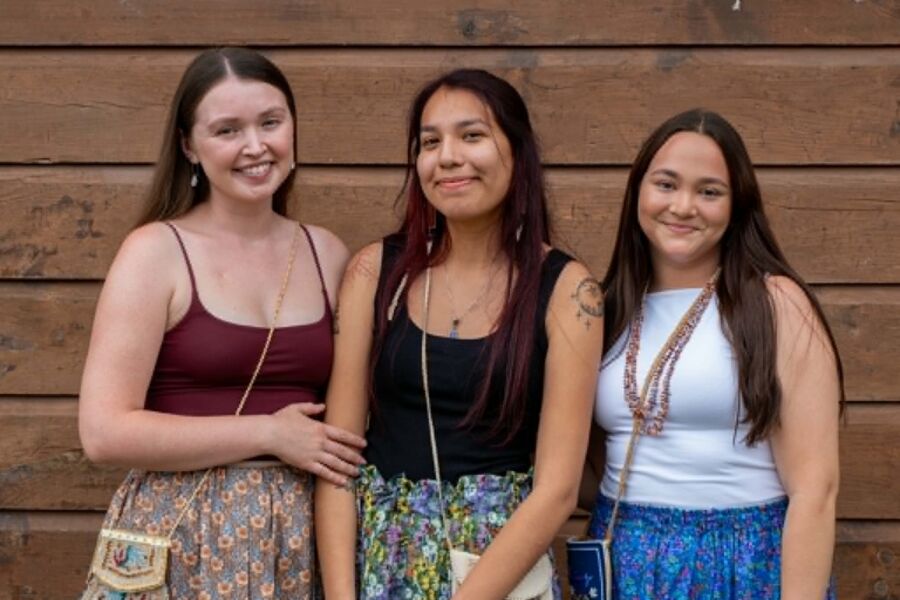
This sharing of knowledge and excitement around science is exactly what the provincial Indigenous science fair is all about, as five Kanesatake youth joined peers from Onkwehón:we communities across Quebec to exchange scientific ideas and learn about one another in the process.


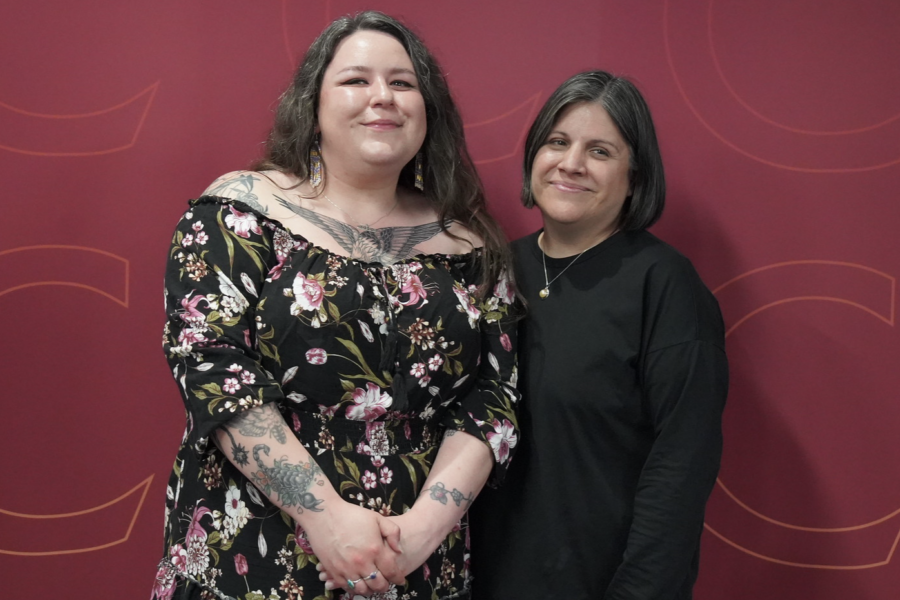
“There was a lot of wonderful stuff we got to see. I think I learned a lot,” said Skanaie:’a Serena Ionescu, whose first-place finish in the local science fair alongside partner Vanessa Schlotthauber earned her a spot on the trip. “I learned a lot from new people that I met and different boards that I got to see. I learned a lot from the community as well and their culture.”

Ionescu and Schlotthauber’s project was about medicinal teas, and Ionescu said it garnered extra attention given the difference in vegetation up north. They showed it off not only to judges and other science fair winners from across Quebec, but also students from the local elementary school who came through.
“It was a little bit scary, but it was really cool,” said Ionescu. “Everybody brought a different reaction and different questions. It was really cool to see how people of other places reacted to the plants.”
The group also got to bond with Kahnawake’s contingent - even getting stuck at the airport together for 12 hours at the end of the trip. Members of the host communities helped out by bringing plenty of food to the students as they found creative ways to pass the time.
“It was both the best and worst part of the trip,” said Ionescu of the delay.
Ionescu’s mother Ami-Lee Trentin Hannaburg travelled not once but twice to Montreal’s airport, ready to welcome her daughter home. The parents were all eager for their children’s return, she said, but she was still ecstatic that her daughter got to take part in the experience.
“We thought it was incredible,” said Trentin Hannaburg. “She worked hard for it. She put in the work to be able to have the opportunity to go, so we’re definitely proud of her.”
According to Flynn, the experience was educational in many ways, not just scientifically.
“I think it’s such a valuable experience for the students to see what life is like up there,” she said.
She noted the hospitality of the host communities and the traditional food they got the chance to enjoy, such as caribou stew. Other cultural aspects they got to experience included an Inuit throat singing performance and a visit to an inukshuk about 12 feet tall looking over Hudson Bay.
But of course, science was at the core, with the judges appreciating some of the projects’ relevance to Kanien’kehá:ka culture. In addition to the medicinal tea project, Nelson had a water drum project that was a hit with visitors.
The third Kanesatake project, one about the James Bay Project by Tewehshon Nelson and Emily Nolet, was also much appreciated, given that project’s damaging impact in the region they were visiting.
Despite the differences in the projects, the effort and insights of all of them impressed the science teacher, not to mention their success in conveying their ideas at the fair.
Sign up for email updates from The Eastern Door
“I said this a hundred times to them, how incredibly proud I am of those students,” Flynn said.
“It was an experience that I don’t think any of them will forget.”
Marcus Bankuti, Local Journalism Initiative Reporter