New grand chief takes minister to task

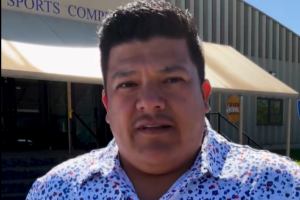
Mohawk Council of Kahnawake (MCK) grand chief Cody Diabo blasted federal minister Gary Anandasangaree while at the Assembly of First Nations (AFN) annual gathering on Wednesday, over his government’s continued refusal to respect First Nations’ jurisdiction over their own membership.
“Turn membership over to the communities and we will determine who our people are, not the federal government,” he told Anandasangaree, the minister of Crown-Indigenous Relations. “The federal government needs to be out of membership all together. We will determine our people and who they are.”
The newly-elected MCK grand chief took to the microphone at the 45th AFN annual general assembly in Montreal to call out the minister following Anandasangaree’s speech to a crowd of hundreds gathered there.
The federal government has adjusted who in Canada has a right to Indian status in response to decades of systemic sex discrimination that came out of the Indian Act.
In the case of Kahnawake, changes to the act over the years have led to a major discrepancy between who the MCK recognizes as being Kahnawa’kehró:non under its membership law and those who aren’t recognized by the band council – but have been registered by Canada as having Kanien’kehá:ka status in the community.
“I have no business defining who is and who is not a member of your community,” Anandasangaree said in response. “Canada should not have that ability, but unfortunately we’re here.”
He said First Nations’ jurisdiction over their own membership will come one day, though.
“We’ve had a number of temporary band-aid solutions,” he said, mentioning the act’s second-generation cut-off rule, which is currently the subject of proposed reforms going through the House of Commons under Bill C-38.

Should the bill pass, hundreds of First Nations people across the country stand to reclaim Indian status previously lost as a result of the act’s second-generation cut-off rule.
Anandasangaree said the government has been implementing patchwork solutions to keep up.
“Ultimately I think we need to get to a place where membership and citizenship is determined by you in your communities,” he said.
Diabo also took Anandasangaree to task on his government’s meddling in Indigenous membership while at the regional caucus for First Nations in Quebec at the gathering earlier that morning.
“He had stated himself that it’s not their job to define who First Nations’ people are. I said, ‘But yet you're doing it,’” Diabo told THE EASTERN DOOR. “Canada just needs to respect and accept that our laws supersede their laws.”
Diabo also denounced Bill C-53, proposed reforms that would grant federal recognition to certain Metis governments in Alberta, Ontario, and Saskatchewan, another proposed law that equates to Canada once again saying who is and isn’t Indigenous.
The new MCK grand chief said the band council’s presence at the assembly is also about making connections with other First Nations and sister communities like Kanesatake.
“Our participation here, it’s more on an observation basis. The assembly doesn’t speak on our behalf,” he said, adding he’s been actively reviewing the 76 resolutions up for adoption at the assembly. “We just want to make sure that whatever is happening here doesn't affect us negatively.”


The main item on his radar were the discussions relating to land claims.
“The time for talk is over. They have to come to the table with concrete solutions,” he said of Canada. “We're going to be giving them a timeline.”
While at the assembly he brought forward amendments to a number of resolutions to make sure the AFN would respect the jurisdiction individual First Nations have over their own land claims – in the hope the AFN chiefs would avoid speaking and advocating on any nation’s behalf without their prior input.
The room also supported his amendment demanding the AFN establish a process for land right holders to directly guide any policy reforms relating to land claims brought forward by the AFN to the federal government.
BOLDSTARTSHEREFeds make new compensation offer over child and family servicesBOLDENDSHERE
In her opening speech Tuesday, AFN national chief Cindy Woodhouse Nepinak announced the Assembly had received a settlement offer from the federal government relating to its ongoing reform of family and child services in Indigenous communities.
"While this offer is under settlement privilege, I can tell you today that it is a very significant offer," Woodhouse Nepinak told the room. "It is a fair offer that will benefit generations of children.”
Details relating to the offer and the compensation involved were shared later at a session at the end of the day, but only chiefs and proxies were permitted to attend, not the media. Woodhouse Nepanik later confirmed while at a media scrum Thursday the compensation amounts to $47.8 billion.
Sign up for email updates from The Eastern Door
The settlement offer stems from a 2016 ruling from the Canadian Human Rights Tribunal that found the federal government had discriminated against First Nations children and families across the country by refusing to provide them with the same quality of child welfare services available in other jurisdictions.
The government of Canada previously had committed $20 billion to the family and child services reforms earlier this year.
Diabo held off on commenting on the offer, saying the MCK is still at work studying what’s included in it.
This article was originally published in print on July 12 in issue 33.28 of The Eastern Door.