New agreement for former offenders

File photo
A memorandum of understanding (MOU) signed between the Mohawk Council of Kahnawake (MCK) and the Correctional Service of Canada (CSC) will see nearly $200,000 flow into the community over the next two years, in an agreement that could serve as a model for other First Nations across Turtle Island.
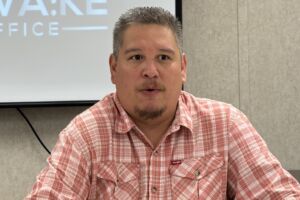
“A non-Native parole officer has no idea what it’s like to be a Mohawk, to be Kahnawa’kehró:non,” said Mohawk Council of Kahnawake (MCK) chief Ryan Montour, who is the lead portfolio chief on community safety. “They have no idea, they don’t know the cultural aspect to it, they just have no idea what it means.”
Montour said that Kahnawake has been developing a program focused on social reintegration for offenders since 2006, at the cost of the community.
“All of the work that we’ve been doing has meant it’s one of the best programs in the country, our recidivism rate is low, we have a 92 percent success rate, and that means a federal offender is not going back to prison,” Montour said.
Montour credits Section 84 of the Corrections and Conditional Release Act with this success - Section 84 permits federal inmates to be released on parole in an Indigenous community. Kahnawake runs its own Section 84 program, part of an agreement it has with the Correctional Service of Canada (CSC).
“In Kahnawake, we have a lot of natural support systems. We have family support systems, direct access to social support, including alcohol and drug addiction support and anger management, but the really great thing we incorporate with offenders is traditional healing,” Montour said.

Now, a new MOU signed between CSC and the MCK will mean more coverage of those programs, and further embedded support for in-community parole workers and services helping with reintegration.
The agreement will see just over $70,000 for Kahnawake’s services this year, with $99,000 the following year.
It’s an impactful funding envelope - Montour said that an average of $4,000 is spent per client per year in services rendered.
“It’s not just about financial resources, I think it’s also validation that our program is the best in the country for combatting recidivism,” Montour said. “What I want to see is continued success, I don’t want to have people in cages, I don’t want our people to go to prison. I think this is just improving the safety and security of our nation.”
Marty Maltby, the acting deputy commissioner of Indigenous corrections at CSC said that the agreement stems from many years of conversations with the MCK, and symbolizes a step forward for the two organizations.
“I really feel like it’s turning a page, and it’s something really new that we’re starting with the MCK,” Maltby said. “It really is something that I feel is entrenching that relationship and establishing that collaborative work.”


The funding, which could be negotiated for future years beyond the initial envelope, will mean more resources can be provided in Kahnawake.
Resources could include more supports for in-community parole workers, employment assistance, cultural programming, and logistical supports as offenders readjust to life back in Kahnawake.
“It also speaks to the relationship that we would have with Kahnawake after that release, so while they’re in the community, how are our community supervision staff, our parole officers, working with Kahnawake to ensure that the things that we put together in that release plan are actually happening, that they’re benefiting from it, and that we’re seeing positive results,” Maltby said.
Assuming the agreement leads to long-term positive results, other First Nations communities could forge similar MOUs with CSC in the future.
“We do have different MOUs with different communities and First Nations organizations,” Maltby said. “But this is pretty exciting because it’s the first step in actually looking at how we can develop this kind of partnership in terms of community support. That’s what’s pretty unique in this. I think I can fairly say that we can look to this as an opportunity to say, ‘Okay, maybe we can develop a new approach,’”
Montour said he’s optimistic about what can be done thanks to the new MOU - he himself benefited from Kahnawake’s Section 84 program after he was sentenced to four years in prison after pleading guilty to dangerous operation of a vehicle and impaired driving causing the death of Tony’s Pizza deliveryman Erick Bertrand.
Sign up for email updates from The Eastern Door
Addictions programs helped him early in prison, but traditional healing provided thanks to Kahnawake’s Section 84 program is what really turned his life around upon his release.
With more funding and commitment coming from the MOU with CSC, he hopes that more offenders could be helped to reintegrate like he was.
“I’ve been advocating for it since I got in, because I was an expert from the other side. Where I sit now is proof that it works,” Montour said.