Longhouse opposes Alto
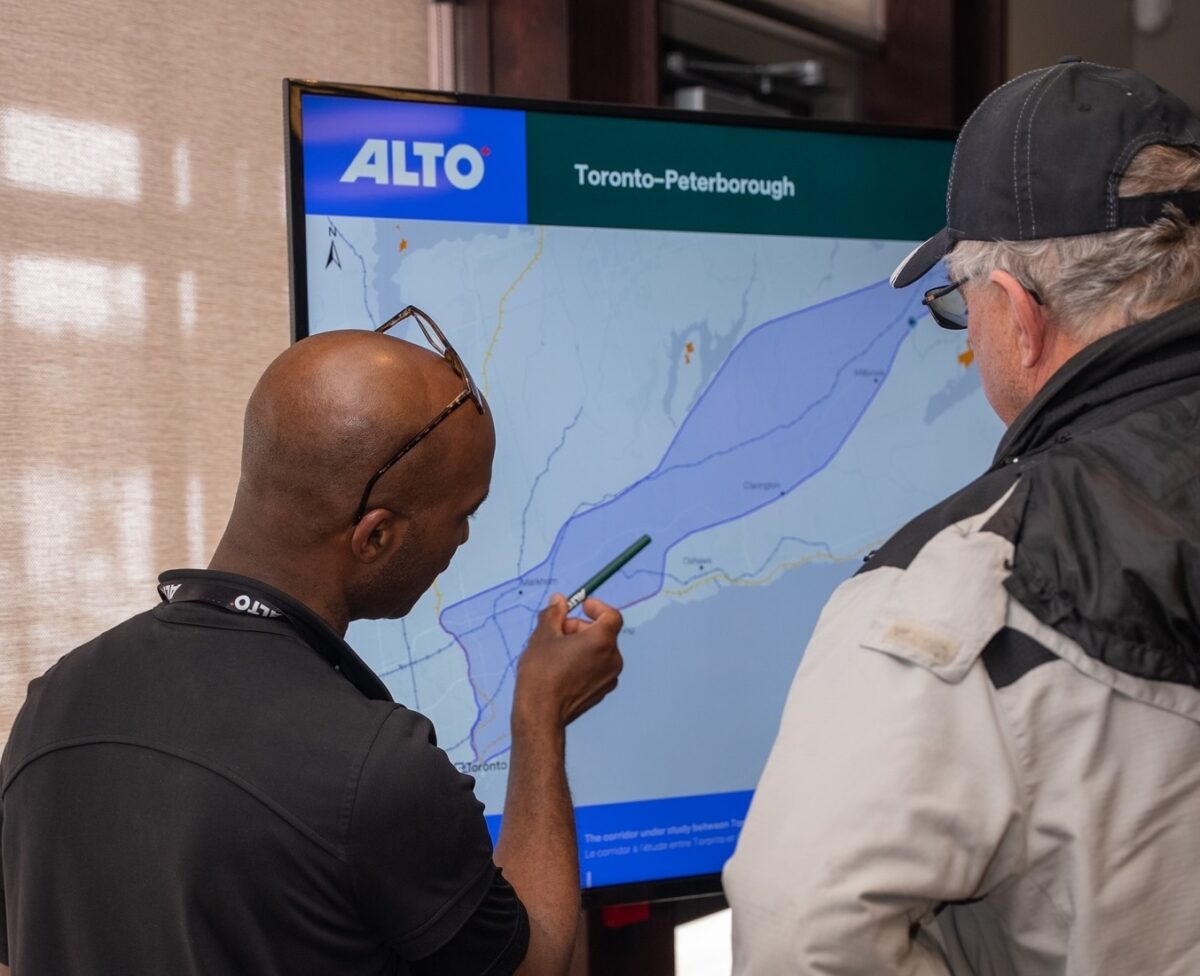
Courtesy Alto Facebook page
Members of the Longhouse in Kanesatake formally opposed the Alto railway project in a letter to various members of government over the railways projected path through Kanesatake’s ancestral lands.
“This is a very sensitive area for all involved, the potential impact on our identity, cultural heritage, and environment as well as the use of our ancestoral territory without our consent,” reads the letter signed by Sabrina Richard for the Rotinonhseshá:ka of Kanehsatà:ke and secretary Wenhni’tano:ron Catherine Beauvais.
“The Kanien’kehá:ka are longstanding stewards of the lands. Since the arrival of the European peoples, they have stripped our traditional territory for their own gain. This must stop.”
The letter was sent to Alto and members of government, including prime minister Mark Carney and minister of Crown-Indigenous Relations Rebecca Alty.
Longhouse representatives did not respond to a request for comment.
The position comes just days after Kanesatake Economic and Business Development (KEBD) concluded a survey seeking the community’s input on the Alto train project.

The survey, which ended on April 21, is meant to inform how the Mohawk Council of Kanesatake (MCK) will respond to the high-speed train project and to provide Alto with information on the community’s perspective.
MCK caretaker council member Brant Etienne said Kanehsata’kehró:non should consider for themselves the possible benefits or drawbacks of the project.
“The Alto project, there’s no way around it. It passes right through our traditional territory,” said Etienne.
“I think there are potential positives and potential negatives. I think people really need to sit down and weigh those.”
Etienne said that he thought the project could potentially contribute to political gains for Kanesatake by creating leverage in negotiations.
“This council, and any future council and the community as a whole really has to consider what the possibilities are, and what our unique position in Kanesatake affords us,” said Etienne.




“We don’t get this kind of opportunity dropped in our lap every day, or even every, you know, 100 years.”
In a statement, Alto confirmed their Indigenous Relations team has been in contact with representatives from Kanesatake for approximately three years, and that community information sessions are meant to inform, drive participation with the community, and provide a space for community members to share their thoughts.
“Input from Kanesatake is essential because the community is located near the planned corridor and future train stations of Laval and Montreal. The ideas, opinions, and concerns raised through our engagement session will play a key role in guiding our work to refine the alignment,” said Alto spokesperson Crystal Jongeward.
Crown-Indigenous Relations and Northern Affairs Canada (CIRNAC) confirmed they have received the letter from the Kanehsatà:ke Rotinonhseshá:ka.
“CIR provides support and guidance to other federal departments and agencies in meeting the legal duty to consult; however, each department - in this case Transport Canada - is responsible for establishing and meeting any consultation obligations arising within its respective mandate,” said spokesperson for CIRNAC Eric Head.
MCK consulting communications officer Justine Germain said a report on the survey results will be available next week.
Sign up for email updates from The Eastern Door
Germain also said there will be more engagement sessions with the community on Alto in the future, including an open house with Alto representatives so the community can discuss their concerns directly with them.
Hadassah Alencar, Local Journalism Initiative Reporter