Kateri inspires classical show
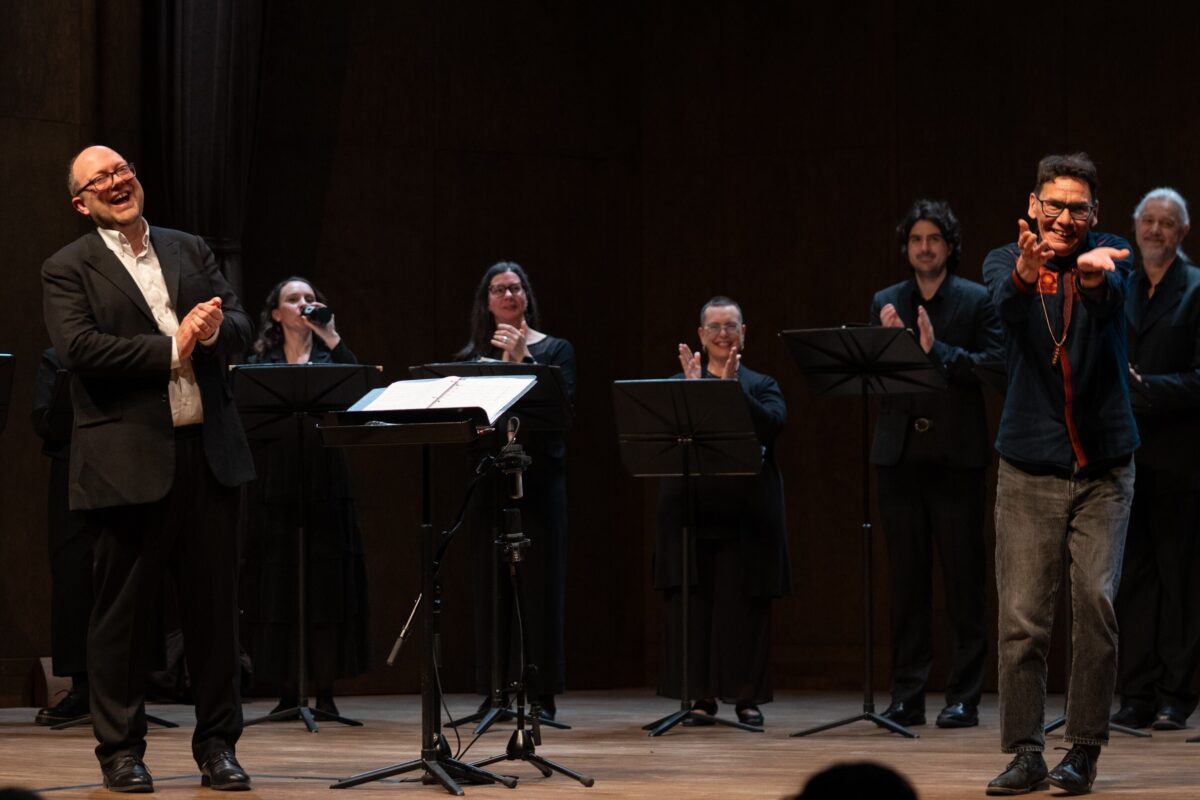
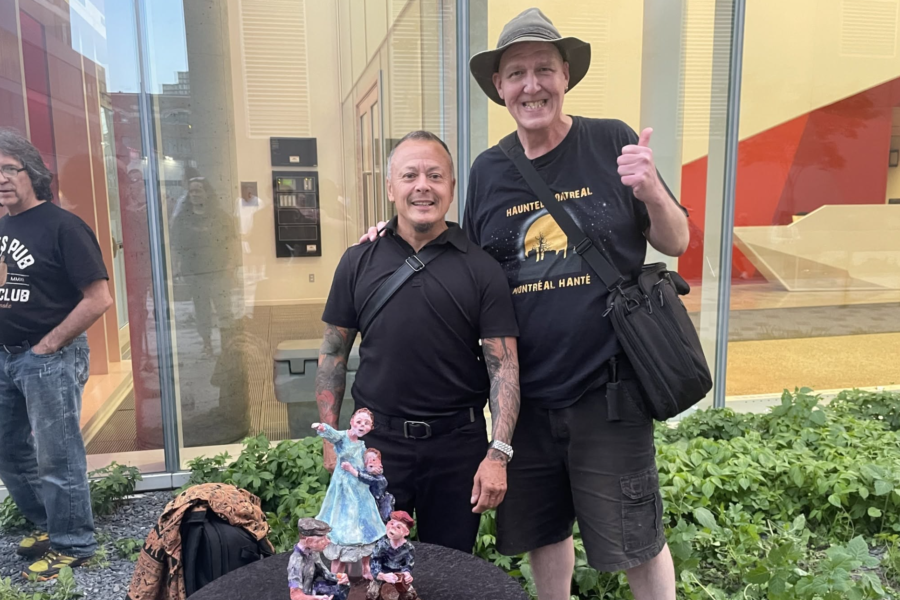
SMAM artistic director Andrew McAnerney (far left) and Cree composer Andrew Balfour (far right) after a performance of “Kateri: Prophecies and the Sacred Woman.” Credit Benoit Vermette
Back in 2018, Cree composer Andrew Balfour was visiting Saint Joseph’s Oratory on Mount Royal, when his late wife mentioned Kateri Tekakwitha. Kateri, Balfour learned, was a Mohawk woman from the 1600s, who became the first Indigenous saint from North America when she was canonized in 2012.
“I thought, ‘Who’s that? I’ve never heard of her,’” he said. “Since then, I’ve been fascinated and interested in the complexities involved in her being an Indigenous woman, a Catholic saint, and all those deeper issues of colonization and what she means to different people.”
Balfour, a Juno Award-nominated composer and conductor, wanted to find a way to bring Kateri’s story to life, and so he decided to start writing, eventually creating a piece as part of the Studio de musique ancienne de Montreal (SMAM) programming this season.
The show, titled “Kateri: Prophecies and the Sacred Woman,” was performed last week at the Notre Dame Cathedral Basilica in Ottawa, and at the Bourgie Hall in downtown Montreal.

“We do a lot of soundscapes, a lot of overtones, there’s a lot of long chords that kick the audience into different spaces,” Balfour said. “I don’t like telling people what to listen for, I want people to listen and make their own conclusions and questions of what the music is, I wanted to write something that could be very reflective.”
Balfour reached out to Ka’nasohon Kevin Deer, who provided translation and pronunciation advice for the seven movements in the piece, including the numbers one to seven in Mohawk.
“To me, it’s about anything that is promoting Mohawk language,” Deer said. “Whatever we can do to get the language out there, I support it.”
SMAM artistic director Andrew McAnerney said that it’s important for the organization to continue to support works that focus on Indigenous history - particularly given the underrepresentation of Indigenous artists in the world of classical music.

“It’s important that we reflect the diversity of Montreal, as an organization we’re very conscious that we want to make sure that we’re appealing to ask many people to come out and hear our music as we can,” McAnerney said. “The feedback we’ve had from these concerts has been overwhelmingly positive, so it’s important as artists to expand our horizons and present that to our public.”
He said that Balfour was successful in his goal of creating music that encouraged audiences to ask questions and reflect - he hopes that reflection continued for audiences long after the performers took their final bow.
“What’s unique about music is that it takes time and a certain space. With a book you can flip through it as quickly as you want, but music takes its time, you have to listen and absorb it,” he said.
“It’s a really powerful medium to communicate the feelings and emotions and Andrew’s interpretation of the history of Kateri’s story.”
Sign up for email updates from The Eastern Door
Balfour hopes to expand the project in future, with the hopes of potentially bringing on Mohawk artists should the idea continue to grow.
“This is only the start,” he said. “There’s a lot of really talented Indigenous singers that are finding their voices.”