Eager reception for Everyday Reconciliation
India Das-Brown The Eastern Door
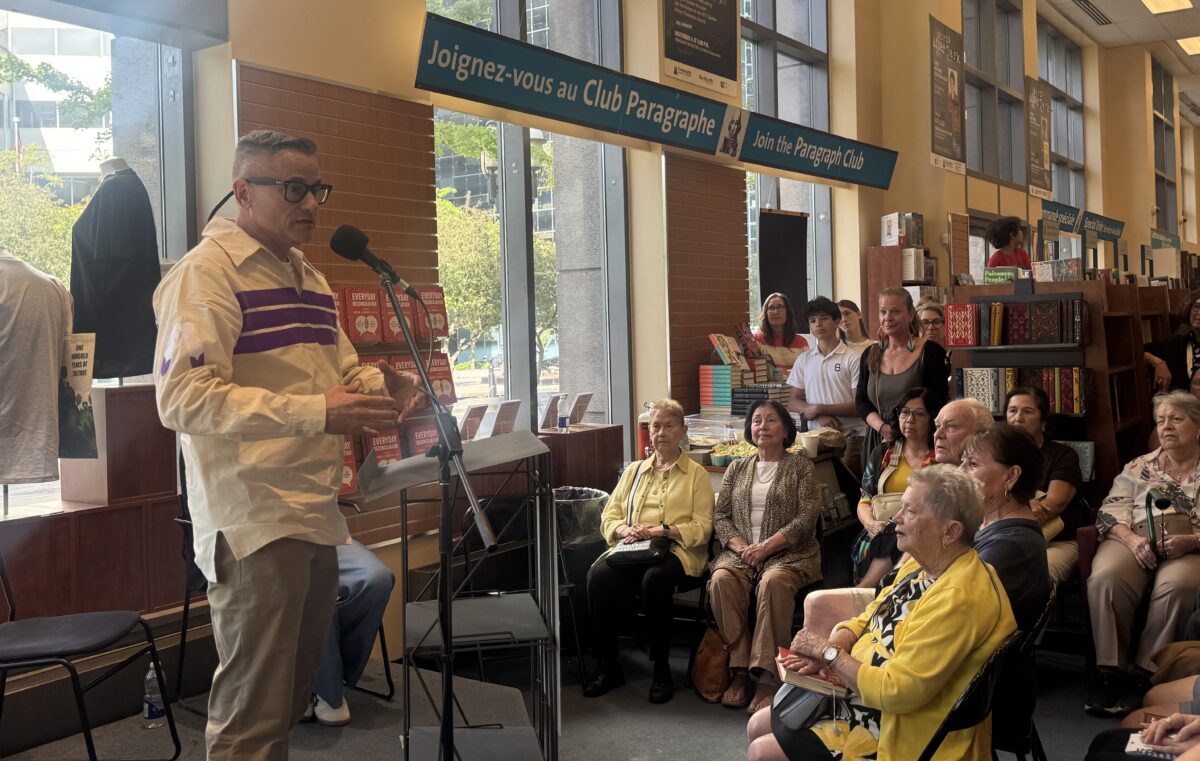
Before Everyday Reconciliation sold out at its June 3 launch at Montreal’s Paragraph Bookstore, Kahnawa’kehró:non author Derek Montour was not sure he wanted to share his story at all.
Co-written with former Swedish diplomat and non-Indigenous writer Elin Sandberg Miller, the book asks what role ordinary people can play in rebuilding trust between Indigenous and non-Indigenous people. It emerged after Sandberg Miller interviewed Montour in 2021 for her podcast of the same name.
“She just called me up after all the podcast series was done and said, ‘Hey, thank you for being on the series. I had a question for you. I’m thinking this story is not done. It’s unfinished. Would you be interested in writing a book about it?’” said Montour.
The executive director of Kahnawake Shakotiia’takehnhas Community Services (KSCS) said he took a couple weeks to make a decision.
“I really had to process, do I really want to put myself out there? What will readers think and say? And how much exposure do I get? How much do I say? Will I embarrass my family or the community or Indigenous people?
“That’s the last thing I would want to do, is misrepresent us,” he said.
The launch discussion moderator was Joe Delaronde, former Mohawk Council of Kahnawake (MCK) political press attaché. Delaronde said Montour’s decision to share so much of himself is part of what gives the book its weight.

“I don’t know how he found the strength to write some of the things that he did,” Delaronde said. “For the sake of getting this message across, that’s part of the sacrifice he made, is to let that all out.”
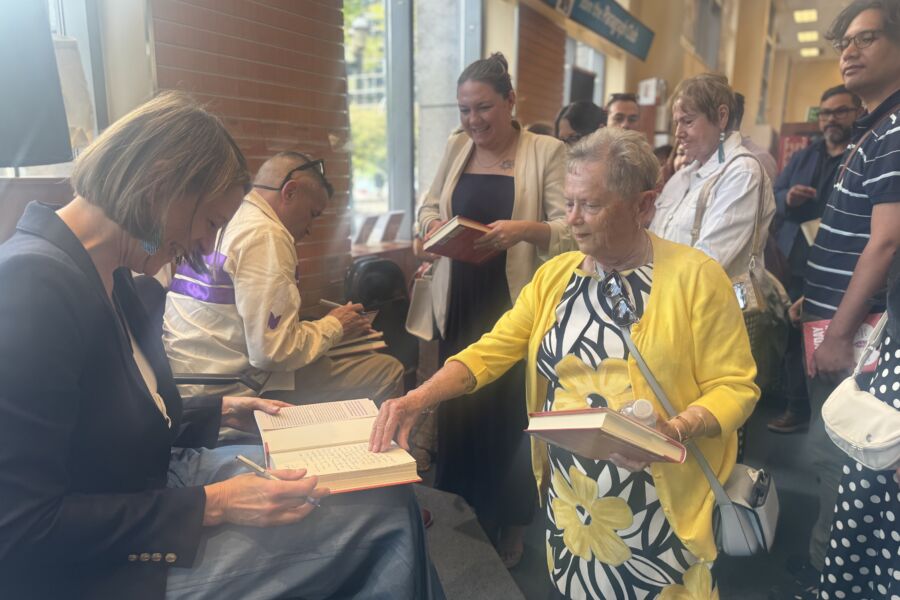
The co-authors of the 13-essay collection were first introduced by Sandberg Miller’s husband, federal Canadian Identity and Culture minister and former Indigenous Services Canada minister Marc Miller. The book, however, focuses on reconciliation on an individual level, driven by people, not governments.
Sandberg Miller said part of this is because she believes relationship building between Indigenous and non-Indigenous people has to happen at an individual level.
“If we want to solve the big issues, like land and access to resources, then we need to learn. We need to get to know each other. We need to build trust between us,” she said.
Miller, for his part, said he has not yet read the novel in its final form. However, he said if there was something his colleagues in government could take from the book, it would be to remember to interact with people.
“(Responsibility) is lost if it’s only governments talking to governments, talking to tribal councils or First Nations bands or whatever form of governance,” said Miller.
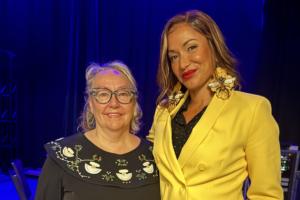


The book is forthright in its purpose as a guide for non-Indigenous Canadians who want to contribute to the national reconciliation process. But for Montour, learning also came through the writing process.
“Sometimes as a child, you remember things a certain way. And it’s only upon reflection that you realize that maybe it wasn’t quite that way,” he said. “Maybe there’s nuances that I didn’t consider before.”
Montour’s aunt, 81-year-old Geraldine Cross, said she remembers reading history books at seven years old that did not match what she saw around her.
“I’d go, ‘Oh my God, that’s awful. Why am I Indian? Why was I born here, you know? They’re awful,’ but I didn’t see any of that awfulness anywhere, with people I’m actively communicating with,” she said.
Decades later, she became part of Montour’s own act of record-keeping, among the family members he consulted for the book. Today, Cross feels confident in her identity.
“I’m the proudest Indian in the world. I’ve learned a lot,” Cross said.
Not every hitch was sorted before the book’s publication. Montour’s mother pointed out an error, admitted the author with a laugh - a three somewhere that should have been a seven - but he says it’s more about sharing his journey than claiming to be a “historian.”
Sign up for email updates from The Eastern Door
“We’ve all experienced challenges and trauma and pain,” said Montour. “You don’t have to be a specialist to share your story.”
Though the book self-brands for a non-Indigenous audience, Delaronde says there’s something for the people of Kahnawake to take away, too, even if it’s just to learn more about Montour.
“He put himself out there and it takes a brave man to do that,” said Delaronde. “It really goes to show that he deserves to be in the leadership position that he holds.”
Montour said he hopes other Indigenous people, especially fellow Kanien’kehá:ka, can see their own stories and struggles reflected in his.
“This is my story. And I would like to say this is our story,” he said. “We can’t keep it buried.”