Concert celebrates Indigenous Peoples Day

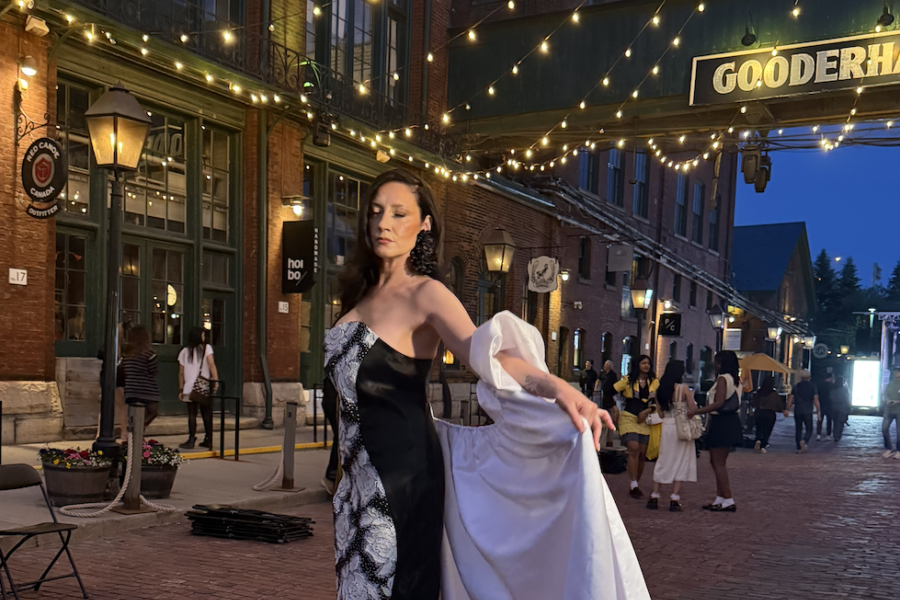
Kahnawa’kehró:non Tara-Louise Montour will be performing in Montreal tomorrow, Saturday June 21, in celebration of Indigenous Peoples Day. Courtesy Tara-Louise Montour
Tara-Louise Montour remembers 30 years ago, when she was one of the only Onkwehón:we performers in the classical music scene. Now, she’s preparing for a special concert taking place tomorrow, Saturday, June 21, where she’ll be sharing the stage with other Indigenous artists as part of a National Indigenous Peoples Day celebration.
“It’s exciting times for our people, we’re more present on the forefront, and rightfully so, because we’ve just got a huge amount of talent and star power,” said Montour. “I’m seeing pretty much every musical group out there trying to program content and artists of Indigenous heritage, and that’s very different from when I was first coming up as a young violinist.”
Montour will be performing a piece titled “Karakett Nitotem” written by contemporary Cree composer Andrew Balfour. The piece, which means “my friend” in Plains Cree, was written by Balfour for Montour for piano and violin. Initially, the concert was going to feature a new piece of music from Balfour written specifically for the day, but “Karakett Nitotem” was chosen instead due to time constraints.
“It’s beautiful, it’s a lovely work, and I’m really excited to be able to perform that,” Montour said.
The other piece that Montour will be playing is a sonata in G minor by French composer Claude Debussy.

“It’s a very beautiful piece of music. I find it very evocative of the impressionist period. There’s a lot of feelings of nature, and when I perform it, I feel this connection to nature, so I love that piece,” Montour said.
The evening will be opened by Ka’nasohon Kevin Deer, and amongst the others sharing the stage with Montour will be soprano Élisabeth St. Gelais, from the Innu community of Pessamit. She has performed on many major stages around the world, but said that she’s especially excited to be performing in acknowledgement of Indigenous Peoples Day.
“It’s really important to represent people that haven’t really been represented in this milieu for several decades, and I think it’s really an enormous responsibility I have,” St. Gelais said. “It’s an honour, I’m really privileged to have this kind of reach.”
Montour and St. Gelais will be performing in the prestigious Bourgie Hall, part of the Montreal Museum of Fine Arts. The 462-seat concert hall is steeped in history: it features 81 restored stained-glass windows, which includes 20 Tiffany windows commissioned at the turn of the 20th century by the American Presbyterian Church, part of what the museum says is “the most important collection of their kind in Canada.”
St. Gelais said that she’s always wanted to perform in the hall, and its meaningful to be finally doing it as part of the Indigenous Peoples Day celebration. In preparation, she’s been resting her voice, but also thinking deeply about what it means to be a contemporary Indigenous classical musician performing in the space.




Élisabeth St. Gelais is an Innu singer who will also be a part of the Indigenous Peoples Day concert tomorrow. Courtesy Élisabeth St. Gelais
“I’m trying to be connected, with the cause, with the day, it’s all really important for me,” she said. “It’s one of the last halls I haven’t performed on in Montreal, so it has a really big meaning for me in my goals of having an international career.”
Montour believes the classical music world can continue to grow and amplify more Indigenous musicians. She herself is heading to McGill University’s Schulich School of Music in the fall to commence her doctorate, with the goal of being able to further advance her own contributions to her industry.
“I’m going to acquire more tools to write my more music, to contribute in more ways than simply being the performer, but also expressing my own musical ideas in the future,” Montour said.
She hopes that one day, no musician will struggle to find a piece of music written by an Indigenous composer.
Sign up for email updates from The Eastern Door
“It used to be impossible to find works that were written for violin, for instance, that had Indigenous ideas and thematics, and that’s why I had to have commissioned works back then, it was just so rare,” she said.
“Now it’s great because people are coming out and writing their music and performing it. Things are moving forward in a very good way.”
Tickets for the event can be purchased online at festivalmontreal.org, with student tickets available at the door with a valid ID one hour before the event.