Debuting the next generation of artists
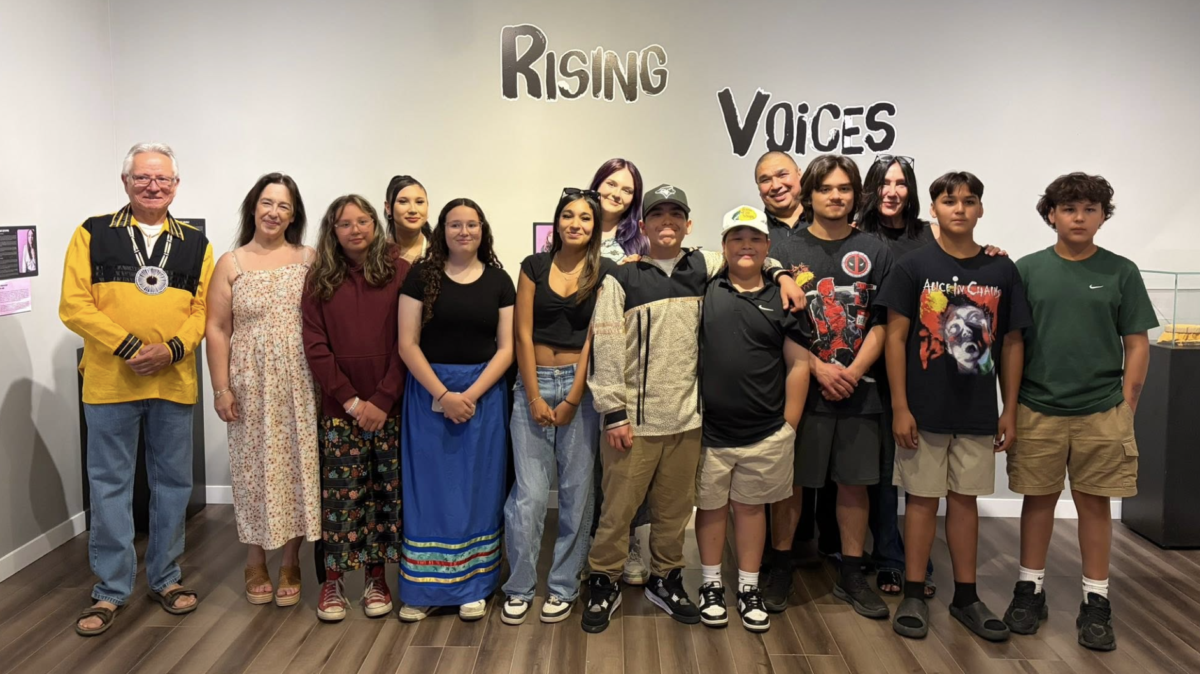
Youth and their families celebrated the completion of the Rising Voices mentorship program at the opening of the exhibit in Montreal last month. Courtesy Angel Horn
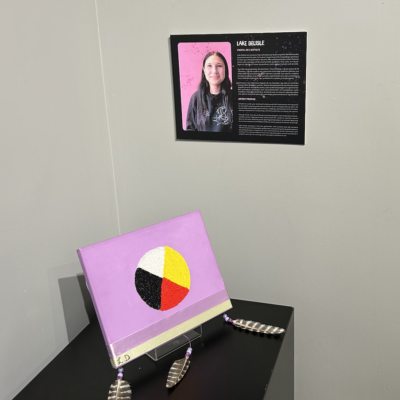
Seventeen-year-old Lake Delisle hopes that visitors at the Rising Voices exhibit in Montreal’s Old Port will feel some of the medicine she stitched into her beaded canvas, which will proudly be on display at the Sacred Fire Productions Cultural Space for the next two months.
“It felt really great for me,” she said of her piece, which features a raised beaded medicine wheel on a purple canvas.
She said that as she stitched each of the four colours of the medicine wheel, she thought about what they represent, and the intentions of her work.
“I put a lot of love into my art, and I hope that everyone who looks at it gets even just a little portion of the benefits it has once you keep those four things in mind.”
Delisle is one of 10 young artists from Kahnawake featured in the Rising Voices exhibit, the culmination of 16 weeks of mentorship from Angel Horn and Tahatie Montour.
Youth worked with Horn and Montour twice a week on their crafts, learning new techniques, supporting one another, and sharing valuable feedback to stretch themselves as artists.
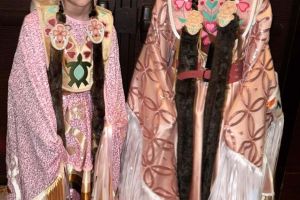
Participants ranged from the ages of 10 to 17, and created everything from water drums to deer toe shakers to ribbon skirts.
“Our traditional items, our cultural items, are slowly dying out. There’s not many people who know how to make a kastowa, or make a cradleboard, and we really feel that it needs to be continued,” Horn said. “We shouldn’t be gatekeeping. We should be showing youth how to make all these things, and we should be giving these kids voices.”
Kaleb McComber, 16, made a rattle for the show, and spent months making sure every detail of the rattle felt perfect.

“A nice colour and a smooth feel was my end goal,” McComber said. “It was nice to find the right one for me.”
He selected cow horn for the main part of the rattle, focusing on texture to create a unique piece he felt connected to.
After working on the piece for so many weeks, it felt monumental to see it on display at the gallery, he said.
“I still remember actually making the rattle and having it to myself, so seeing it now in the hands of the museum is a bit surreal,” he said.
For McComber, the mentorship aspect of the program was a highlight, having worked closely with Montour to understand the craftsmanship that goes into each rattle.
“I learned how to use many tools and techniques, but I feel the most important thing I learned was to ask questions, even when I thought they were stupid,” he said. “Before Rising Voices I would be the curious type, but I’d spend a long time trying to make the right question and then miss my opportunity to ask.”
Having an ongoing, open space to ask questions built his confidence throughout the program.
“I wanted my rattle to be the best it could be, so I constantly tried to confirm with my mentor to see if everything I did reached the standards of rattle creation,” he said.
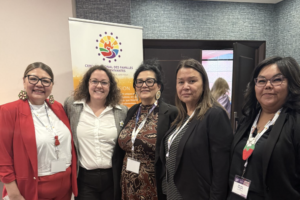
Marjolaine Dumonteer, a member of the team at the Sacred Fire Productions Cultural Space, said that it’s been special to see space being carved out for the next generation of Indigenous artists.
“It’s really important to teach the new generation. We have established artists, and if we want to continue that knowledge and that artistic vision, it’s important to work with the people that are interested in it and to create opportunities for them to express themselves, and show them they can be professional artists too,” she said.
Dumonteer helped create an official catalogue of the exhibit, featuring the names and biographies of each young artist.
“We want to show the youth and up and coming artists that it’s possible, and if you want to do this, you absolutely can,” she said. “There’s opportunities for you to grow.”
Horn said that as well as passing on cultural knowledge, the program has allowed her to help teach youth about the paths they could take if they want to pursue art professionally one day.
“We want to show kids that their artwork can produce income. You can be employable. You can use your creativity to get employment, you can put this on your resume,” she said. “It can open doors for them, it can give them confidence.”
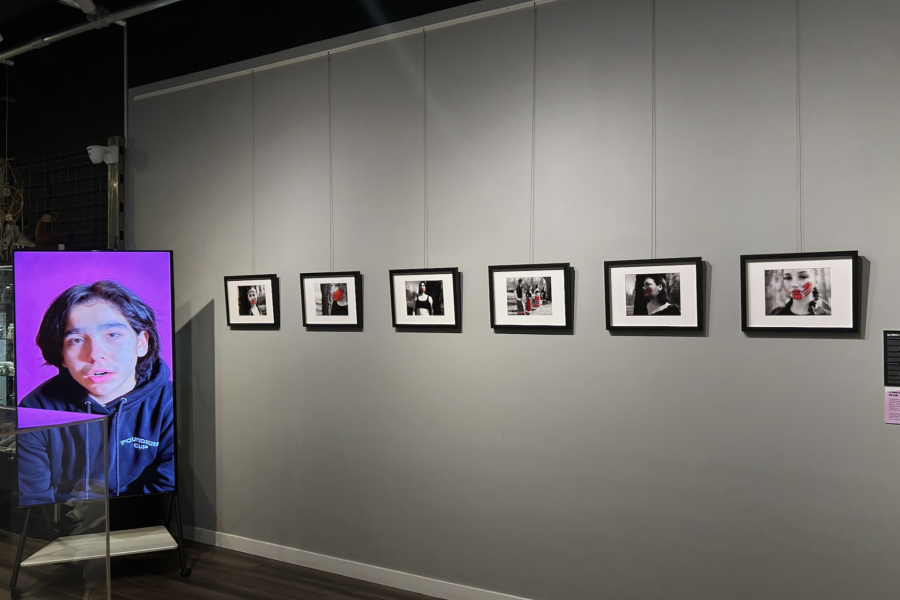
The youth also participated in video interviews, which are screened on a loop at the exhibit, for guests to learn more about the artists behind the pieces.
Cookie Rice, Delisle’s mother, said that it was special to see the result of weeks of mentorship.
“All the kids did a great job on their projects, I’m very proud of my daughter and her fellow artists,” she said. “I’ve known Angel for a long time. She and Tahatie are doing great things for our youth.”
Delisle said the support of her mother, her mentors, and her fellow participants was motivating.
“I was really scared of messing up, but the support of the group helped me a lot. There was never a negative comment from anyone, everyone was supportive of each other, and that’s what gave me the courage to keep going,” she said. “I”m very lucky that I got to meet people in Kahnawake who share the same passion for art as me, and who admire my art just as much as I admire theirs.”
Sign up for email updates from The Eastern Door
Parents were able to visit the exhibit at an official opening late last month, and guests will continue to be able to attend the show for the next two months at the Cultural Space, where admission is free.
“For them to be put on such a big stage like this in the Old Port in Montreal, that’s pretty big. It’s a very proud moment,” said Julie Simpson, whose daughter Kaia Dearhouse, 13, made wampum cuffs and a ribbon skirt for the exhibit.
“It was a really cool experience because we saw each week how she was progressing, and she picked up on it so fast. It’s an amazing opportunity for them, and now our kids can teach these skills to other kids too.”
Also featured in the exhibit were Tahoe Montour, who made deer toe shakers, Korry Goodleaf, who made a water drum, John Charles, who made a kastowa, Frank Charles, who made a water drum, Aundrea Kane, who made a doll cradleboard, Lyric O’Bomsawin, who made wampum cuffs and clay earrings, and Alianna Beauvais, who made a photo series about Missing and Murdered Indigenous Women and Girls (MMIWG).
For Delisle, the lessons she and her fellow participants learned represent the start of an artistic journey that will continue to grow long after the exhibit ends.
“It was such a great environment for me to feel confident in what I was working on,” she said. “My favourite part was having the opportunity itself to make something that isn’t only just mine, but holds a lot of meaning to Indigenous people.”