Joyce Echaquan’s legacy five years on
Megan Kanerahtenha:wi Whyte The Eastern Door
In October 2021, just over a year after Joyce Echaquan died in the Joliette hospital, the coroner’s report concluded that racism and prejudice contributed to her death.
It may have taken time for officials to put their ducks in a row on an inquiry, but anyone with eyes, ears, and a heart knew the truth in an instant.
Callously mocked by the nurses charged with her care, Echaquan started a live stream that showed the world that she was being insulted by healthcare staff when she was at her most vulnerable. She was trying to convey her pain and the depth of her medical need, but she was ridiculed instead.
Echaquan, who was Atikamekw, died that day – September 28, 2020 – of pulmonary edema.
It was a watershed, among the most shocking events in modern Quebec history, but at the same time, painfully, it was not surprising given the inhumane treatment Onkwehón:we have often faced at medical facilities in this country all the way up to the present day.
How many Onkwehón:we have suffered as Echaquan did when the camera wasn’t rolling?
Atrocities like forced sterilization are well documented. Meanwhile, innumerable indignities go unnoticed by the system but not by those who are affected. We have spoken with a number of community members here in Kahnawake who have been treated unjustly in outside facilities.

When a person is stereotyped, dismissed, mocked, or in any other way disregarded when they seek medical care, one of the most basic needs and rights imaginable, they are put in danger, and it’s completely unacceptable.
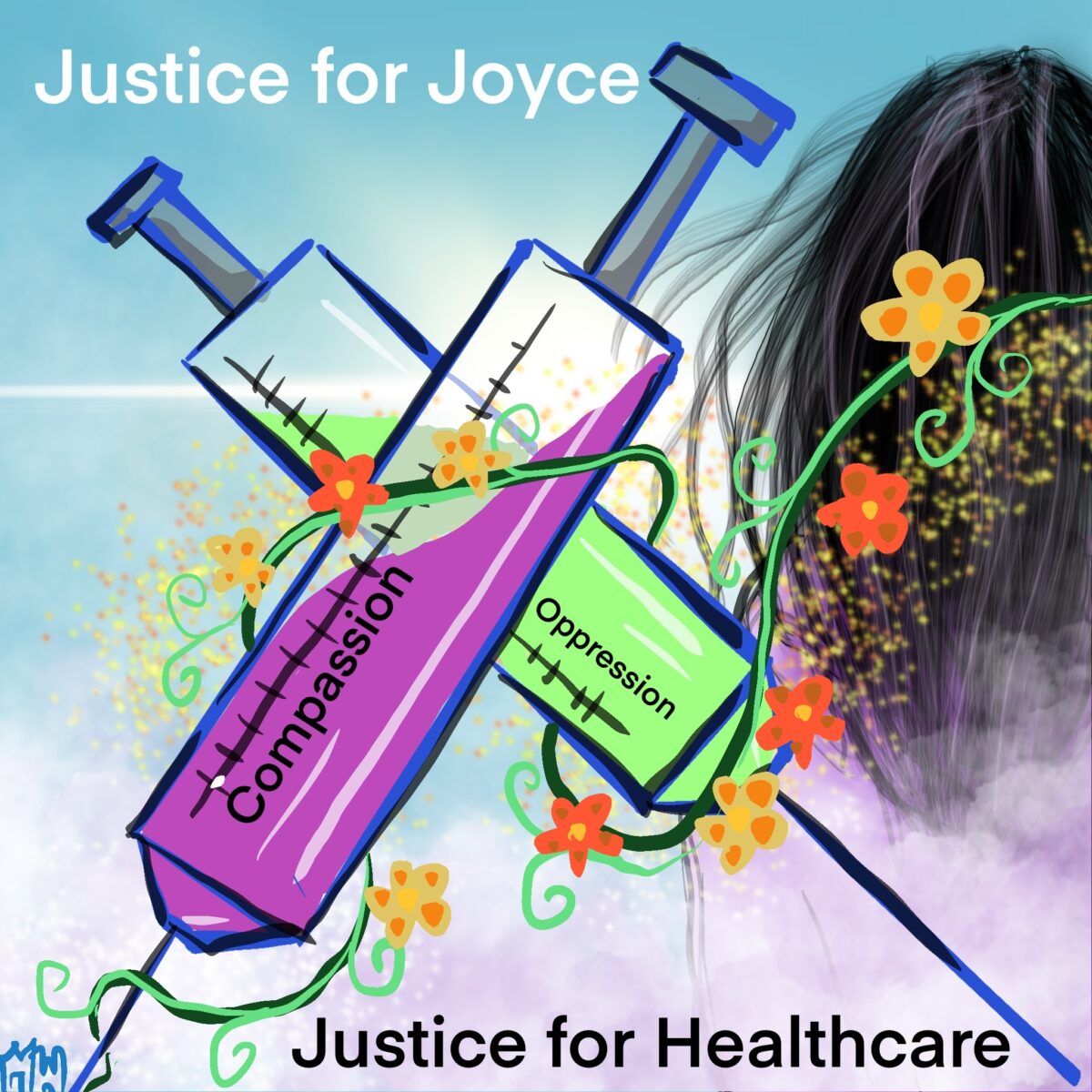
There have been strides made since that dark day, which led to the creation of Joyce’s Principle, the insistence that all Indigenous people have the right to access health and social services equitably and free of discrimination.
At McGill University, for instance, the department of family medicine has adopted Joyce’s Principle, and students there are taught about it in their coursework.
The Collège des médecins du Québec called on the government to recognize systemic racism in a law ostensibly created to promote equity in the healthcare system. When that law finally passed in late 2024, it drew statements of dissatisfaction from organizations that might have been inclined to herald it.
While the law was supposedly in response to the death of Echaquan, it failed in the most basic tenet of accurately naming the problem.
The Quebec coroner tasked with the file concluded that Echaquan’s death was a case of systemic racism, one she called undeniable - even saying she believed Echaquan would still be alive if she were white.
But in this province, the premier and the government he commands continue to deny the very existence of systemic racism. Healthcare is a provincial responsibility, but even if it weren’t, what message does it send when the head of the province where this happened can’t accept the extent of the problem?






Why are these words so hard for him to utter?
Quebec premier François Legault has even gone as far as recently rejecting, yes, rejecting race-based federal funding - in this case targeting the justice system, where Indigenous people are disproportionately jailed - on the grounds that Quebec doesn’t accept the premise that system racism is a problem that exists and needs solving.
If a provincial government has ever turned down cash, it’s the first we’ve heard of it.
It goes to show you how entrenched this attitude is in Quebec society, even in 2025.
In other words, the fight isn’t over.
In this province, where healthcare in general has steadily eroded in quality, racist and discriminatory attitudes endure. Instead of focusing on fixing the healthcare system, the government has placed its emphasis on policing language there, risking increased discrimination against Onkwehón:we from communities like Kahnawake.
It’s imperative to enhance healthcare here in Kahnawake, to send Kahnawa’kehró:non to medical school and nursing school, as representation is a key component of change.
Sign up for email updates from The Eastern Door
Meanwhile, the fight continues, and Echaquan’s memory and legacy live on.
This weekend, a major conference in Trois Rivieres will examine the legacy left by Echaquan and analyze how the system has responded - or not - five years on.
Joyce’s Principle is the expression of a basic right, and the demands it embodies are not going anywhere.
TED Staff