Indigenous Services seeks clarity

While a contingent of community members advanced their efforts this week to attempt to contract a new electoral officer and resume elections, a quorum of incumbent Council chiefs met a deadline set by Indigenous Services Canada to formally assert an extension of their term with a band council resolution (BCR).
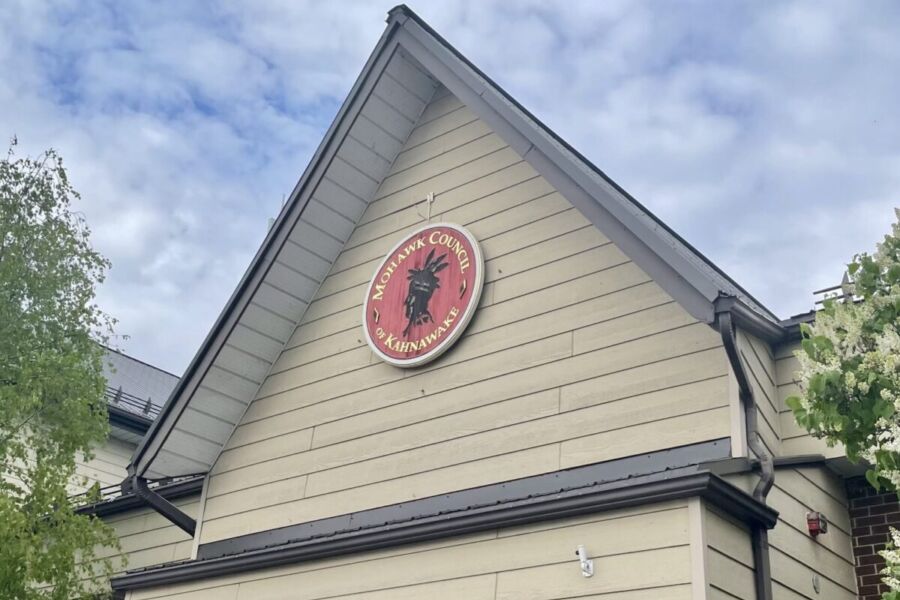
The Mohawk Council of Kanesatake (MCK) elections set for August 2 were cancelled in a bombshell announcement on August 1, throwing the community into a state of confusion and discord over who now leads the community. That’s because the previous Council’s term ended July 31, and the Custom Electoral Code that governs elections specifies that a mandate extension of up to six months must be authorized with a special public meeting.
While electoral officer Graeme Drew and incumbent Council chiefs argued there could be no governance lapse, making the incumbent Council the de facto leadership pending an election, other voices in the community argued this was illegal and unacceptable.
Meanwhile, many questioned electoral officer Graeme Drew’s authority to cancel the election. He pointed to an unworkable code and his belief that as many as six candidates on the ballot were ineligible to take office as reasons for his decision, disagreeing that his mandate forced him to go through with an election he had concluded was compromised.
ISC requests BCR
In response to enquiries from The Eastern Door last week, ISC expressed an unwillingness to weigh in, essentially saying it would await instruction from Kanesatake and had no role in determining the community’s leadership.
However, in an August 8 letter addressed to all seven members of the previous Council, ISC’s acting regional director general for the Quebec region, Nathalie Turgeon, requested a BCR confirming an extension of the MCK’s term of office beyond its July 31 end date.
In the letter, which has been obtained by The Eastern Door, Turgeon demanded that this be provided by 12 p.m. on Wednesday.
“In the absence of such confirmation, the department could consider that the Council is in default under the Comprehensive Funding Agreement and could take action, including appointing a third party funding agreement manager to manage the Comprehensive Funding Agreement,” she wrote.
“This would be done to ensure the delivery of essential services to community members, unless there is official confirmation that your term of office has been extended or until a new Mohawk Council has been elected following a general election.”
According to incumbent MCK chief Brant Etienne, a BCR was passed and provided to ISC on Wednesday morning. Etienne, Amy Beauvais, Serge Otsi Simon, and John Canatonquin were the chiefs who formed quorum and united to pass the BCR, he said.
It is unclear at presstime whether ISC will accept a BCR passed after July 31, given that Turgeon’s letter notes the expiration of the Council’s term on July 31.
“Indigenous Services Canada confirms receipt of the (band council) resolution. The department is currently preparing a response,” said Eric Head, spokesperson for ISC.
“Our top priority remains ensuring that the essential programs and services outlined in the funding agreement with the community continue to be delivered.

“We continue to work toward this goal with transparency, a commitment to maintaining strong relationships, and respect for the principle of Indigenous self-determination,” he said.
At one of the community gatherings this week, grand chief candidate Victor Bonspille, who was elected grand chief in 2021 but was ruled to have vacated his seat by the Ethics Commission, which he did not accept, told the crowd that ISC should not accept a BCR from the incumbent Council, which he said has no authority.
“(Turgeon) said she would recognize anything like a band council resolution, but we don’t have a Council to make a resolution,” said Bonspille.
Special public meeting
Section 8.3 of the Custom Electoral Code reads, “ln exceptional circumstances, Mohawk Council may hold a special public meeting for authorization to continue its mandate for a period not exceeding six additional months.”
Etienne said a special public meeting will be held within the next two weeks to fulfill this requirement following the signing of the BCR.
“We want to make sure that as many people in the electoral list are able to participate as possible,” he said, adding that the incumbent chiefs want to get as much buy-in as possible.
The meeting will be held online, Etienne said, with no in-person component. “We know that the majority of community and electorate doesn’t like or doesn’t feel safe when you have a crowd of people like that,” he said.
The meeting will not include a vote for authorization on a mandate extension. Rather, according to current plans, a discussion on the current governance situation will be followed by a poll on whether the community wishes to hold an election immediately or first amend the Custom Electoral Code, as recommended by Drew.
Community gatherings
In a continuation of discussions the morning following the election’s cancellation at a meeting called by Bonspille, attended by about 40 people, community members assembled on Monday and Tuesday this week to advance their hopes of moving forward independently.
The result was a people’s resolution outlining an intention to hire Annie Neashish, a lawyer who served as electoral officer in 2021, to take over as the electoral officer.
In his comments at the Monday meeting, Bonspille said he had reached out to Turgeon to inform her that the community would be acting under Section 2.5 of the electoral code: “The Kanehsata’kehró:non, as members of the Mohawks of Kanesatake, have the primary role in assuring there is Good Governance.”
“Now that there’s no governance, it’s up to the community to ensure that there’s governance,” he said, “and that’s what we’re doing.” Then he invited those in attendance to propose going forward with Neashish.


Etienne suggested Bonspille was trying to represent his own supporters as the voice of the community. “He’s trying to use his small group of people saying they’re the community while disregarding the 98 percent of people that aren’t made aware of his meetings or anything like that in order to get through what he wants,” Etienne said.
The resolution arising from the gatherings of community members this week - each one attended by up to around 40 people - was signed by community members Gordon Oke and Karyn Wahsontiiostha Murray.
“I signed as an elder,” said Oke. “I was nominated by the people in the gym. I had suggested maybe you should look at some of the women to lead the charge. After nobody put their name forward I said let’s get on with it, I’ll accept.”
Oke said it’s not possible to contact everybody but that word was spread widely about the gatherings.
“We have to come up with a solution,” he said, calling these “extraordinary times” in which community members feel the election was stolen from them.
Oke said he was motivated to participate in the meeting by his concerns about the electoral situation.
“It’s horrific. The community has lost their voice,” he said. “We need a change of government. Who wins? Whoever knows. We started off with the agreement there would be an election this year. Unfortunately, the chief electoral officer decided to manipulate the election by imposing his own standards, his own thoughts about how this electoral code should work.”
He dismissed the idea that the incumbent Council is a de facto government, saying only a special public meeting could have secured this distinction.
Oke was coordinating a group of community members during the previous Council term in examining the electoral code, he said, and he strongly believes a Code of Conduct needs to be enacted.
“We all realize, yes, the electoral code needs to be reworked,” he said, but he feels that doesn’t mean the community shouldn’t move forward with an election in the meantime.
“There were two other elections held since 2015 - maybe a few hiccups along the way, but nothing like this.”
Section 2.1 of the electoral code reads, “The participating majority of adult members are the final authority in all matters pertaining to all Kanehsata’kehró:non and their territory.”
Drew argued last week that exercising this authority would require that members be duly informed and that meetings be impartially convened.
Chief candidate Amanda Simon pointed to Section 2.1 last week as proof of an alternative to a Council she said was no longer legitimate, but added that the meeting held August 2, where Murray was tasked with contacting three potential electoral officers, lacked lawful authority to make decisions. She did not attend this week’s meetings and did not comment on them.
Sign up for email updates from The Eastern Door
Murray contacted three potential electoral officers, but only Neashish responded positively, Murray told attendees on Monday.
Angus Montour, the frequent electoral officer for Kahnawake elections, told The Eastern Door he replied he was not interested when he was contacted.
“I basically declined because I told them that I’m leery of suspect election law and codes or lack thereof. It’s pretty messy over there,” said Montour.
Asked for an update this week, Neashish replied on Thursday morning saying she has none at this time. Last week, Neashish told The Eastern Door that she was unaware of current developments and prefers to refrain from commenting on the electoral process, noting that it is Council’s responsibility under the code to initiate a call for tenders for the hiring of a chief electoral officer.
According to Oke, the plan to move forward with an electoral officer would require buy-in from ISC to fund the election.
“I believe the people have contacted a lawyer who is willing to start it up as soon as we get some word from ISC,” he said.
“There’s no funds that we as community can use. We can’t go into the band council office and basically tell finance to secure X amount of dollars. We have no authority.”
Drew told The Eastern Door last week that he continues to consider himself the chief electoral officer.
Marcus Bankuti, Local Journalism Initiative Reporter