Health Center speaks out on Bill 2

File photo
The head of the Kanesatake Health Center (KHC) has joined the chorus of opposition to the Quebec law overhauling the province’s healthcare system, citing fears it could harm the health centre’s capacity to serve the community effectively.
Among other changes, the legislation that was known as Bill 2, which passed on October 25 but did not immediately implement the new regime, ties compensation of doctors to performance targets in hopes of relieving the overburdened provincial healthcare system by pressuring medical professionals to take on a bigger load - or, in other words, to work faster.
Doctors across Quebec have been united in opposition to the changes, with many even reportedly considering a move outside the province to flee its effects.
“I felt it important to first show support for our visiting physicians, who are being subject to the legislation and serious remuneration change,” said the KHC’s executive director, Teiawenhniseráhte Tomlinson. “It’s a battle they are undertaking, and they are valued partners in service delivery. Further, there is a great potential that these changes could have adverse effects on patient care, so we must advocate for them.”
Besides the aspects of the law that could imply operational challenges, Tomlinson said the legislation shows a “total disregard” for the realities facing First Nations, including Kanesatake. He has also pointed to a lack of consultation.

“We are federally funded and cater to our community members. We fall in a grey zone or black hole of sorts with regard to this legislation and other provincial laws,” Tomlinson said. He referred to the law’s requirement of capitation, which means doctors will get paid for their number of patients rather than the services they deliver.
The health centre exists outside the family doctor group (GMF) clinic system, which facilitates a collaborative approach to patient volume, essentially penalizing the visiting physicians the KHC depends on.
“A lot of the legislation is on patient volume, which we don’t have,” he said.
He also invoked the law’s multidisciplinary approach, incorporating social workers, nurses, paraprofessionals, and others. The KHC already uses this strategy, but outside the provincial system, leading to a lack of recognition.
“These are some of our realities, and many other First Nations have similar and other concerns,” he said.

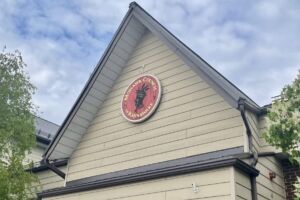




The KHC has met with the First Nations of Quebec and Labrador Health and Social Services Commission (CSSSPNQL) on the issue, a meeting that included provincial representatives such as the underminister of health and some vice presidents of Sante Quebec.
Meanwhile, the health centre is bracing for the law’s effects if nothing changes.
“It’s difficult to see what things would look like at KHC given the ever-evolving situation with Bill 2,” he said. “It would likely affect the way medical appointments are structured and perhaps more reliance on nurses. We are exploring various approaches and feasibility of supplementing the physician pay to make it more attractive to work in community.”
In the meantime, he suggested community members stay informed on the facts and avoid speculation, which could cause unnecessary anxiety.
While the bill has passed, negotiations between doctors and the province are reportedly ongoing - an announcement Thursday morning revealed that a deal in principle has been reached between Quebec and the Fédération des médecins omnipraticiens du Québec (FMOQ).
Sign up for email updates from The Eastern Door
This agreement would delay the law’s implementation until the end of February 2026. Previously, this was set for January 1, 2026.
Marcus Bankuti, Local Journalism Initiative Reporter