Finding confidence at Ratiwennahní:rats
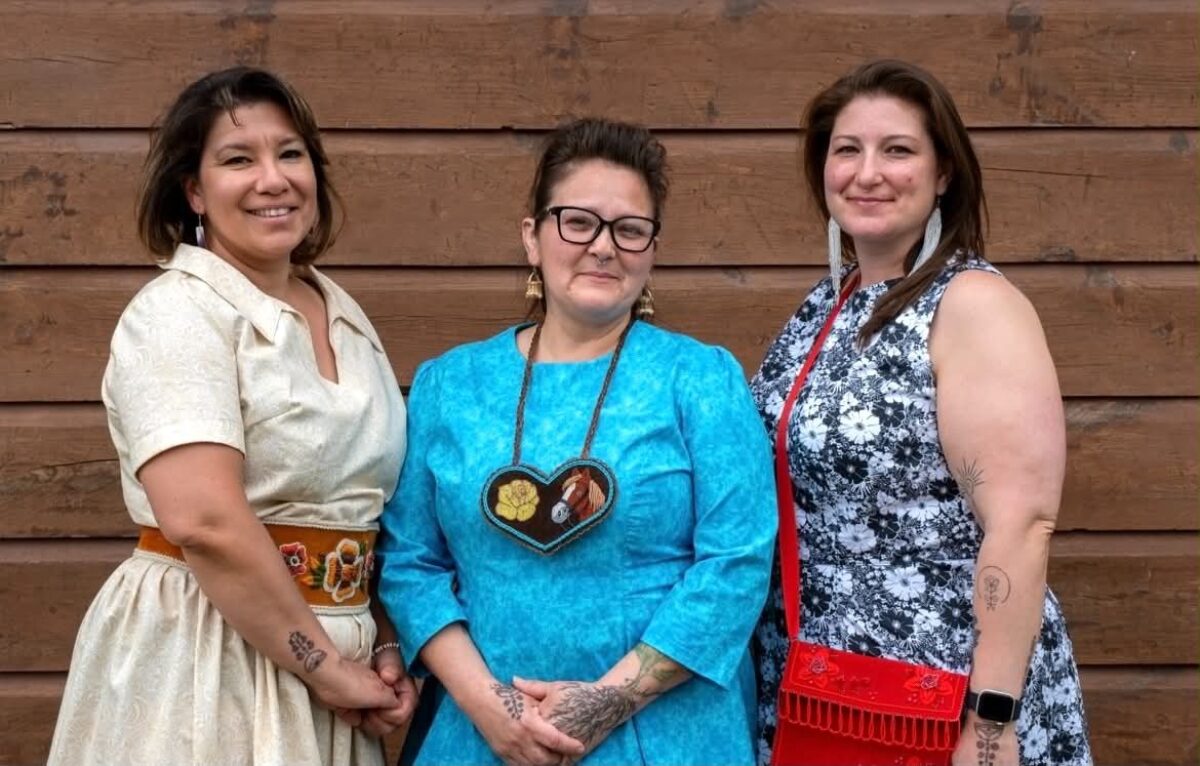
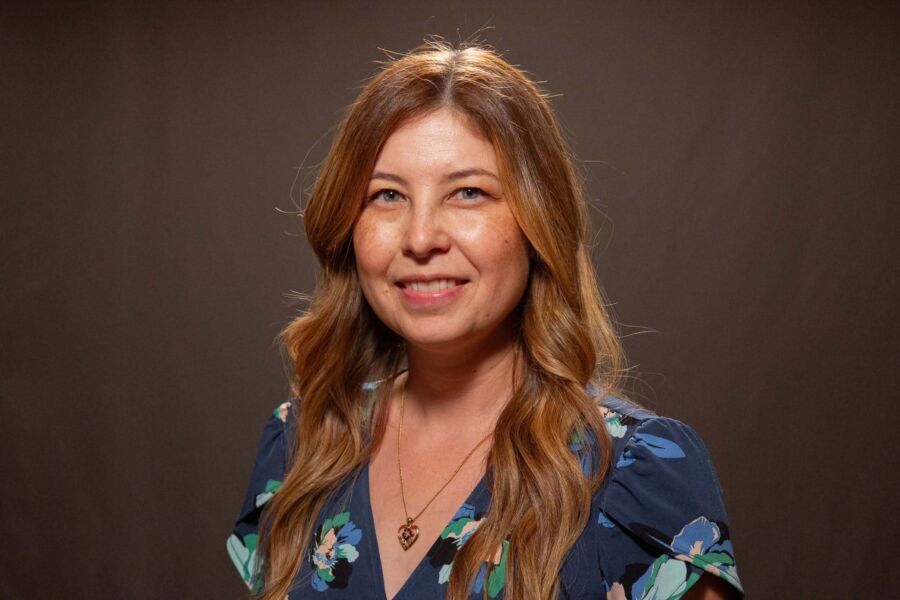
Candace Kahnekanónhnha Snook (right) and her two close friends Konwahahá:wi Hemlock (left) and Karrie Kahtera’shátste Benedict (centre). “The three of us developed a close friendship and were really there for each other during the struggles and the celebrations,” said Snook. “I’m forever grateful for their friendship.” Courtesy Candace Kahnekanónhnha Snook
Each year, students in the two-year Kanien’kéha Ratiwennahní:rats immersion program put on a play, performed entirely in Kanien’kéha.
Recent Ratiwennahní:rats graduate Candace Kahnekanónhnha Snook remembers her first year taking part in the performance, feeling shy while dressed as a grumpy old man from The Muppets.
“I wore a mask, and I just kind of sat in the corner as my character,” Snook said.
The evolution of her confidence in the program could be seen by the time she took to the stage in her graduating year, this time showing up loud and proud in a handmade poutine costume and performing without fear.
“I thought, ‘Let’s just go for it, let’s just do this,’” she said. “That was really a highlight, just having my childlike nature be able to come out and do that. I don’t think I could’ve done that in my first year, but with all the growth I had over that time, by the second year, I was all in.”
Snook celebrated her graduation from Ratiwennahní:rats last month, and as she looked around at her friends, family, and fellow learners, she was struck by how far she’d come.

“For me, it really gave me the opportunity to explore who I am as a person, and to really grow,” she said. “If you want to get the full effect and get everything you can out of the program, you really have to push your boundaries, push your comfort level, and sit in the discomfort.”
She remembers being nervous at first, intimidated by group presentations and speaking in front of her classmates.
“You just have to take chances and be willing to make mistakes,” she said.
Spurred on by the support of her cohort and teachers, she slowly came out of her shell.
“All of the people in my class were so supportive, there was this really special sense of humour that we all had, and it made learning light-hearted, even in the hardest times,” she said. “Everyone held space when people cried, or when people had something to celebrate. It was really all about support, regardless of what was going on.”
Snook had first felt called to apply for the program, which is offered by the Kanien’kehá:ka Onkwawén:na Raotitióhkwa Language and Cultural Center (KOR), after seeing friends and family complete it in the past. She had previously been enrolled in the Mohawk Council of Kahnawake (MCK)’s Kanien’kéha program but wanted to stretch herself further and commit to full immersion.


“It was so important to me. It encompasses identity, there’s so much it contains. It’s not just learning the language, it’s so strongly connected with our culture, and it’s something I’ve always been really interested in pursuing and learning more about,” she said.
She remembers being wracked with nerves as she prepared for the interview portion of the application.
“I realized I had to go in there and really be myself, and I just spoke from the heart. I remember one of the questions they asked me was, ‘What are you going to do if you’re not accepted?’” she said. “I just said ‘Well, I guess I’m going to see you here again every year at the same time until I do get in.’”
Once she was accepted, Snook said the biggest challenge was the sheer emotional energy that full immersion took each day.
“I had to really push through the ceilings of tiredness and exhaustion sometimes,” she said. “At the end of the day when you know there’s still more you want to learn, or you need to do more studying, it’s hard to find the mental and emotional capacity to keep going, but that’s one of the most important things that you have to do.”
At times, there were hurdles that were hard to overcome. Snook faced the loss of her father during her second year and had to navigate that loss while trying to maintain her language progress.
Sign up for email updates from The Eastern Door
“That added an extra layer of exhaustion and its own mental need for space within my brain and my body, and for a long while I felt like grief really stalled me,” she said. “But I was able to continue learning, I returned to school relatively soon after, and I ended up really, really happy with where I was at by the end of the school year.”
A long-time employee of Kahnawà:ke Shakotiia’takéhnhas Community Services (KSCS), Snook is continuing to work for the organization, this time at the Family and Wellness Centre in traditional healing and wellness services.
She said she’s looking forward to applying everything she learned at Ratiwennahní:rats to support the community in her role, and she urges anyone thinking of applying to take the leap.
“I feel like I learned even more about myself than I even did about the language, and I really feel like I came out of the program a different person,” she said. “It’s really a roller coaster, but my advice is to stick with it because you might not realize that every little thing you’re learning creates this great foundation and adds up to a really big thing.”