Diabo walks out of Carney meeting

Crowds gathered in Ottawa to protest Bill C-5 before its passage earlier this year. File photo
Mohawk Council of Kahnawake (MCK) grand chief Cody Diabo was one of multiple attendees to walk out of a meeting with Canadian prime minister Mark Carney last week, in an event that Diabo characterized as more of a PR stunt than a meaningful consultation.
“I refuse to be a photo op or have Kahnawake be a campaign tool for any foreign governments,” Diabo said. “I was very, very disappointed with the event overall.”
Diabo was one of over 600 members of Indigenous leadership who were in Gatineau last week for a summit concerning Bill C-5, now known as The Building Canada Act. The Act is supposed to facilitate the fast-tracking of certain major infrastructure projects with the intention of strengthening Canada’s economy, but many First Nations leaderships have expressed concern that it could come at the expense of Indigenous communities’ rights.
A lack of meaningful consultation was a major topic before the passing of the Bill, with many Indigenous groups, including the Assembly of First Nations (AFN) arguing that the legislation was being rushed through with little regard for Indigenous input.
The summit in Gatineau was pitched as a way for community leaders to have facetime with Carney and voice their concerns, Diabo said, but instead felt like a slap in the face.
He waited six-and-a-half hours before an opportunity arose to say anything at the meeting.
“I had got on the mic, stated my displeasure, said that I didn’t want my name or Kahnawake’s name attached to whatever this was, and I blatantly told him I had better training session engagements than whatever this was,” Diabo said.

The structure of the meeting wasn’t conducive to meaningful engagement, Diabo said. Attendees sat at large tables with other leadership from similar regions, leading to an environment where it felt like participants talked more amongst themselves than directly to Carney and his cabinet.
Tables were to discuss guiding questions in their groups, and then each table was asked to answer just one question per session, for a total of four questions throughout the event.
“We were engaging ourselves and Canadian officials would just hear what we had to say, rather than just dialogue directly with them about it,” Diabo said.
It was a completely different structure than he’s seen before for these kind of meetings, Diabo said, and he added that it felt insulting.
“It almost felt like we were in some kind of high school thing, where it’s like, ‘You sit down, you answer these questions, and you answer only when you’re called upon, when you’re picked, and if you’re not picked, you don’t have an ability to speak,’” he said. “It was very disheartening. I’m very disappointed.”
While topics like meaningful consultation and economic partnerships were brought up at the summit, Diabo ultimately felt like the prime minister’s thoughts on the issues read as performative.
“The consultation stuff they know. We’ve sent many of these responses to them already with our concerns about how consultation normally is. They’re just asking for the same information that I know Kahnawake has already sent numerous times in correspondence with federal entities,” he said.


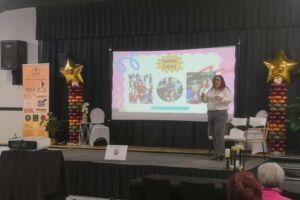
Diabo said that the event featured panellists, including Indigenous panellists, but that all of those panellists seemed to be in favour of the legislation. It felt at odds with the reality of the situation, Diabo said, because while the Indigenous people on the panel looked favourably on the Act, most of the Indigenous people in the room felt strongly opposed to it.
“I don’t know if it was a way for them to have their ‘token Indians’ or whatnot, but I felt kind of speechless about it,” Diabo said.
He felt particularly disappointed to see the amount of airtime given to the AFN who were granted time for opening remarks. It’s another move that Diabo feels demonstrates how the Canadian government views the AFN as a government, instead of an advocacy organization.
He had a particular issue with the AFN national chief Cindy Woodhouse Nepinak, who he felt gave Carney too much praise for simply hosting the meeting.
“She said, ‘We’re all glad that you’re our prime minister,’ and I had to correct that and say that he’s not our prime minister, we’re individual sovereign nations, and we don’t look at Canada as being our leaders,” he said. “A lot of the speaking points from AFN were about that.”
Diabo was one of several chiefs to walk out of the summit, and Diabo said he’s prepared to collaborate with other First Nations leadership in fighting against the legislation. He’s already been speaking with leaders from the Oneida Nation of the Thames, who are one of nine First Nations in Ontario launching legal action against the Act, and the MCK will be reviewing their submissions in the filings.
“Who knows, maybe we’ll partake in it, or we’ll launch our own, those are things we’re going to start exploring,” Diabo said.
Sign up for email updates from The Eastern Door
In a written statement to The Eastern Door, Anispiragas Piragasanathara, a spokesperson for Indigenous Services Canada (ISC), said that meetings will continue between the prime minister and his cabinet as well as Indigenous communities about the Act to ensure its implementation “proceeds in the spirit of collaboration grounded in meaningful engagement.”
They did not address questions concerning the views expressed about the event and the chiefs who walked out of the meeting.