Decision makers sign oath
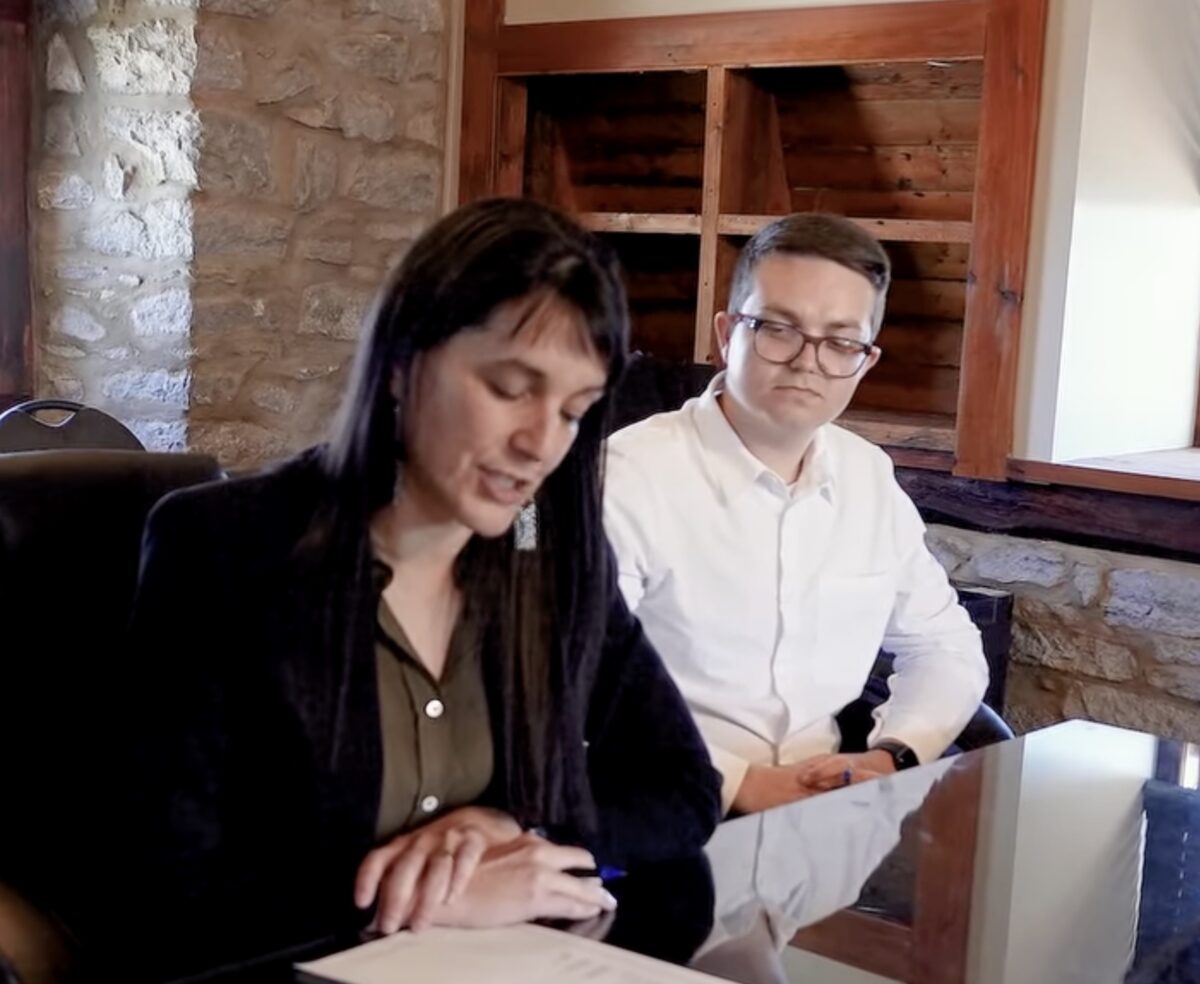
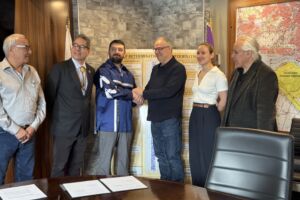
Decision makers Aubrey Charette and Brandon Montour have signed the oath of office, the last step in getting the Administrative Tribunal up and running. Courtesy Mohawk Council of Kahnawake
In what is being cast as a milestone for community-based justice, the new Administrative Tribunal is now ready to consider files following the swearing in of the new body’s two decision makers.
The tribunal creates a mechanism for the review of a range of administrative decisions, including those relating to land allotment, water and sewer, residency applications, and alcohol permits.
“The Administrative Tribunal is pivotal because the decisions that it makes could impact people’s everyday lives,” said commissioner of justice Kevin Fleischer, who noted that two files received in recent weeks have already been assigned.
The body is part of a broader push to institute a community-based justice regime that can empower community members to settle disputes within Kahnawake rather than resort to outside courts.
“Ours is, from what I understand, the only comprehensive administrative tribunal in any First Nations community in the country, perhaps anywhere on Turtle Island,” said Fleischer. “It is a very wide-ranging, expansive tribunal, so we put a lot of work into it.”

That includes nearly 80 technical drafting committee meetings over five years, he said.
“There was a lot of research, a lot of discussion, sometimes a little bit of a debate to get to this point,” he said. “We took it very seriously and put a lot of time and effort into it because we saw the importance of it.”
The new decision makers are Aubrey Charette, a lawyer from Kitigan Zibi Anishinabeg First Nation, and Kahnawa’kehró:non Brandon Montour, who has a law degree from McGill University and is now pursuing a doctorate in law. He has previously worked at Mohawk Council of Kahnawake (MCK) Justice Services.
“I think they’re very high-quality candidates with extensive academic backgrounds and very good work experience,” said Fleischer. “Both individuals were very interested in being a part of this tribunal. I think both are going to do a fine job for Kahnawake.”
Justice Services is currently in the process of making consequential amendments to 29 laws to ensure they reflect the Kahnawake Justice Act.




“When we had the Administrative Tribunal on the horizon, and as work was progressing on the regulations for Kahnawake judges, it was time to revisit this project and say, okay, we have to update these laws, so everything fits together, like a puzzle almost,” he said.
This is just one area that had to be addressed - there was also a need to create policies, forms, and governance documents on the way to this moment.
“When we created this administrative tribunal, it wasn’t created in a vacuum,” he said. “To have a fully functional administrative tribunal like we have, we had to create an entire system of administrative justice.”
The department will be searching for a third decision maker in the near future; decisions are made by individual decision makers, not by committee, so a third member will simply bring greater flexibility to the tribunal.
Sign up for email updates from The Eastern Door
Marcus Bankuti, Local Journalism Initiative Reporter