Dawson petition deposited
A petition calling for an exemption to Law 14 for Indigenous students in anglophone CEGEPs has been deposited with the Quebec National Assembly, having garnered nearly 3,000 signatures since its launch in August.
“First Nations students should have the right to education that they deserve, and everyone should be able to have the same access to that,” said Dawson Student Union (DSU) vice-president external affairs Leilah Doyle.
The DSU led the petition, organizing events at the CEGEP, which is located in downtown Montreal, and rallying support from other local institutions. Doyle said the petition did not reach the union’s goal of 3,000 signatures.
“Not everyone sees this as a struggle that we should all address and that’s definitely where I think those missing signatures are,” Doyle said.
“But this is a struggle we should all be working on breaking down.”
Under the law, which was previously known as Bill 96, all students have to take more French courses at CEGEP, with many having to take a French-language exam at the end of their studies to prove their knowledge.
Some Indigenous students may be exempt from taking that exam if they have a certificate of English eligibility, but all students have to take an increased number of French classes, needing at least five to graduate.

Community member Zye Mayo is a current student at Dawson and said that he isn’t optimistic that the petition could materially change the situation for Indigenous students.
“I think as Indigenous people, we don’t have much faith in politicians. There’s no actual thinking that they’re going to fulfill a goal that we’ve asked for,” he said. “I thought the petition was a good way of spreading the message and that it’d bring awareness.”
Mayo said that though he doesn’t believe that the petition will enact change in Quebec parliament, he thinks it’s brought English-speaking CEGEPs closer together.
“I think that’s going to work out great. There’s talks with all the CEGEPs and all the universities, and they’re finding ways for all the schools to agree that the law is impacting Indigenous students and trying to find ways to best support those students,” he said. “That’s what’s helping support our students into getting into university and trying to get them not to stress so badly about the added stress of these extra French courses.”
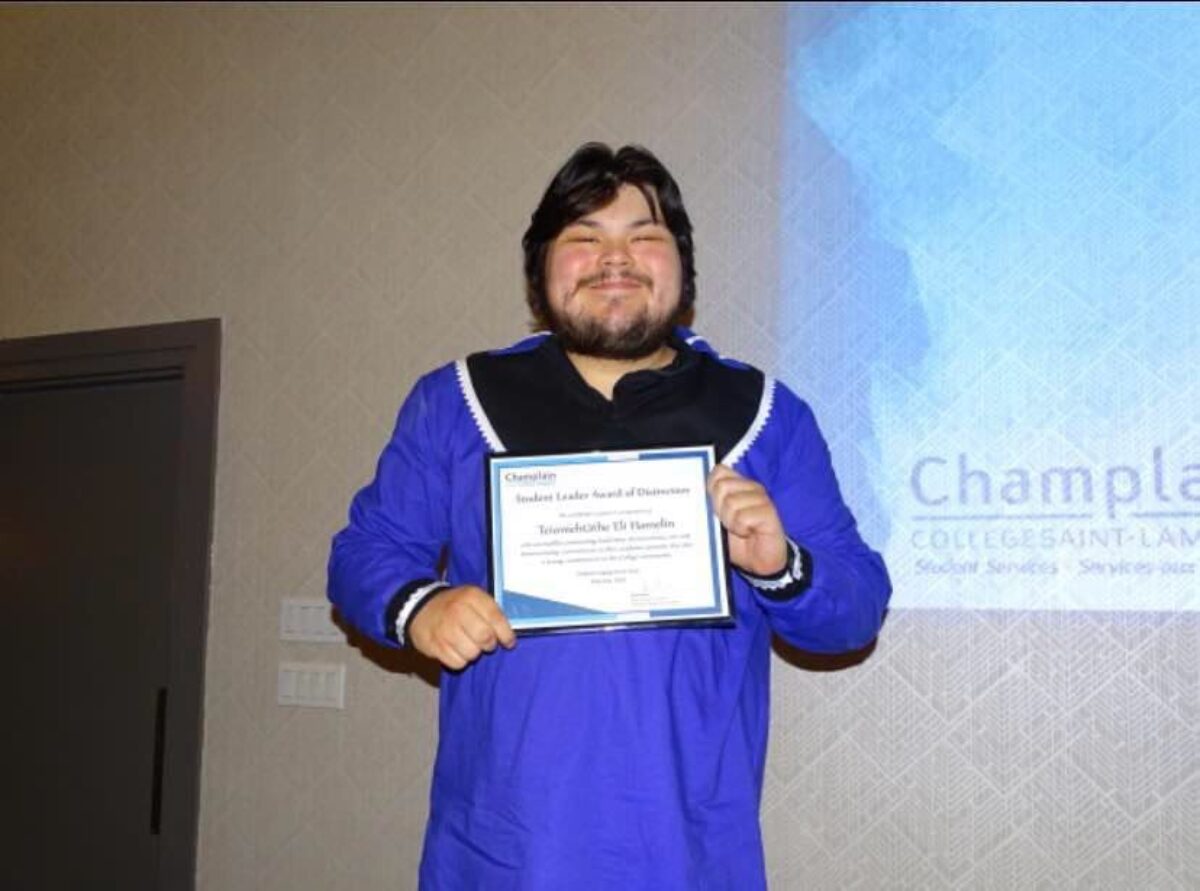
For community member Eli Hamelin, who graduated in July from Champlain College, an English-speaking CEGEP in St. Lambert, the requirements for Indigenous students are a concern. As a 2024 graduate, he wasn’t subject to the new requirements, but he did have to take three French courses during his studies.
He received extra help and tutoring, having come in with less French knowledge than many of his peers, who learned more French in their high schools than he did at Kahnawake Survival School (KSS).
“In my first semester I went to my first French class, and I was like ‘Oh my goodness, I don’t even know what’s going on, I can’t understand what’s being said,’” Hamelin said. “It was definitely something that was really stressful.”






Hamelin managed to get the help needed to succeed in French at Champlain, but said that it was a big push, and he fears for the next generation of Indigenous students who will be affected by the Law.
“I can’t even imagine what’s going through their mind. I would feel very frustrated, and I would honestly have considered not going to CEGEP because of that,” he said.
The petition will be presented to the National Assembly by Jennifer Maccarone, the Member of the National Assembly (MNA) in the Westmount-Saint-Louis riding who sponsored the petition. After that, it will be forwarded to a parliamentary committee, which has 15 days to decide whether to examine the petition.
If they decide to examine it, they must produce a report to be tabled in the National Assembly within 30 days.
Should the petition make it all the way, Hamelin said productive change could come about for Indigenous students planning to attend CEGEPs.
“It would show that we actually matter. With this new law, it feels as if they’re trying to tell us not to go to CEGEP anymore,” he said. “It’s like they’re trying to make us feel discouraged from going to school and pursuing a better career and more education. It would mean a lot if they made an exception for us.”
Mayo added that the fight will continue whether or not the petition is examined by parliament.
Sign up for email updates from The Eastern Door
“We’re not going to walk away thinking we can change something today. But we can always say we got that awareness out to people, and maybe further down the line it’ll change people’s minds,” he said.
“Maybe one day a government will go back and see what we said, and they’ll change and amend it. I think it’s good to have these fights early.”
The DSU plans to visit the National Assembly in Quebec City later this month as the petition progresses.