New regional chief elected

This week, for the first time in 33 years, Ghislain Picard woke up without the weight of carrying the Assembly of First Nations of Quebec and Labrador (AFNQL) on his shoulders.
“The coffee tasted so much better this morning,” said Picard, who was at the helm of the AFNQL for 11 terms, a position that also made him regional chief for Quebec-Labrador at the Assembly of First Nations (AFN). “And it stayed warm until the last drop.”
On Wednesday, AFNQL chiefs gathered in Quebec City for the leadership election, with Francis Verreault-Paul cinching the top spot with 58 percent of the vote.
Out of the 43 AFNQL chiefs, 36 cast votes in the election - the Mohawk Council of Kahnawake (MCK) confirmed it did not vote in the election, stating that it tends to only vote in AFN and AFNQL matters in exceptional circumstances.
Verreault-Paul is from the Innu nation of Mashteuiatsh, and comes to the role familiar with the office, having previously served as Picard’s chief of staff for the past two years.
“It’s very big shoes, or moccasins, to fill, and I’m very humble about the mandates that the grand chiefs and chiefs have given me,” Verreault-Paul told The Eastern Door.
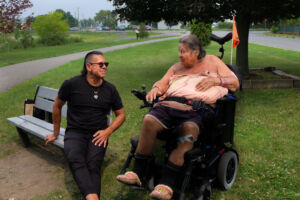
He celebrated his win on Tuesday evening with his wife and two-week old son, as well as his kokum, who travelled to Quebec City to surprise him.

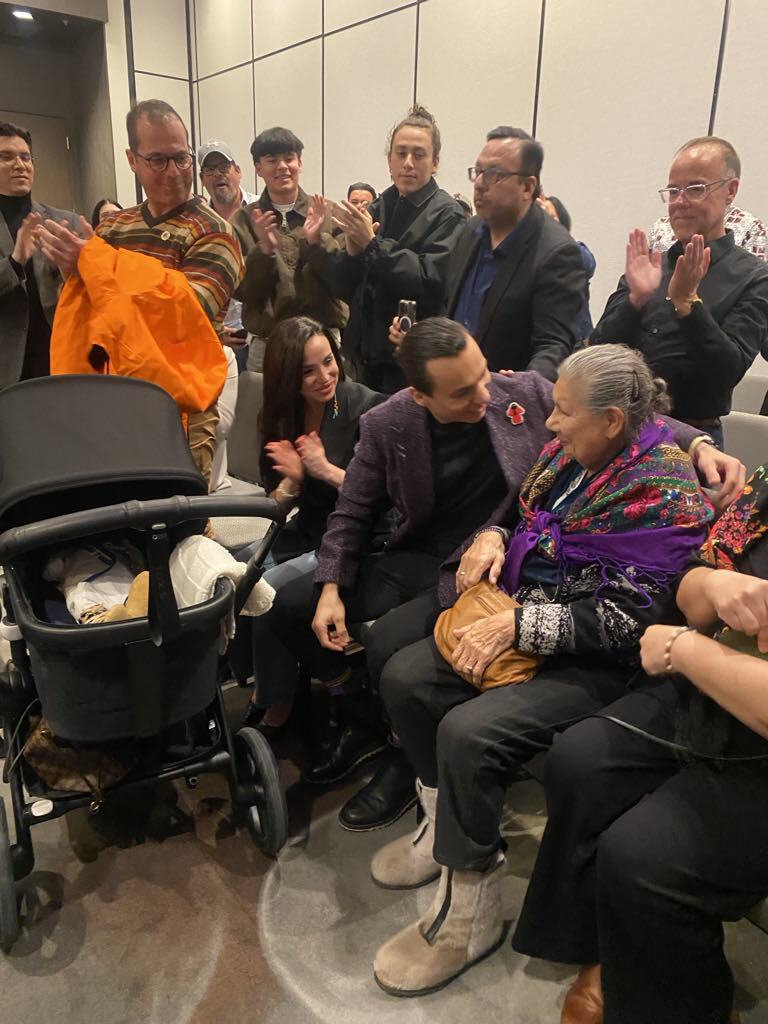
Courtesy Francis Verreault-Paul
After the election, Verreault-Paul met with AFNQL chiefs to discuss the transition from Picard’s leadership to his.
“I want to keep building that relationship and reinforce it at the chiefs’ table,” Verreault-Paul said. “Our children, our lands, our cultures, and our languages will always be at the top of our priorities, and I think there’s a consensus around those aspects.”
At 37, Verreault-Paul is the same age that Picard was when he came into the role. And, like Picard, he also isn’t a career politician.
In fact, Verreault-Paul is a former hockey pro, having spent time on professional teams in the US and internationally before his recent retirement in 2020.

His background on the ice might be an unconventional one for a political leader, but Picard said that it brings another type of experience to the leadership table.
“He’s a quick learner, he’s got respect for the diversity that the table represents,” said Picard. “But at the same time, he’s feisty. As a hockey player he certainly was. And I think all of that will come into play in his role as regional chief.”
MCK grand chief Cody Diabo said he’s optimistic that Verreault-Paul’s time working as chief of staff for Picard will ease the transition between leaders.
“I’m hopeful that we can have a similar relationship to his predecessor,” said Diabo, adding that he’s already discussed MCK’s opinions on the role of AFN and the AFNQL with Verreault-Paul. MCK has long maintained these organizations are advocacy groups, as opposed to government bodies.
“He stated he understood that, and he’s looking forward to working with us,” said Diabo.
As AFNQL leader, Verreault-Paul will oversee a range of commissions, including the First Nations of Quebec and Labrador Health and Social Services Commission, which is headed up by Kahnawa’kehró:non Derek Montour.
Montour said he’s worked with Verreault-Paul before and is confident in his leadership.
Sign up for email updates from The Eastern Door
“I think he’s got the right frame of mind for the role, he’s young and got energy in trying to realize the vision of self-determination for our people,” Montour said.
Montour said that one of Verreault-Paul’s biggest challenges will be addressing ongoing disagreements about the child welfare reform deal - particularly following news that chiefs in Ontario this week signed a deal with the government for region-specific reform.
“He’s got to make sure that he’s got the understanding and direction from all communities in Quebec on that, including Kahnawake,” Montour said.
Verreault-Paul beat out three other chiefs for the role, with Constant Awashish receiving 11 votes, and Cathy Martin and Monik Kistabish each receiving two votes.