Council chiefs take to airwaves
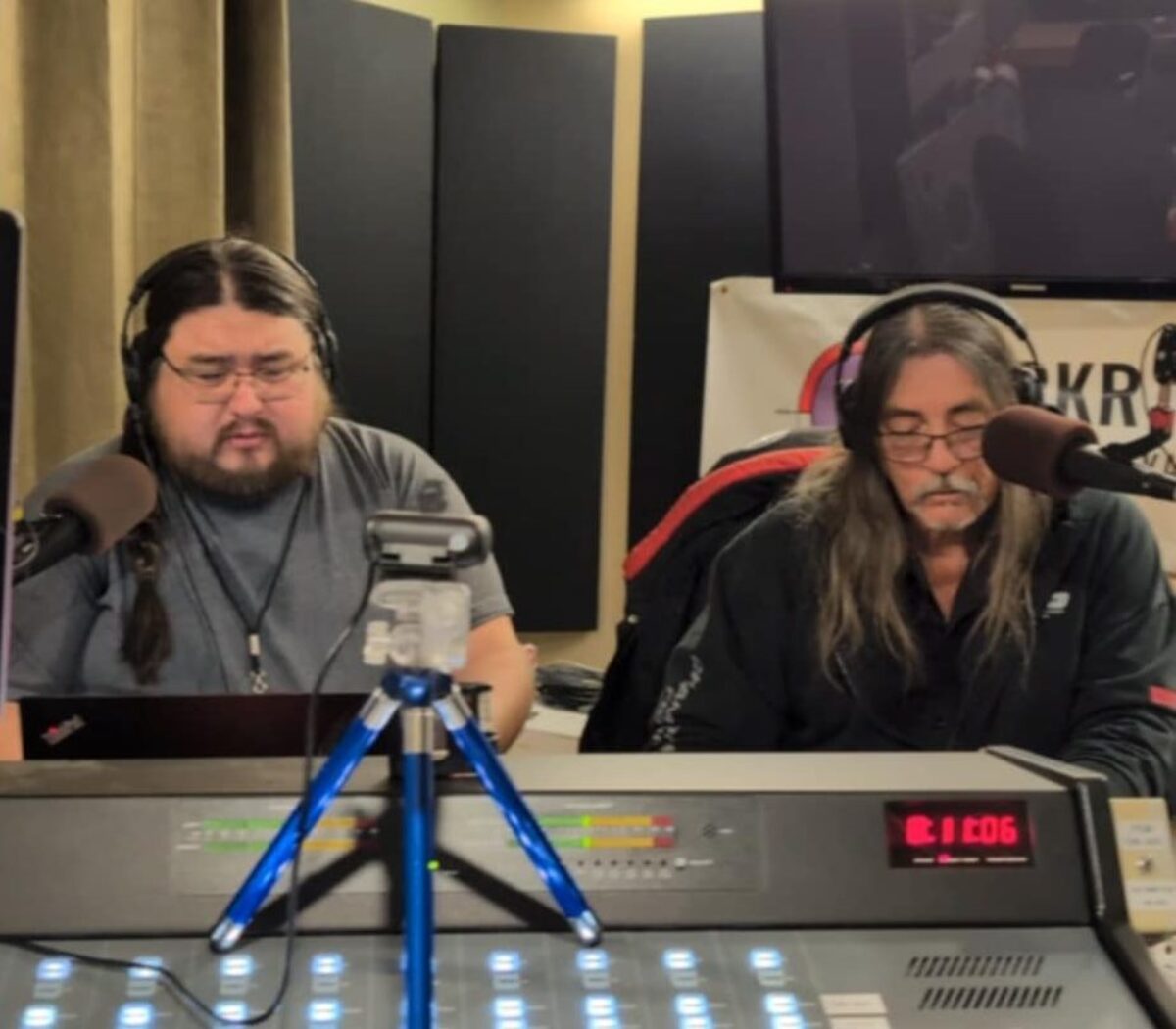
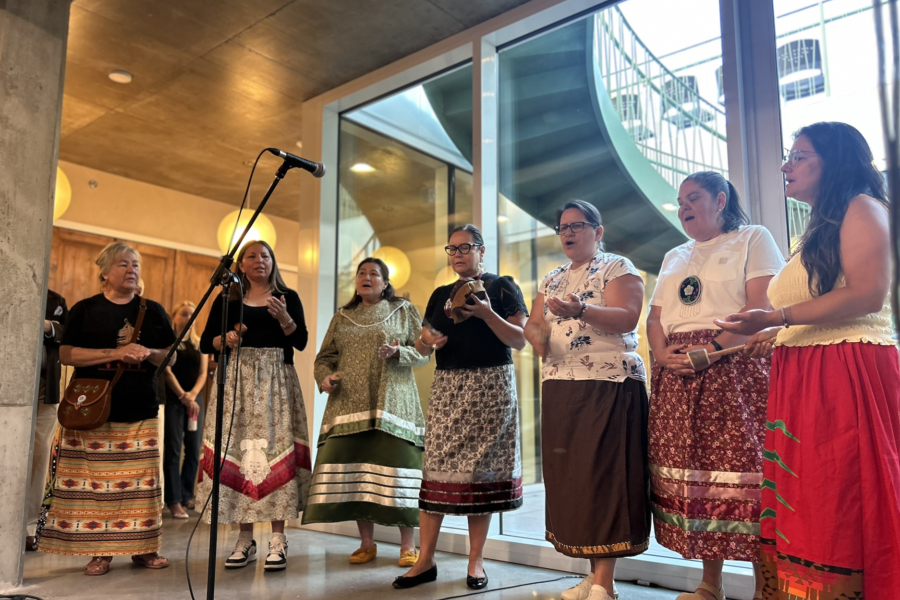
Courtesy Reviving Kanehsatà:ke Radio (RKR) 101.7 FM
After pushback from the community on the recently passed Kanesatake Law-Making Process (KLMP), Mohawk Council of Kanesatake (MCK) chiefs Brant Etienne and Serge Otsi Simon hosted a community meeting online and on Reviving Kanehsatà:ke Radio (RKR) 101.7 FM.
The session was notable for two reasons, one being the meeting’s content, with many community members skeptical of the new lawmaking process, and the other being the format itself.
Live on Microsoft Teams and Reviving Kanehsatà:ke Radio (RKR) 101.7 FM, the community had the chance to hear directly from Council chiefs about the legislation and to pose their questions and concerns – albeit filtered through a moderator.
“I’m really grateful for people who took the time to ask those questions,” said Simon in an interview with The Eastern Door. “It really felt good as a governance. I think me and Brant took away that there’s hope that there are members out there that are serious about their governance and their own security.”
Some community members, however, took issue with the meeting, given the schism on Council and the absence of MCK grand chief Victor Bonspille, who was not involved in the KLMP’s passage. Bonspille hosted his own meeting in person on Tuesday, which he billed as an emergency community meeting.
A message from the office of the grand chief was read out at the end of the RKR broadcast, informing community members of Bonspille’s meeting and its agenda.
That agenda included an update to the Emergency Response Unit investigation, which he has frequently invoked, as well as “Ethic Committee” and the KLMP.
Bonspille has voiced opposition to the KLMP, circulating a notice to local businesses suggesting the legislation could harm their interests.
On Monday, the recently formed Ethics Commission, which is comprised of legal professionals from outside the community, will meet to consider an appeal on whether Bonspille has vacated his position as grand chief.
The Kanesatake Custom Electoral Code dictates that a Council member who has missed three Council or community meetings without a valid reason or “engages in, during their term, any wrongful conduct that affects, interrupts, or interferes with the performance of their duties” has vacated their seat. Bonspille has rarely attended Council meetings this term, but he has argued only meetings he calls are valid.

Bonspille did not return a request for an interview on the public meeting he hosted this week.
Radio meeting
Etienne and Simon began the broadcast by outlining the process behind the KLMP, which included the publication of a draft law nearly nine months ago, followed by online and in-person sessions with the community, before outlining their view that opposition to the KLMP is primarily due to misinformation.
“I think we could dispel some misinterpretations of the KLMP, and not only that, dispel a lot of fear that people have about this,” said Simon on the program.
He mentioned the word zoning as an example of something that made some people reticent and argued that Kanien’kehá:ka have long demarcated areas for different activities, such as ceremonies or hunting.
The early part of the discussion focused on the law’s legal basis, which cites several sources, such as the Indian Act and inherent rights, as well as the Kanesatake Interim Land Governance Act (KILGA), also known as S-24.
“Creating Mohawk laws via the KLMP is not accepting jurisdiction from any outside authority,” said Etienne on air, who emphasized Kanesatake laws have the same standing as federal laws. “We are pushing back the authority of outside governments, whether it’s provincial, municipal, or federal.”
The Council chiefs also spoke about the consultations that would take place for laws pertaining to certain categories.
“Council can’t just unilaterally pull stuff and pass whatever they want,” said Simon.
Several questions were submitted, mostly pertaining to the KLMP. MCK chief Amy Beauvais, who attended the Teams meeting, occasionally chimed in on the air while Etienne and Simon spoke from the radio’s studio.



The first question of the night was how laws will be upheld.
Etienne said security who could uphold more serious infractions is still “a ways off,” but that the Kanesatake Perimeter Security Team or another similar entity could handle something like ticketing vehicles if, for instance, a Kanesatake law modified the speed limit.
Simon emphasized the importance of a security force to provide a buffer.
Another question asked, if only members can vote, whether there is a valid membership code. The MCK chiefs said there is no valid membership code, but that the KLMP means a membership law is now possible.
Other questions asked about the land code, matrimonial law, whether future councils can alter the threshold needed if a law is put to vote, and other issues, including Tioweró:ton - Kanesatake laws are not in force there.
Expanding on the question of enforcement, one question asked whether a court of competent jurisdiction has been negotiated.
“That’s something that has to be developed,” said Etienne, who said the ultimate goal is to appoint a justice of the peace. In the meantime, he suggested the MCK could negotiate with sister communities to enable Kanesatake cases to be taken to their courts, such as the Court of Kahnawake.
New format
“Overall, it was successful,” said Karahkóhare Syd Gaspé, president of Mohawk MultiMedia Inc., which oversees RKR.
Typically, MCK-led community meetings have been limited only to those community members who are present in person, with many Kanehsata’kehró:non unwilling to participate, with some citing the hostility that can be present.
Sign up for email updates from The Eastern Door
The local radio station offers a means of informing the community that is more accessible and less prone to such discord; many radio stations, including K1037 Radio in Kahnawake, routinely invite politicians to speak directly to constituents.
“I think we have to be innovative today and use technology to our advantage,” said Gaspé.
“The format provides a safe space to exchange with the elected leaders. It doesn’t replace an in-person meeting, it’s a complementary way to communicate and reach as many people as possible. Each format has its challenges,” he said.
“RKR has provided the medium as a communication tool. We are a neutral, non-partisan, independent organization providing a service, a service that MCK paid for, i.e., RKR is renting the airwaves. We are not favouring one political party. We offer equal opportunity.”
He said the programming was not a consultative process with community members because a lack of a profanity delay system meant the station could not provide a live connection, as it must uphold broadcast rules under its license to operate on the airwaves.
Marcus Bankuti, Local Journalism Initiative Reporter