Onake paddles the Pacific
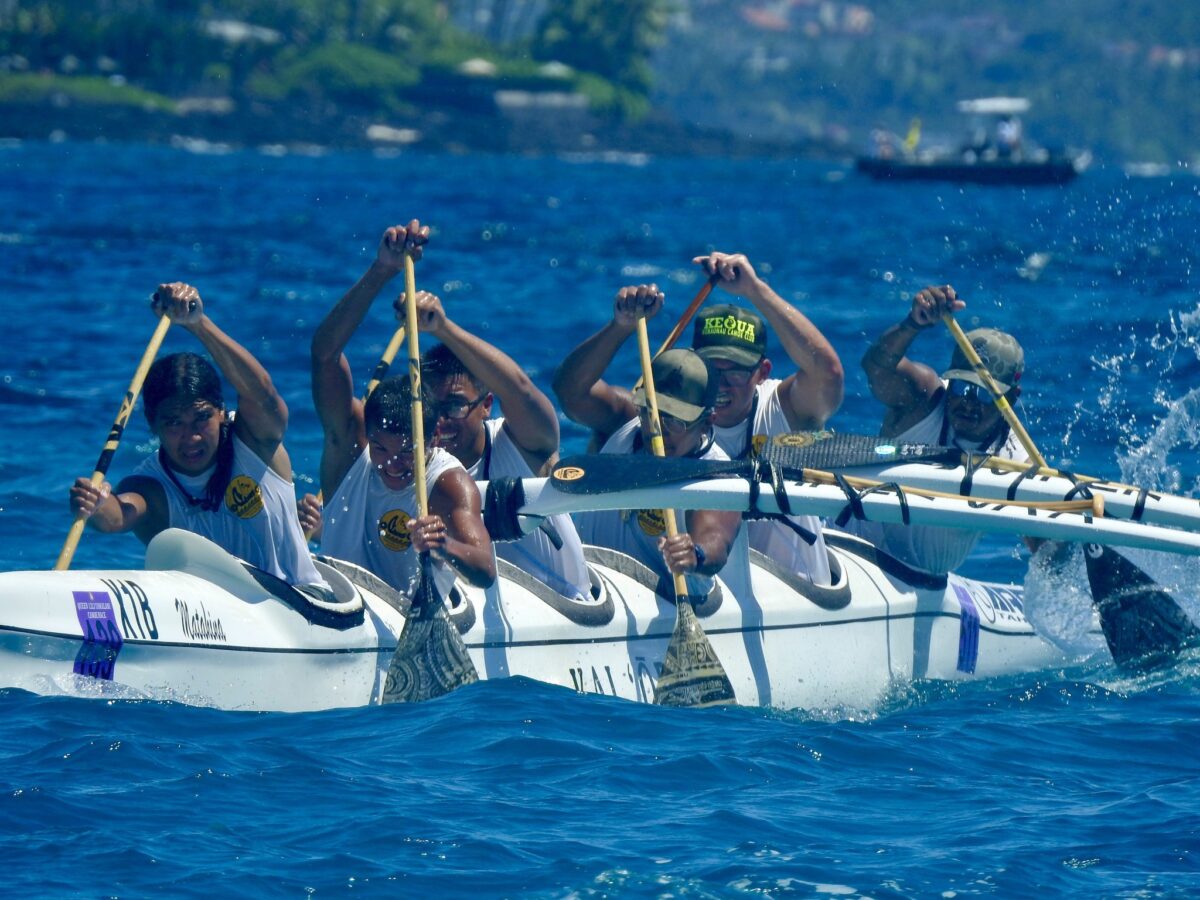
Each Onake paddler thinks of something different while on the water. Some sing songs to keep them focused, others think about any anger they might be holding onto, using their rage to spur them on further.
Last weekend, as Onake’s paddlers got ready to the water in Kona, Hawaii, for the Queen Lili’uokalani Canoe Race, they discussed what comes to mind when they’re in their boats.
“When I’m really pushed beyond my limits, I think about here, I think about home,” said Russell Delaronde. “Not just my house and my yard, home is this whole community. So when I was out there, I was just thinking about home and about training in our river. For me, that’s what I tap into when I need to the most.”
Home was on Delaronde’s mind as he cut his paddle through the water with Onake’s men’s crew, who called themselves “The Water Moccassins.” He felt laser-focused throughout his 18-mile long race, listening to captain and coach Lanho Goodleaf bellow out directions.
“There was such a sense of pride, our language was being used. When you’re being yelled at to go harder and harder in Kanien’kéha, it gives you that energy,” he said.
The Water Moccassins came in 53rd place out of 344 racers, clocking in a time of two hours and seven minutes.

Delaronde was one of 32 paddlers that flew to Hawaii from Kahnawake for the races, alongside another load of friends and family who joined the paddlers to support their efforts. A total of five crews participated in the event, which is the world’s largest outrigger canoe race, participating in 18-mile and five-mile long races along the coast.
Crews had been training for months, and it proved to be worth it - especially for the youth teams, who each took home medals in their events. The Junior mixed OC6 crew took home a silver medal, coming in second place, and the Junior girls OC6 crew came home with gold - an immense achievement, given that the teams were racing against crews from all over the world.
“There were a lot of feelings before it, but we pulled it off,” said Tekahonwitha Diabo, a member of the Junior girls’ team. The team hadn’t initially realized that they won gold due to the flurry of excitement as multiple boats crossed the finish line, but they were delighted to be told the news by the older girls also racing from Onake. “The highlight of the trip was the race. Hard work pays off.”
Goodleaf, who also coached the Junior teams as well as captaining and coaching the men’s crew, said the highlight of the trip was watching all the paddlers from Kahnawake cross the finish line.
“That was my proudest moment. Medals or not, my greatest accomplishment is that I felt like everybody was prepared enough for their races,” he said. “Seeing everybody come back happy was inspiring. To see so many people succeeding, it just makes you want to paddle more.”
Lisa Montour raced with the women’s 50+ crew, one of the three women’s crews from Onake. She said that the success of paddlers in the race is testament to the path that youth at Onake are forging for the club’s future.


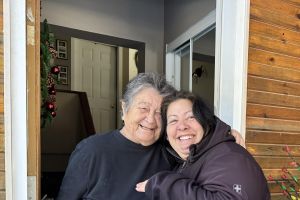
“I was so proud, it was so nice to see. I’m just hopeful that other youth see this and say, ‘Man, if those kids can do that, I want to do it too,’” Montour said. “I have people in my boat over 60, and if they see that we’re in our 60s and still paddling, they’ll see what they have to look forward to in their future.”
Like Montour, Karahkwenhawi Sondra Cross also felt a sense of pride watching the next generation of paddlers - specifically her son, Rohsennakehte. The last time she paddled in the Queen Lili’uokalani Canoe Race, Rohsennakehte was just two years old - this time, she got to see him take part in the 18-mile and five-mile races with the men’s crew as a strong 16-year-old.
“He dumped everything he had into his 18-mile race. When he got out of the boat he was totally depleted, and he came up onto the shore and I caught him. He fell into my arms and we just had our moment,” said Cross, who paddled with the women’s 40+ crew.
“I was just really happy to have been there for him to catch him after that race, because it’s a long race and you go through all the emotions and all the thought processes. There’s lots going on in your head, but it’s so beautiful.”
Onake coach Maris Jacobs, who raced with the open age women’s crew that ranged from 17-25 years old, said that it was particularly special to meet other Indigenous paddlers from around the world.
“It felt like we were right at home, even though we were thousands of miles away from it,” she said. “We had a really special time being able to just be in the ocean, paddling with dolphins and with other teams at the top of their game.”
Sign up for email updates from The Eastern Door
Though it wasn’t possible for all of Kahnawake to be in Hawaii, Delaronde said it felt like they were.
“You felt it from back home, seeing everything on social media and people posting about us. It was a really powerful feeling,” Delaronde said. “It wasn’t just for us. It was for the community back home. We made everybody proud, and I felt it.”
This article was originally published in print on September 6 in issue 33.36 of The Eastern Door.