Canada still defendant in Northvolt litigation

How the electric car battery plant was projected to look. File photo
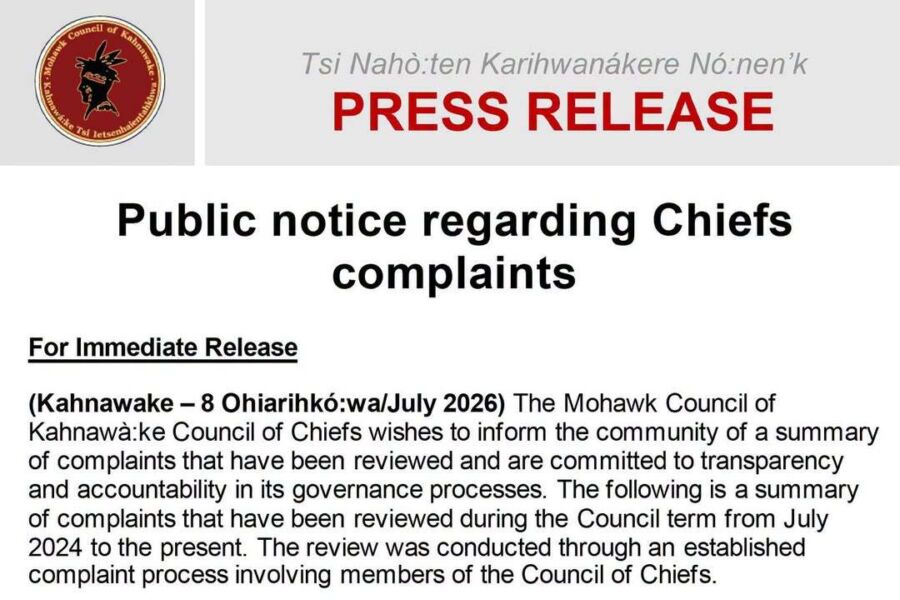
Canada must participate in upcoming proceedings at Quebec Superior Court over its alleged failure to consult the Mohawk Council of Kahnawake (MCK) over an electric car battery plant, a judge has ruled.
The Attorney General of Canada had argued it should be exempt from the band council’s legal challenge, maintaining the MCK’s legal action against the federal government should be treated as a judicial review instead. Judicial reviews, a process used to challenge government decisions at the federal level, can only be heard by the Federal Court in Ottawa.
Judge Andres Garin ruled against the proposal.
“The result sought by the Attorney General’s declamatory exception would require the Mohawk Council to institute proceedings in two separate fora - the Quebec Superior Court and the Federal Court - in order to vindicate its claim to consultation and accommodation,” he wrote in a judgement issued on February 18.
“While I recognize that the evidence and issues raised by the claims against the Attorney General the Procurer general du Québec may not be identical, requiring the Mohawk Council to incur the expense and effort of two separate sets of proceedings hardly advances access to justice, or reconciliation for that matter.”
In September of 2023, Canada announced it would be contributing $1.34 billion toward the project, a $7 billion electric car battery plant to be located in the Montérégie along the Richelieu River. The federal government failed to consult the MCK ahead of its decision to commit funding to Northvolt, the Swedish company behind the project.

Given that funding was committed pursuant to a federal statute, the Attorney General argued Quebec Superior Court didn’t have the jurisdiction to rule on the matter. Garin disagreed, however.
“The federal law relied upon by the Attorney General simply establishes that the Ministry of Industry is empowered to make grants and contributions to facilitate the implementation of any program or project of the Minister under the Department of Industry Act. Beyond that, the federal law appears to be of no consequence to the present case, and the Attorney General has not demonstrated otherwise,” he wrote.
“The only law that is essential to the disposition of this matter is the law governing the rights recognized and affirmed by section 35 of the Constitutional Act of 1982 and the duty to consult and accommodate. That law is constitutional and is not federal law.”
The judge also concluded there was no basis to Canada’s claim that the MCK’s legal challenge was “clearly unfounded” and as such it ought to be dismissed.
Given Canada had since initiated a consultation process with the band council in the months following their legal filing, lawyers for the government had argued its demands for consultation were “now moot,” an assertion Garin took issue with.
“I fail to see how the proceedings could be premature in respect of the alleged past breach of the duty to consult and accommodate in relation to the federal funding decision,” he wrote.






“Moreover, without deciding the matter, I query whether a government can initiate consultations after the institution of proceeding alleging a failure to consult and accommodate and then successfully argue that those same proceedings are premature and ought to be dismissed as an abuse of the Court’s process.”
MCK grand chief Cody Diabo said he’s not surprised Garin ruled in their favour.
“We weren’t too concerned about it, but a win is a win at the end of the day,” he said.
Quebec is also targeted in the legal challenge before the court, following its decision to authorize the clearing of wetlands at the site in January of last year. The case is set to be resolved through case management hearings to be held later this year.
Northvolt is also listed as a defendant and has since filed for bankruptcy in Swedish. With that, what’s to come for the company’s electric car battery project in the province remains to be seen.
Since their legal challenge strictly revolves around demands to Canada and Quebec, whether the project moves ahead is of little consequence, as their demands remain the same regardless, Diabo said.
Sign up for email updates from The Eastern Door
“It’s really about them pushing ahead with a project, not doing the proper steps. If the project gets cancelled, they’re still going to have to go to court,” he said.