Asbestos pipes must be removed
File Photo
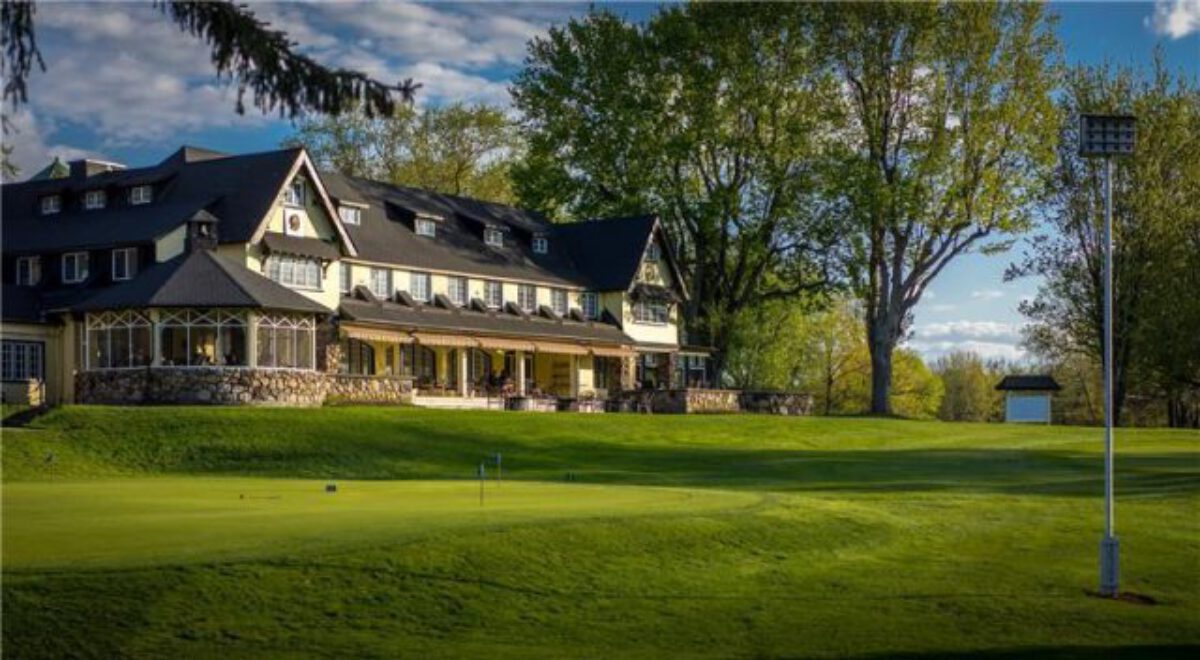
Management at the Kanawaki Golf Club and Indigenous Services Canada (ISC) have yet to decide what kind of work will be carried out to remove old asbestos pipes currently underground at the golf course. That’s according to Council chief David Diabo, who sat in on the most recent meeting held last Thursday about the hazardous materials there that date back decades.
“Indigenous Services Canada and Kanawaki have to get their stuff together and come up with a better plan. And we told them,” Diabo said.
Staff from the Kahnawake Environment Protection Office (KEPO) have also been sitting in on the meetings about the issue. Canada is involved in them as it’s the one that holds the lease on the land.
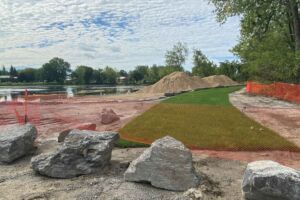
It was in the summer when workers were digging to add a new drainage system on the grounds that they discovered segments of the cement pipes containing asbestos, The Eastern Door revealed in a recent investigation.

The cement pipes that lie underground date back from a former water irrigation system on the grounds.
They will all have to be removed eventually, as there’s the risk they could leach asbestos into the soil and groundwater there, said Benjamin Green-Stacey, the director at KEPO.
It’s important restoration work happens soon to remove the pipes since they’ve already started to break apart, he said.
“While the pipe is still a pipe, it’s not a problem,” Green-Stacey said. “It’s when it starts to break down and small pieces break off, when it becomes airborne and can be inhaled, then it becomes a problem.”




Workers with KEPO have been carrying out soil and groundwater testing there for many years now, but they’ve yet to reveal any leaching of asbestos into the ground. Soil testing did reveal traces of heavy metals, but not in levels high enough to pose a risk to the environment or human health, Green-Stacey said.
“It can’t stay in the ground after it’s been busted up, or after it’s done serving its purpose,” he said. “It can’t stay there on site, it can’t stay on that property, and it can’t go to the landfill.”
The environment office has been monitoring the groundwater and soil at the golf course because the land there will eventually be returned back to Kahnawake. Over the pandemic, the Mohawk Council of Kahnawake (MCK) agreed to a 25-year extension of the lease agreement between Kanawaki and Canada first reached in 1914, but only on the condition that the land be returned in the same condition as it was when it was originally taken. The lease will expire in November of 2046.
Green-Stacey said it’s still not known where the remainder of the cement pipes are located on the golf course. It’s only been a few months that his office has been aware they were there at all, he said.
Sign up for email updates from The Eastern Door
“We just want to make sure that we know exactly what’s there, how much is there, where it is, so then we can figure out how to properly manage it,” Green-Stacey said. “That’s the intention.”
The federal government wasn’t able to comment much on the issue, only sharing a short written comment with The Eastern Door about the restoration work that’s to come.
“The meetings have been productive, and all parties are committed to effectively addressing the concerns about the cement pipes onsite,” wrote Jennifer Cooper, an ISC spokesperson.
The Eastern Door invited management at the golf course to provide comments for this story too, but did not hear back.