Water levels in check for now
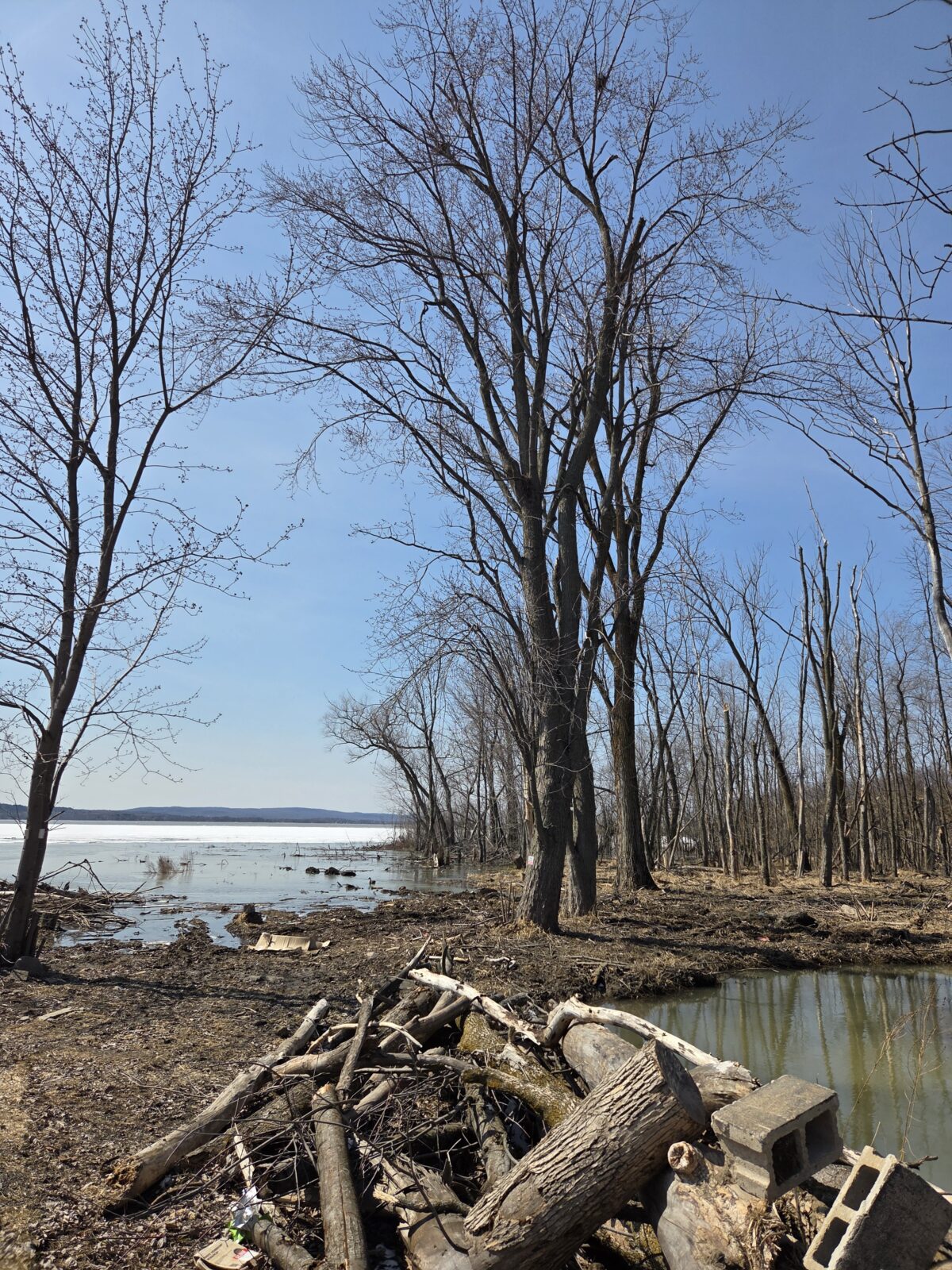
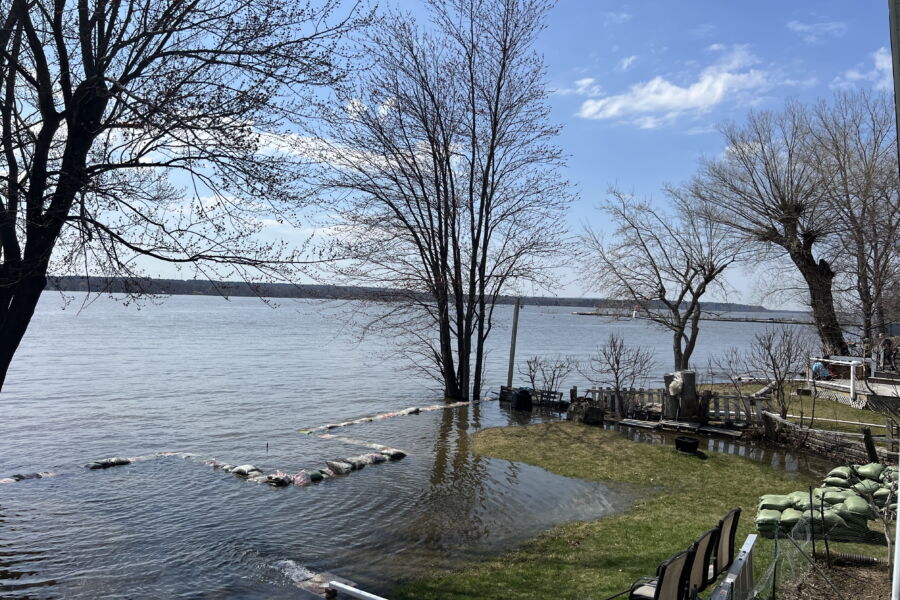
The shoreline on Rick Carbonnell’s property. Fern Marmont The Pines Reporter
As spring temperatures rise and snow begins to melt, the Kanesatake Perimeter Security (KPS) team said there is currently no significant risk of flooding, but community members are advised to be cautious as water levels may still increase.
On Sunday, KPS responded to multiple calls from residents dealing with localized flooding caused by clogged drainage ditches. Garbage and debris had blocked the water flow, causing runoff to spill into yards, even threatening a family graveyard.
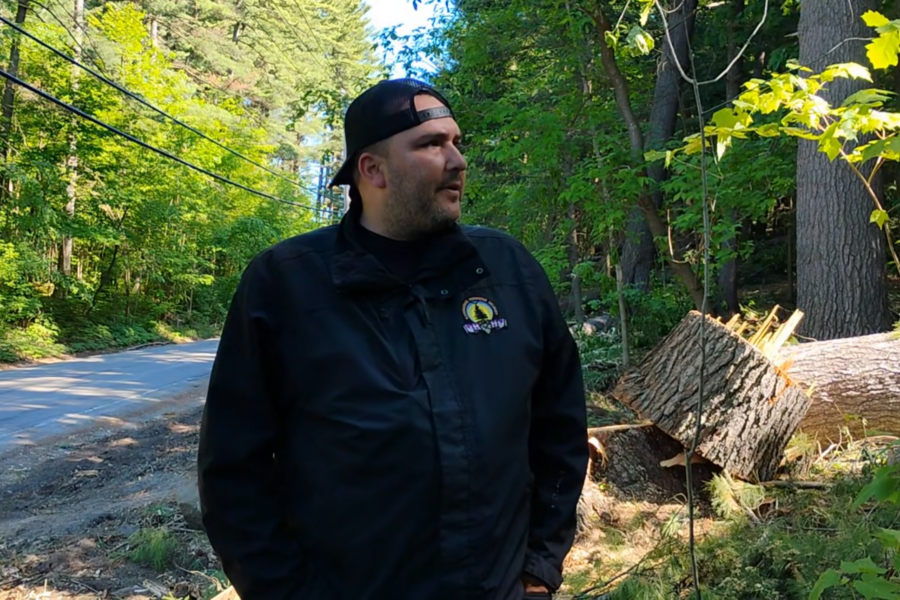
KPS coordinator Kane Montour said the situation highlights the importance of early intervention during the spring thaw, even when overall flood risk remains low.
“There’s no immediate danger right now, but this is exactly the kind of situation where being proactive makes a difference,” said Montour.
Montour and his team cleared debris and used makeshift piping to redirect the flooded ditches.
“It came out like Niagara Falls,” said Montour.
The team is also monitoring the water levels of the Lake of Two Mountains, putting markers out to compare current conditions with previous years, paying special attention to the areas where there was bad flooding in the past.

“Water levels are normal. I don’t think we’re going to flood this year, but it’s always good to be proactive,” said Montour. “We’ve been monitoring, and I don’t think anybody should stress out and worry right now.”
Still, officials caution that conditions can change quickly depending on weather patterns and snowmelt.
The Ottawa River Regulation Planning Board (ORRPB) said in a statement to The Pines Reporter that while water levels are currently within seasonal norms, with ongoing snowmelt and rainfall, the levels may rise.
“While the snow water content of the snowpack in the northwestern portion of the basin is above normal for this time of year, snow water content is only one of several factors impacting the magnitude of the spring freshet,” stated the ORRPB. “Weather conditions that trigger rapid snowmelt or heavy rainfall can only be known a few days in advance.”
Kanesatake experienced major flooding in 2017, 2019, and 2023, which caused widespread damage. Montour said those events have shaped the team’s approach to preparing for potential flooding.
“I got to be there first hand,” said Montour, referring to how he did disaster relief during past floods. “That really prepared me for what needs to be done if it floods again.”





Montour added that while there is no immediate threat of such devastating floods this year, they have resources that they didn’t have in the past, such as a relationship the KPS has built with the Red Cross.
“It’s good to develop those partnerships so we can utilize them when we need help,” said Montour.
Serge Otsi Simon, a caretaker council member on the Mohawk Council of Kanesatake (MCK), said the community is better prepared than in the past, with plans and resources ready to be deployed if needed.
“If there was flooding, the first steps would be mobilizing resources, equipment like sand for sandbagging, and mobilizing personnel. Those systems are already in place,” said Simon.
“When the melt is too quick up north, that’s when you have to worry,” he added, explaining that water flowing into the Lake of Two Mountains from northern tributaries can significantly impact local flooding.
“I’m not overly worried right now, but you always think about the ‘what ifs,’” said Rick Carbonnell, who lives right on the shore of the lake.
Carbonnell shared that while he only recently moved back to the community two years ago to take care of his father, Garry Carbonnell, who passed last year, his father was greatly impacted by the past flooding.
Sign up for email updates from The Eastern Door
“I remember my dad sending me pictures where the water was right up to his front door, and it went right out to the road,” said Carbonnell. “He had to put on gaiters to get to his front door.”
Environment and Climate Change Canada said in a statement to The Pines Reporter that flood risk management is a shared responsibility between all levels of government, industry, nongovernment organizations, communities, and individuals.
“Being prepared for a flood can save money, property, and lives,” the statement said.
Fern Marmont, Local Journalism Initiative Reporter