Wampum string rematriated to community
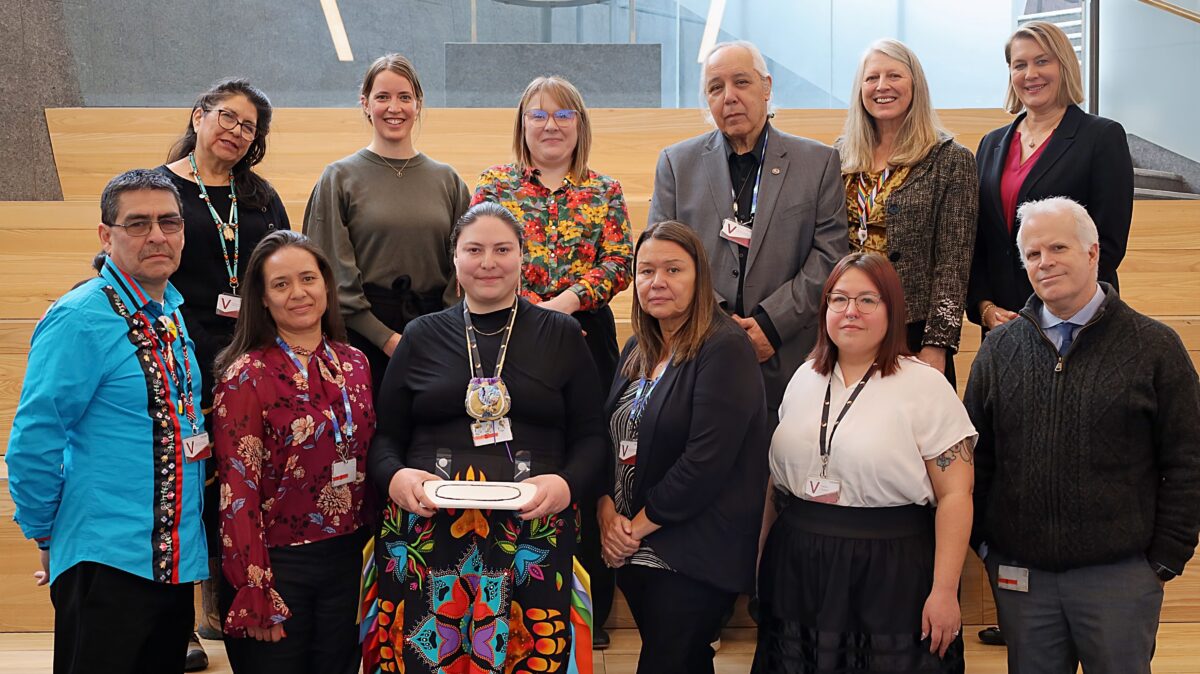
The group that took part in the rematriation of the wampum to Kahnawake, including Mohawk Council of Kahnawake chiefs Ross Montour and Melanie Morrison, archeological technician Katsitsahente Cross-Delisle, as well as Kitigan Zibi elders Verna and Fred McGregor. Courtesy OMX Media - Christcella Nicholas
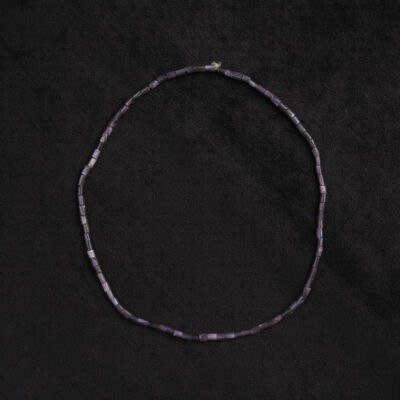
A string of wampum beads was returned to the community last week, in collaboration with the outside organization that had it in its possession for almost 50 years, the Bank of Canada Museum in Ottawa.
The return was marked with a ceremony, attended by Mohawk Council of Kahnawake (MCK) council chiefs Ross Montour, lead on Indigenous rights and research, and Melanie Morrison, lead on heritage. Two elders from Kitigan Zibi, Verna McGregor and her brother Fred, were also there, to welcome the group from Kahnawake to Algonquin territory.
Montour said the ceremony was very moving, and the return of the wampum is a step forward in the return of items to the community, where they should be.
The wampum is made up of 87 beads in various shades of dark purple, on a string of natural fibres. Montour thinks the beads would have been traded numerous times before getting to Kahnawake, as the beads would probably have been made of shells coming from the Atlantic coast, around what is today Maine and Rhode Island.
It is too small to have been a necklace, “not even for a baby,” Montour said, being only nine inches around.
“It would have had some intrinsic value, but its purpose was not for money,” said Montour.
It being in the National Currency Collection (NCC) to begin with is probably because of the false belief that a wampum was used as a type of money by Indigenous people, said Montour.

“Throughout the 60s and early 70s, we did end up acquiring several wampum belts and strings of wampum beads from different sources, including private collectors and transfers from other public institutions,” said Krista Broeckx, an assistant curator for the NCC. “It kind of fell within this category of currency. In a lot of people’s minds, there was this idea of beads being a form of currency used by First Nations and so that’s how it fell into our collecting mandate at the time.”
The museum acquired them as it was expanding its collection in the 60s and 70s to include more than just old Canadian banknotes to include things that would have been considered currency or forms of exchange from all over the world.
“That’s the context in which wampum came into our collection as well,” said Broeckx.
Today, it is known that that was not the role of the belts, instead being used often in diplomatic, cultural, and ceremonial settings, she said.
Five years ago, the museum undertook efforts to return the Indigenous belongings to their rightful communities when possible.
“We’re coming at this really from the perspective of the calls to action of the Truth and Reconciliation Commission and advocacy that’s been going on for decades from First Nations telling museums that they want to have their belongings back, that it’s really important for these cultural belongings that have really strong ties and important roles to play in communities, to be returned,” said Broeckx.
That’s why she contacted the MCK last year, to begin talks with the community to have the wampum returned.
It has not always been easy to return items, as those buying collections decades ago were not always very precise in the origins of the items being acquired.
That, however, is not the case for this string of wampum beads. Quite the contrary, actually, because of a letter detailing how and where the string was acquired by the collector selling it to the museum.
The person who sold the string to the museum, along with many other items, was J. Douglas Ferguson, who did so in 1966.
Ferguson sold the wampum string to the museum for $50 – a little more than $482 in 2026 money.
Ferguson was an avid collector of currencies, as well as wampum, according to Broeckx.
He received the string in 1930 from father Conrad Hauser, who was a priest at the Saint Francis-Xavier Mission in Kahnawake.
Sign up for email updates from The Eastern Door
It is not known how Hauser came into possession of the string.
“It was pretty clear connection to us that that that’s where this particular object came from,” said Broeckx.
Now, the wampum resides in Kahnawake, where it will once again be a part of a museum, Montour said – only this time, it will be the museum in Kanatahkwèn:ke, the new multi-purpose building in the community.